Chapter 3: Biological Macromolecules
Overview
Biological Macromolecules
Biological Macromolecules:
- Four macromolecules necessary for life; present in all cells
- Proteins
- Lipids
- Carbohydrates
- Nucleic Acids
Polymers
Polymer:
- Large molecule made from chains of similar smaller individual monomer units
- Biological macromolecules are mostly polymers
Dehydration Synthesis:
- Reaction which polymerizes monomers
- The hydroxyl group of one monomer and a hydrogen from the adjacent monomer form a water molecule and dissociate
- This causes the remaining monomers to form a covalent bond
Hydrolysis:
- Reverse dehydration synthesis reaction
- A water molecule bonds with a polymer
- The water molecule splits and the hydroxyl bonds with one monomer and the hydrogen with the other
- This splits the covalent bond that was formed between the monomers
Proteins
Function
- Proteins perform most cellular functions
- Includes enzymes: biological catalyst for biochemical reaction
- Most enzyme names end in
-ase
- Most enzyme names end in
Monomer
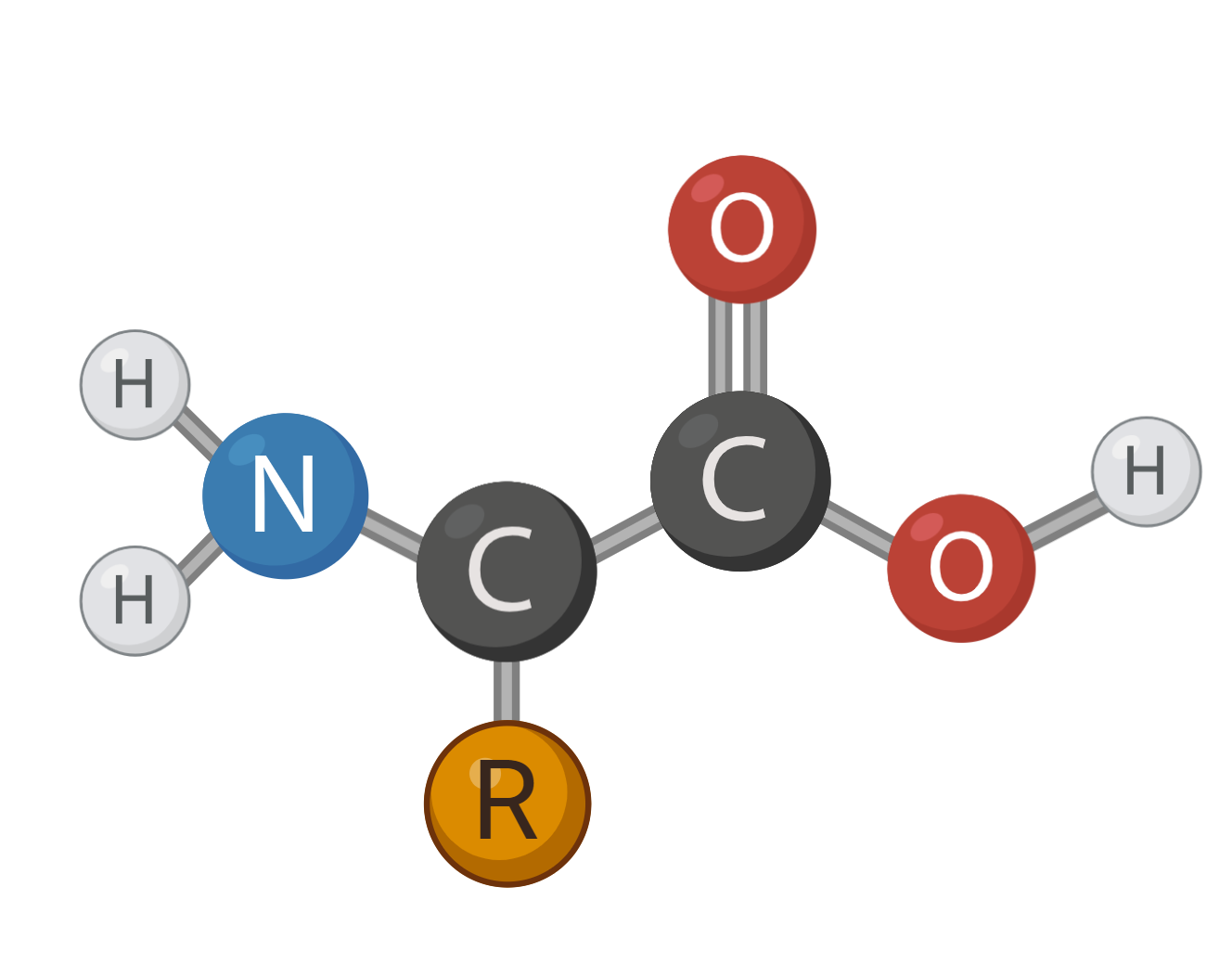
Amino Acid: Monomer from which proteins are constructed
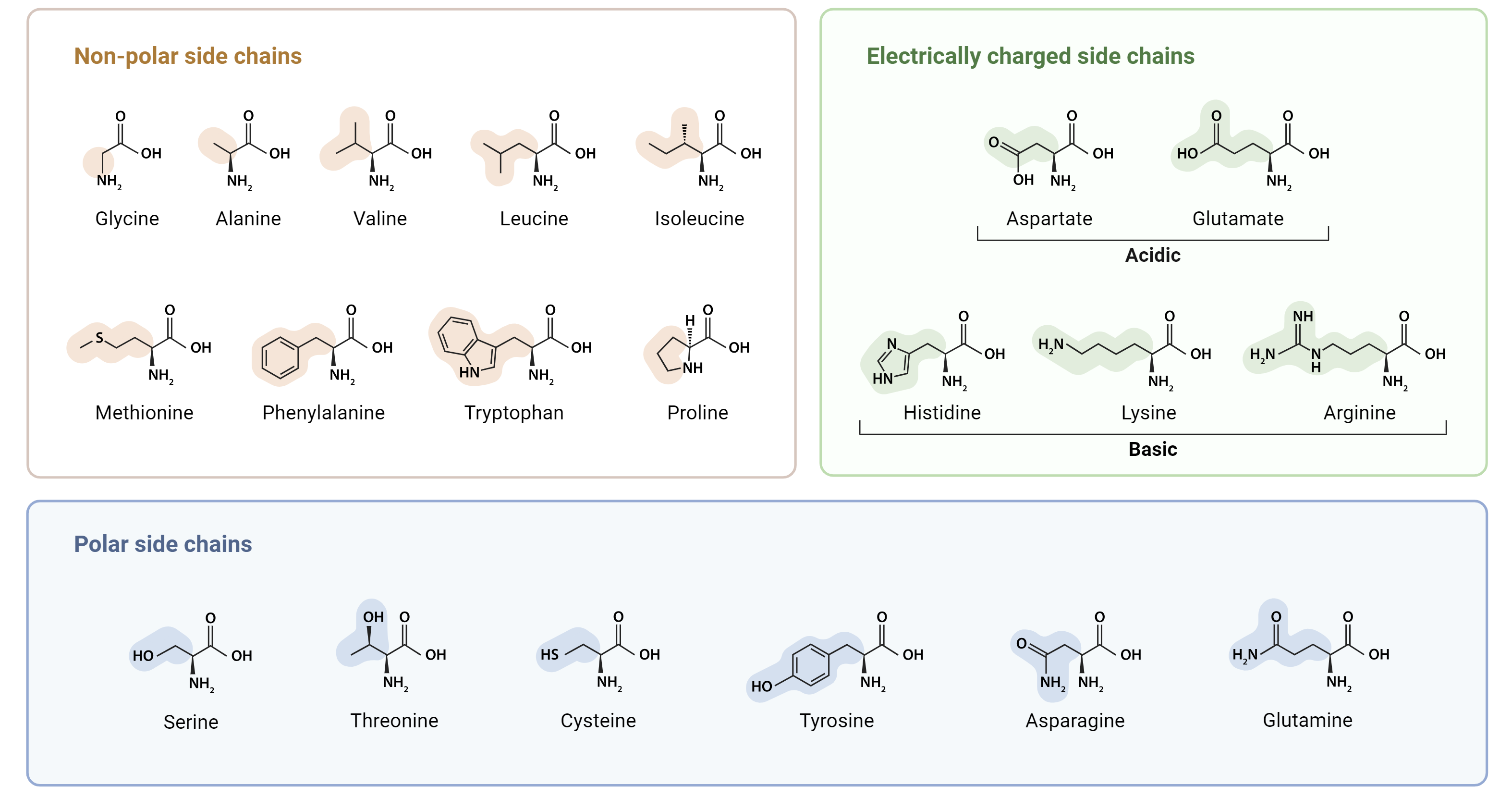
- There are 20 kinds of amino acids
- All have:
- Central carbon
- Amino group
- Carboxyl group
- $R$ group
- The $R$ group differs in each type of amino acid; the $R$ group is what gives each type of amino acid its individual identity and unique properties
Polymerization
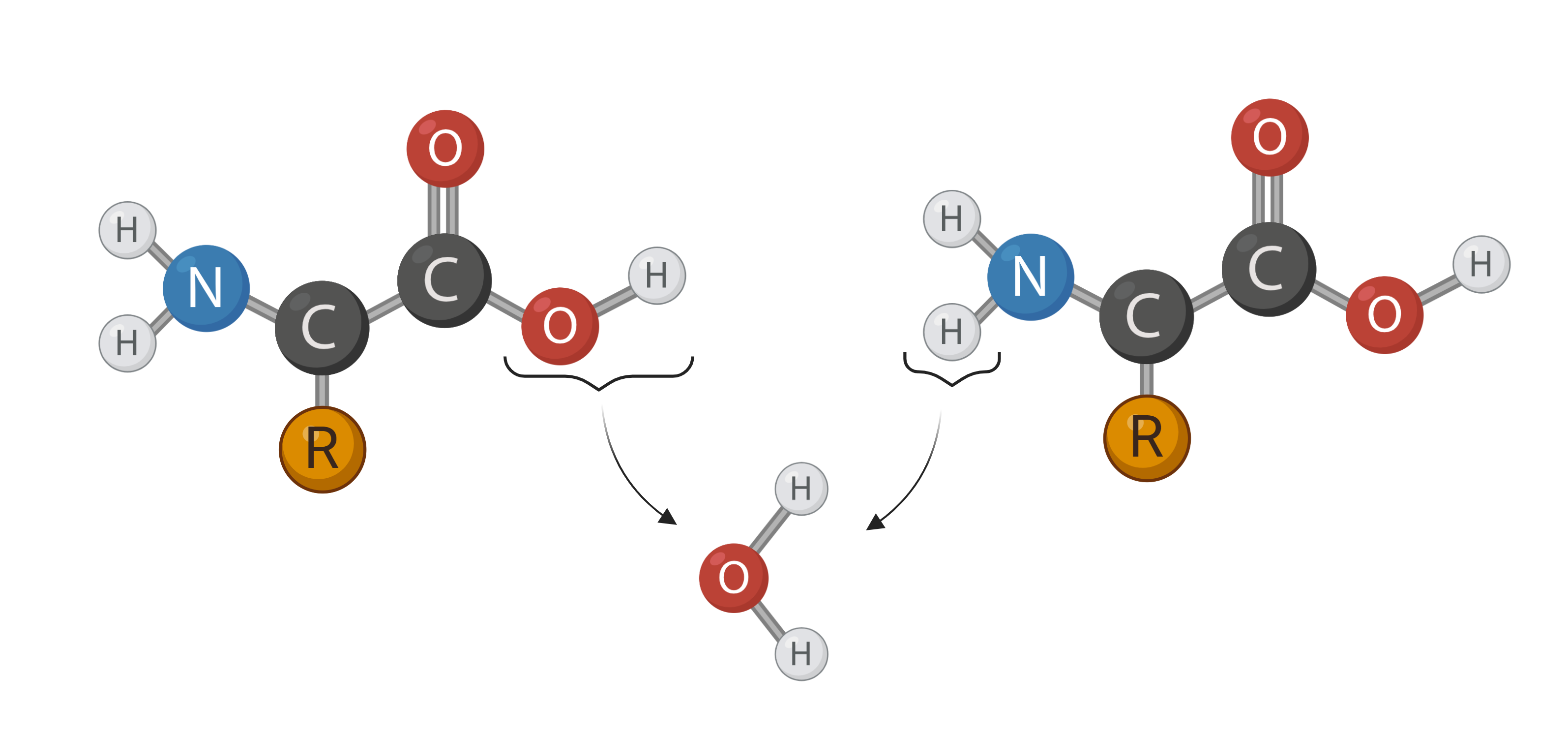
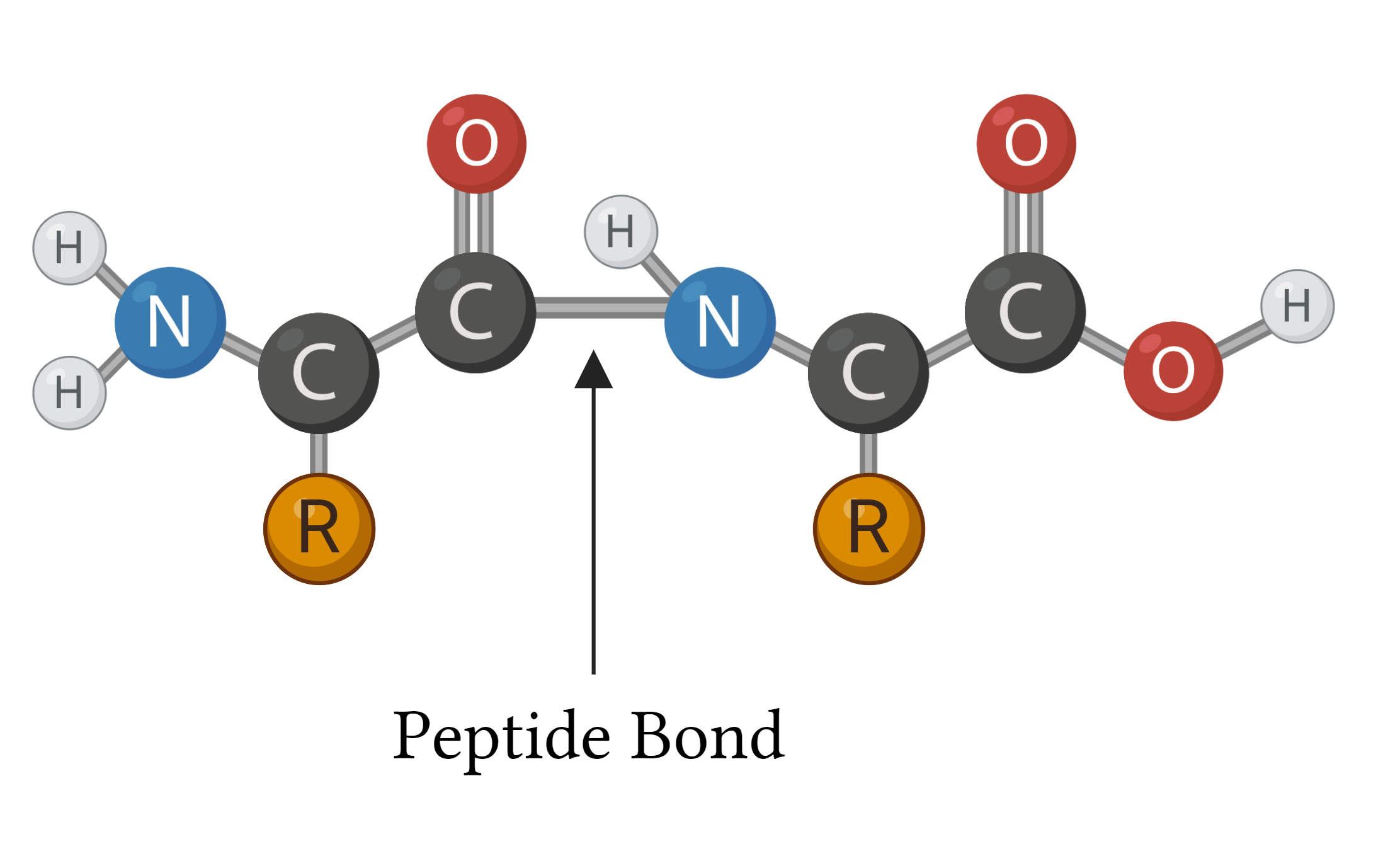
Peptide Bond: Bond between two amino acids
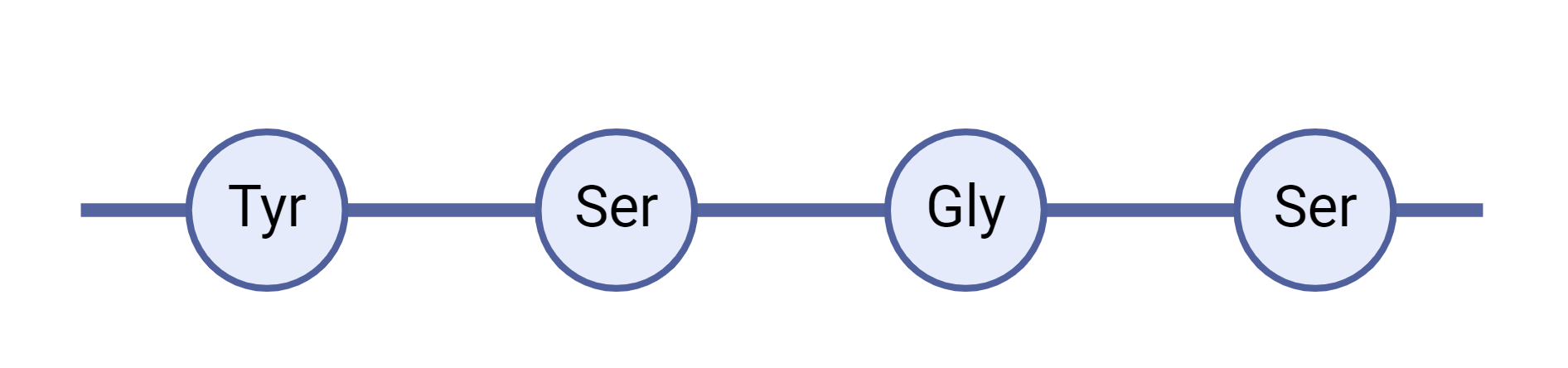
Polypeptide: Chain of peptide-bonded amino acids
- The carboxyl of one amino acid bonds with the amino group of the next.
- The hydroxyl of the carboxyl and a hydrogen from the amino group form an $H_2O$ molecule, bonding the two amino acids through dehydration synthesis
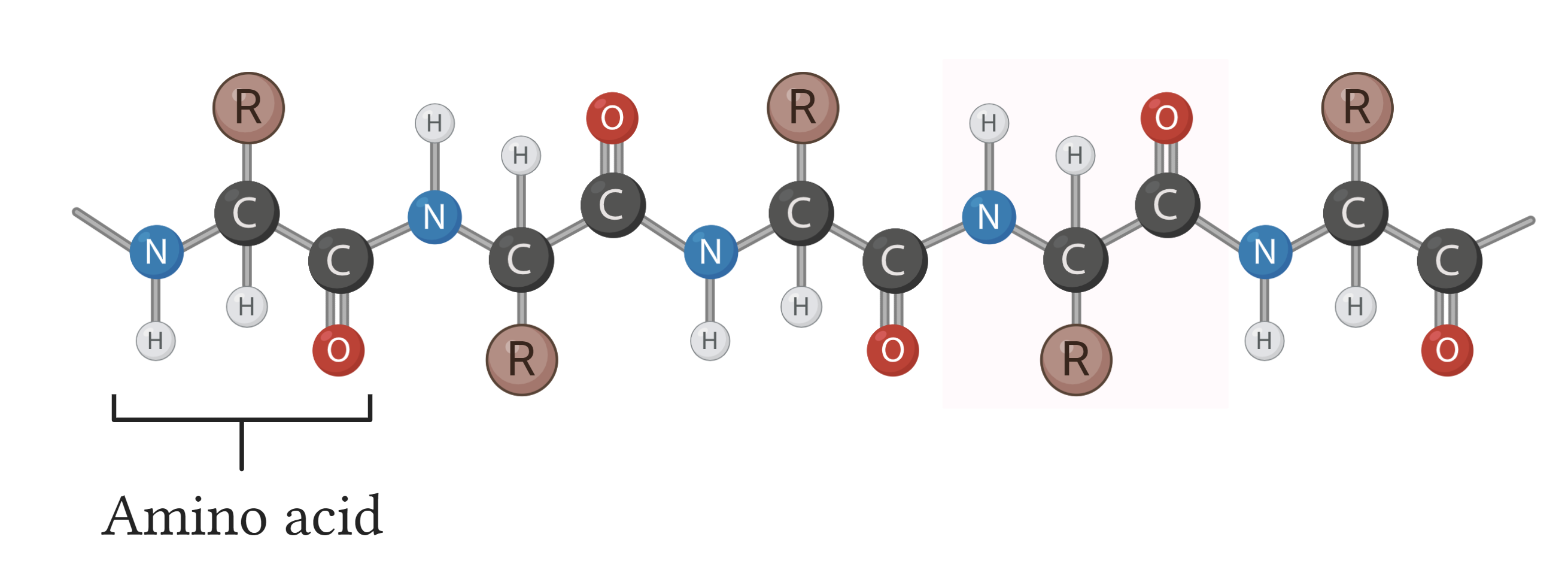
- The sequence of carbon, carboxyl and amino group form the protein backbone
- The protruding $R$ groups are sidechains
- The specific sidechain sequence is what gives each protein polymer its individual identity and unique properties
Structure
Proteins structure has four levels:
- Primary Structure:
- The sequence of the amino acid polymer chain
- Secondary Structure:
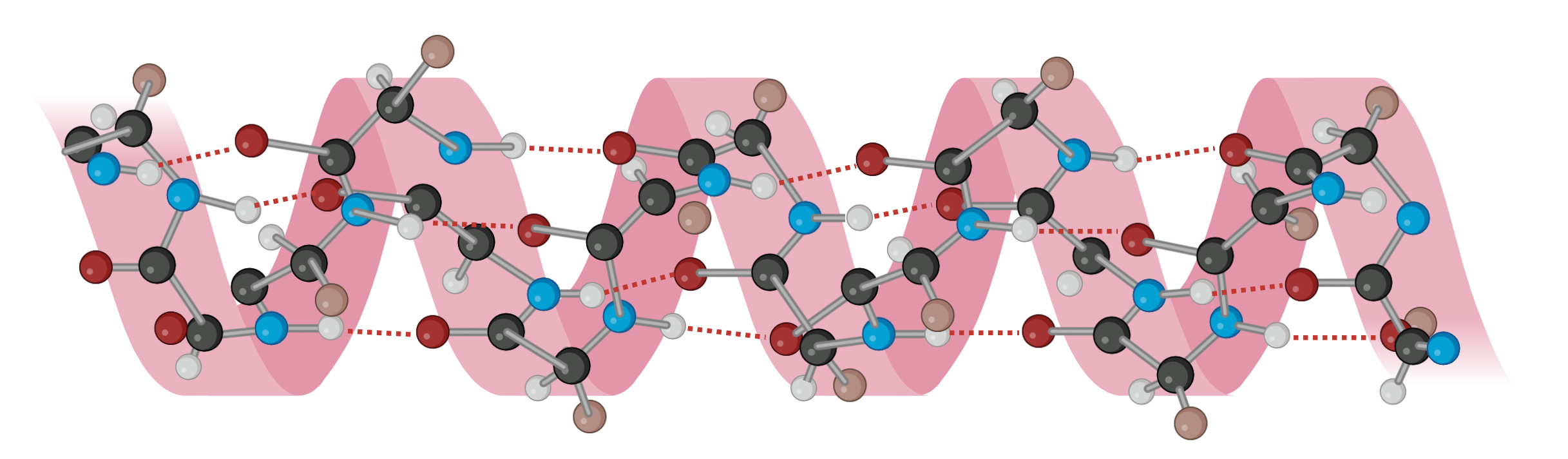
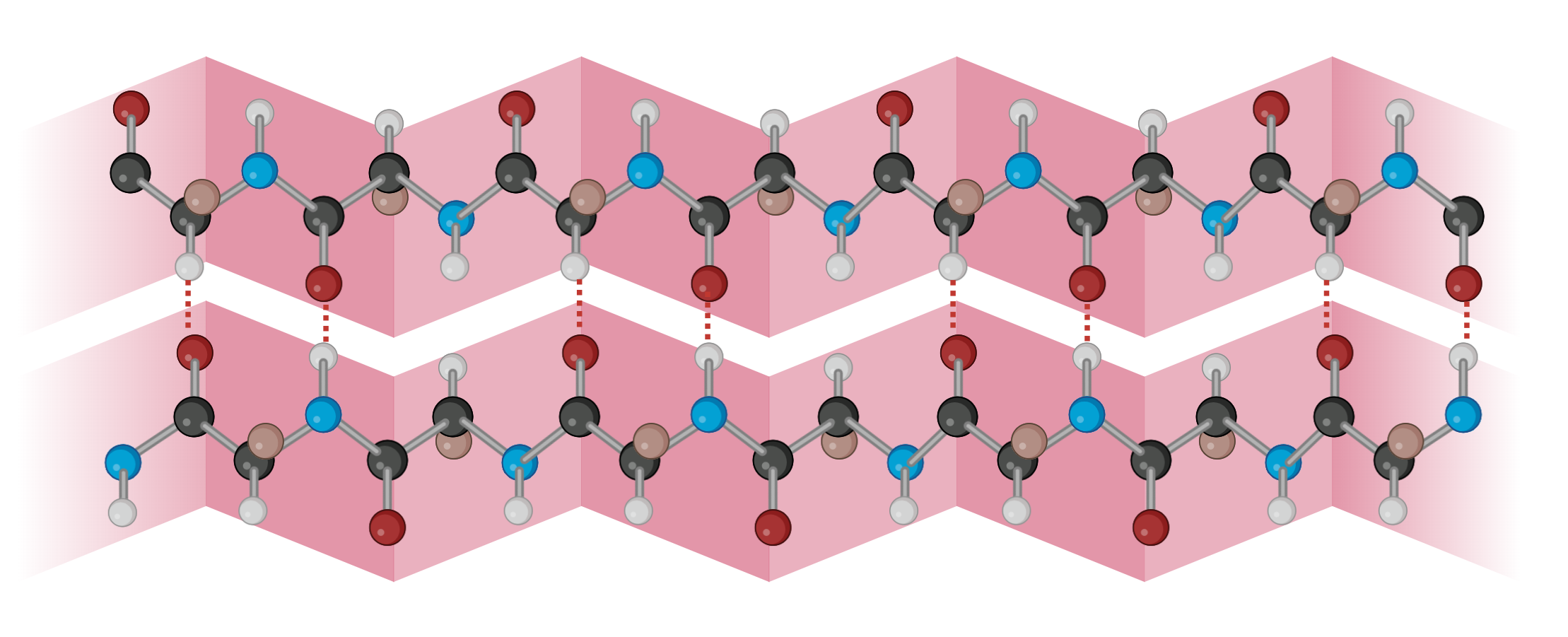
- The primary structure forms secondary structure shapes, due to hydrogen bonds between various backbone components
- Includes alpha-helix structure, beta-pleated sheet
- Tertiary Structure:
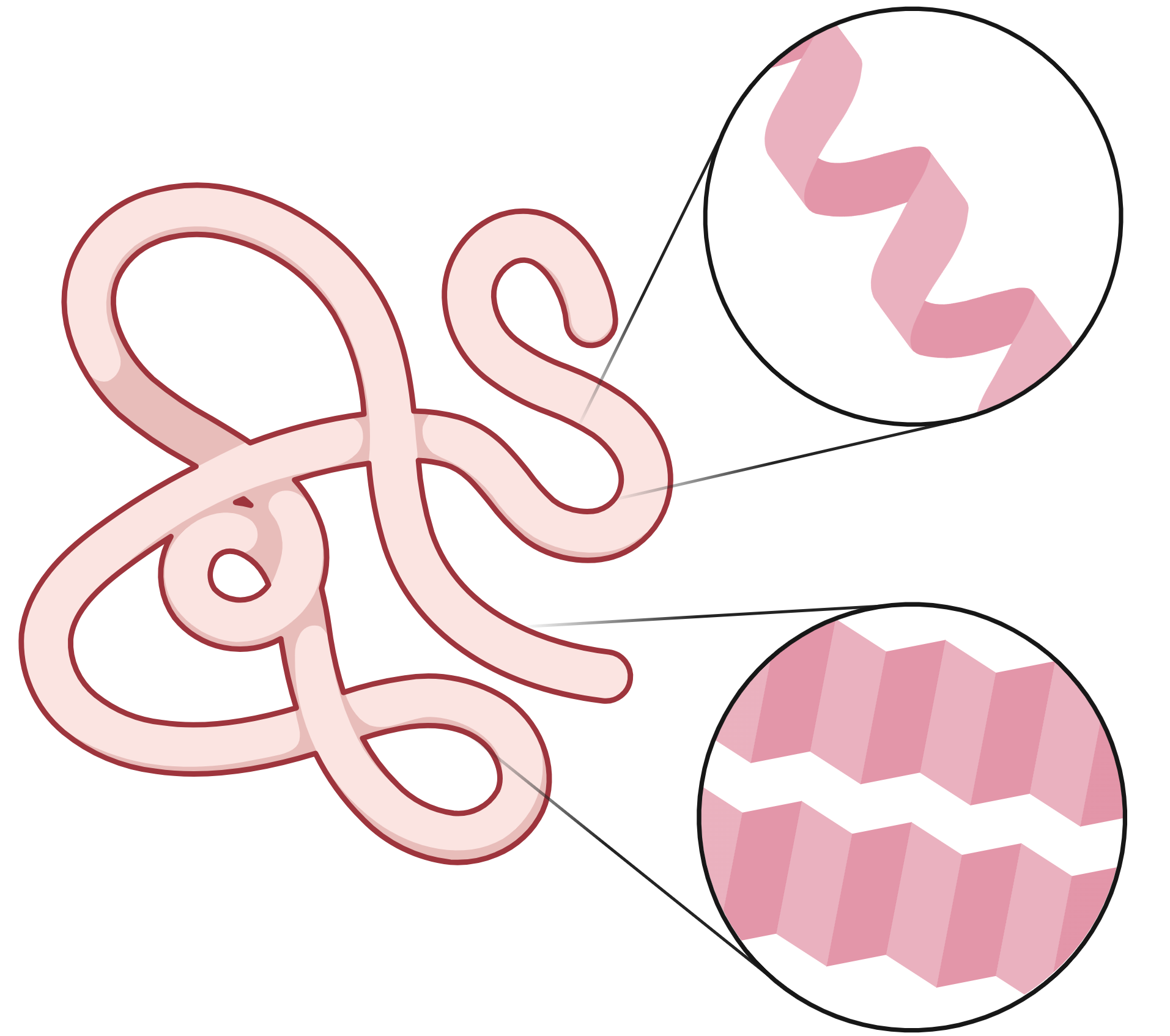
- The secondary structure forms tertiary structure shapes due to various bonds between the $R$ groups
- Quaternary Structure:
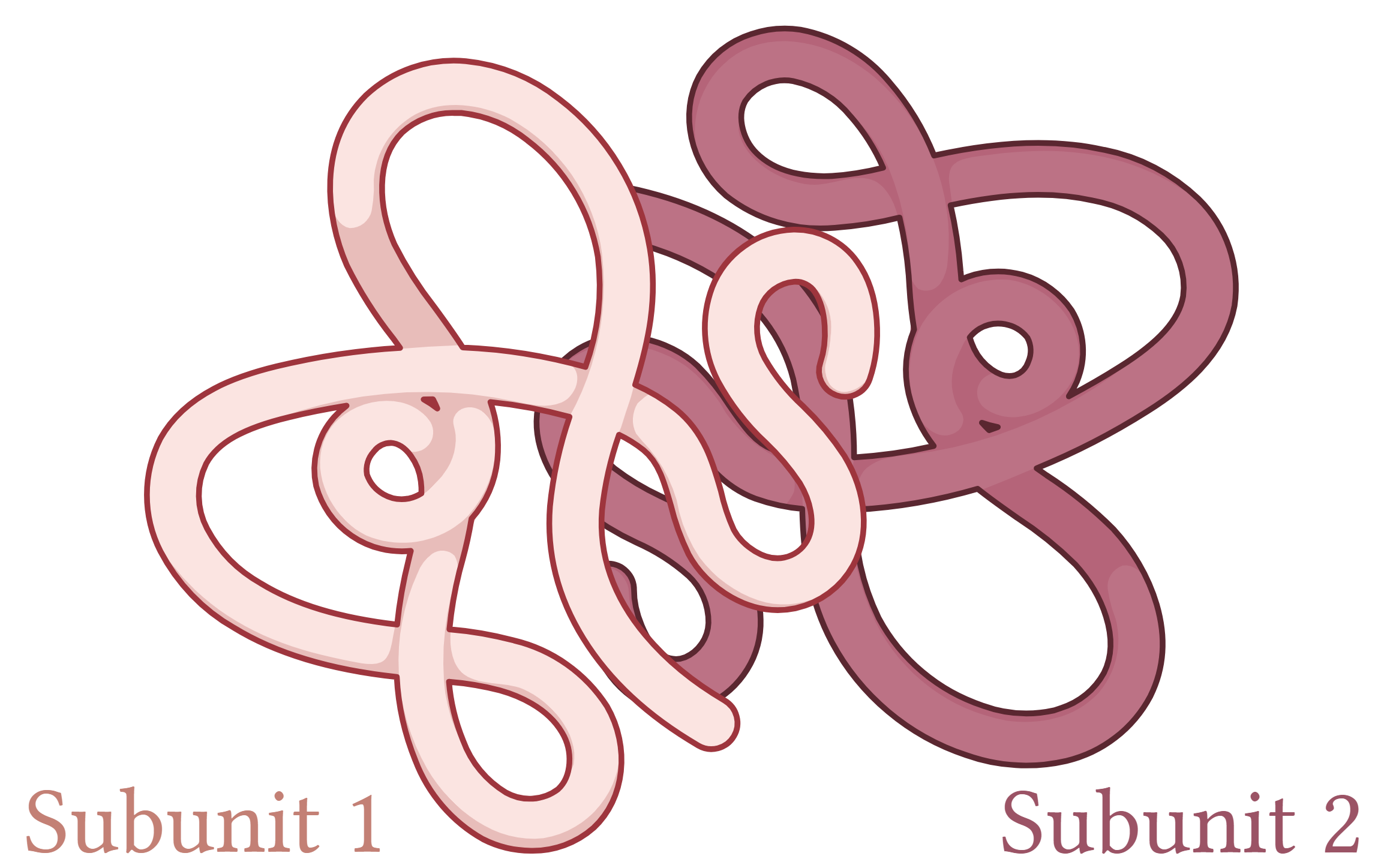
- Multiple individual polypeptide chains bonded together
- Not every protein has a quaternary structure
Denaturation
Denaturation:
- External circumstance - such as temperature, pH changes, chemicals - which causes a protein to lose its secondary, tertiary or quaternary structure
- Causes protein to lose function
- May be irreversible
Carbohydrates
Nomenclature
- Most carbohydrate names end in
-ose
Functions
Carbohydrate functions:
- Stores short term energy
- Forms cell wall in plants
- Serves as exoskeleton for select insects
- Among other functions
Composition
Carbohydrates are made of carbon, hydrogen and oxygen in a $1:2:1$ ratio.
Monomer
Monosaccharide: Single sugar molecule; carbohydrate monomer
- Generally pentose - $C_5H_{10}O_5$ - or hexose - $C_6H_{12}O_6$
- Pentose example: Ribose, deoxyribose
- Hexose example: glucose, fructose, galactose
Polymerization
Glycosidic Bond: Bond between monosaccharides
- Monosaccharides bonds through dehydration synthesis
Disaccharide: Two bonded monosaccharides
- Example: Lactose, sucrose
Polysaccharide:
- Many bonded monosaccharides
Examples
Glycogen:
- Animals store carbohydrates as glycogen
Starch:
- Plants store carbohydrates as starch
Cellulose:
- Forms plant cell walls
Chitin:
- Forms arthropods’ exoskeleton
Lipids
Properties
- Unlike other biological macromolecules, lipids are not polymers
- Lipids are hydrophobic molecules
- Includes fats, oils, wax
Function
Lipid functions:
- Used to store long term energy
- In plants as oil
- In animals as fat
- Used where there is a need for a hydrophobic molecule
- Among other functions
Glyceride
Glyceride:
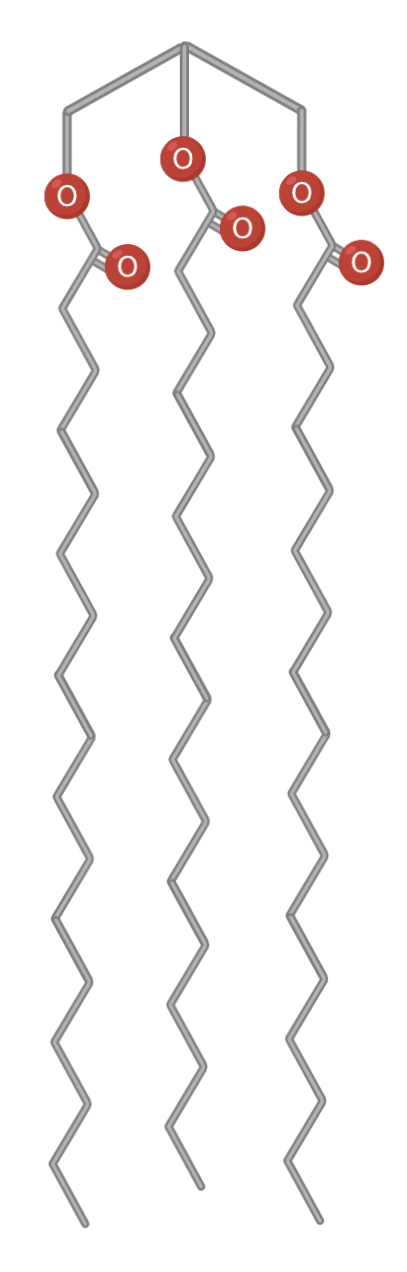
- Animal use triglyceride to store fat.
- Triglyceride is a form of glyceride, a lipid.
- Glyceride is made of glycerol bonded with fatty acids
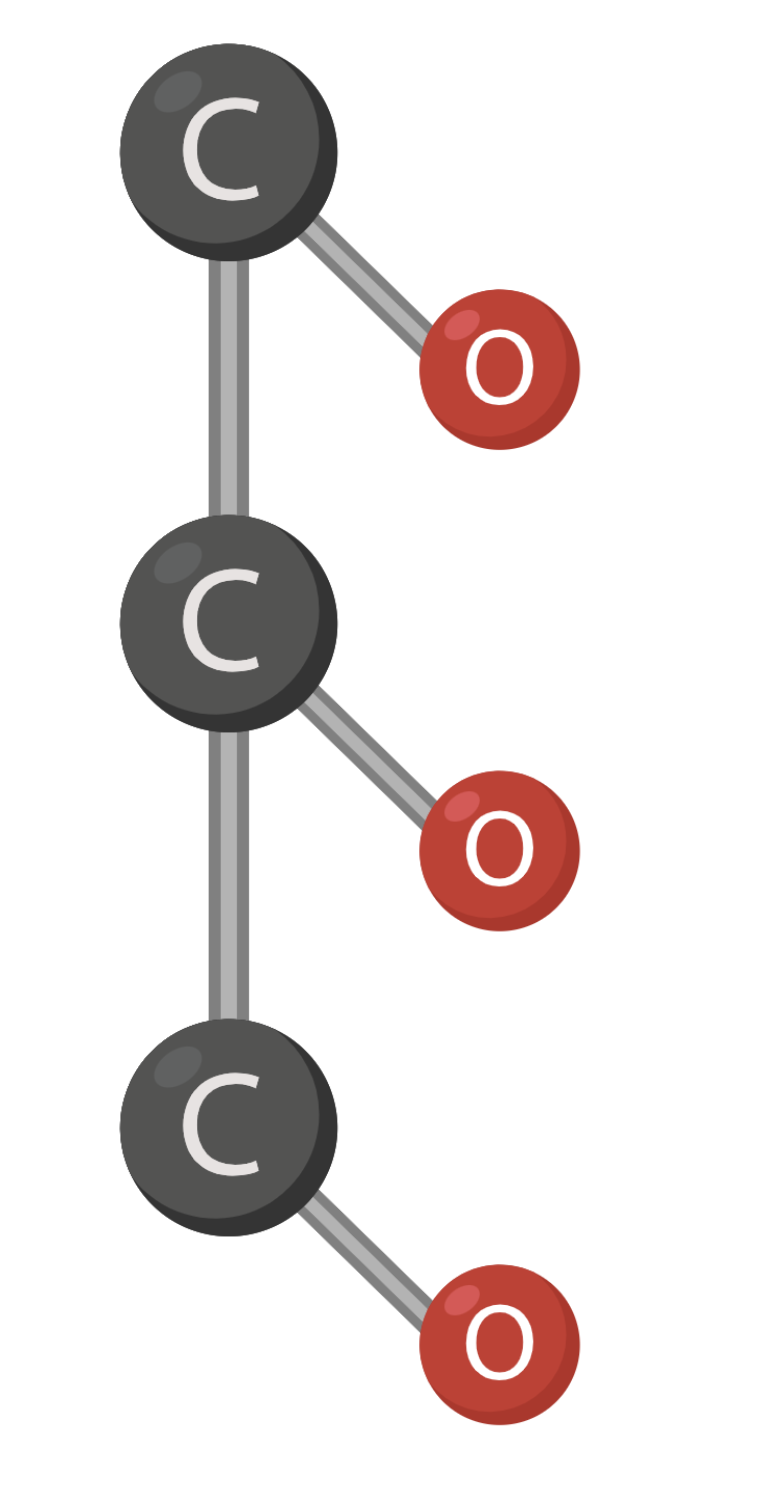
- Glycerol:
- Molecule; chain of three carbons, each with a hydroxyl group
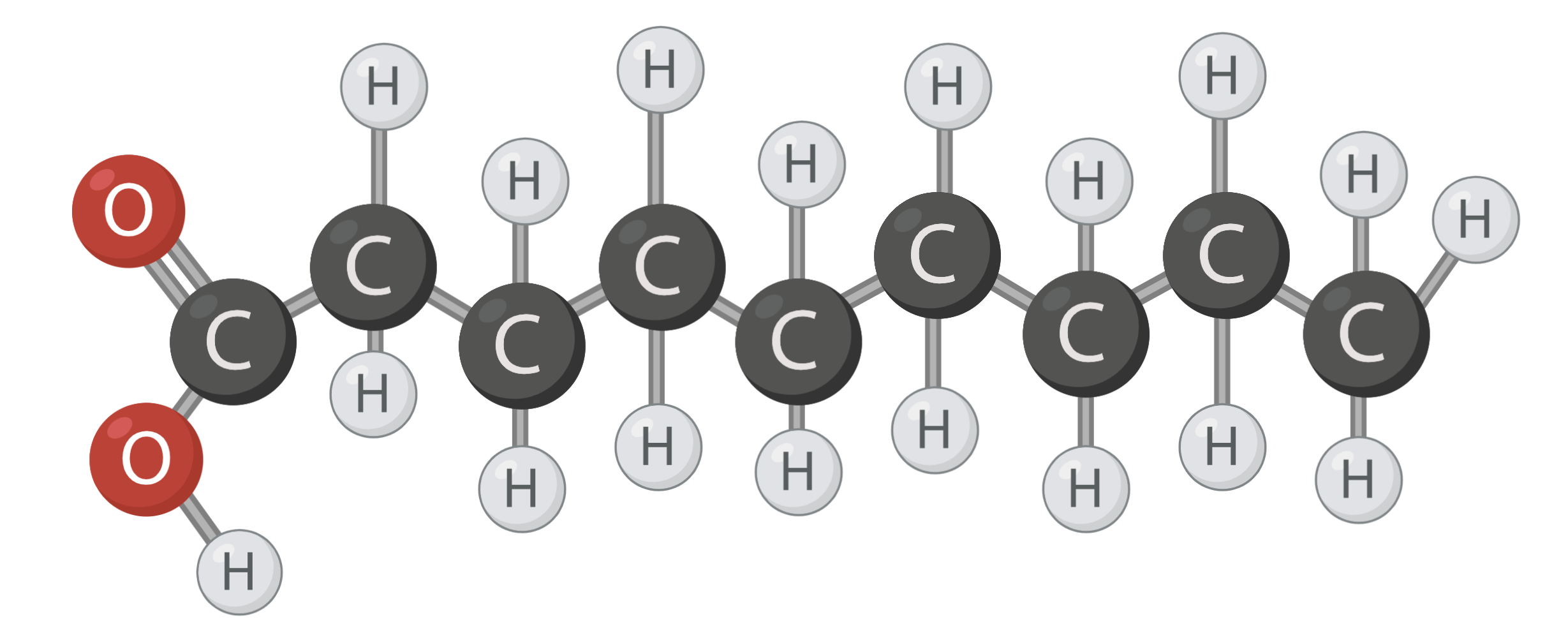
- Fatty Acid:
- Hydrocarbon chain
- Energy dense
- In triglyceride, all three glycerol carbons are bonded with fatty acids
- Glycerol:
Fatty Acids
Saturated fat:
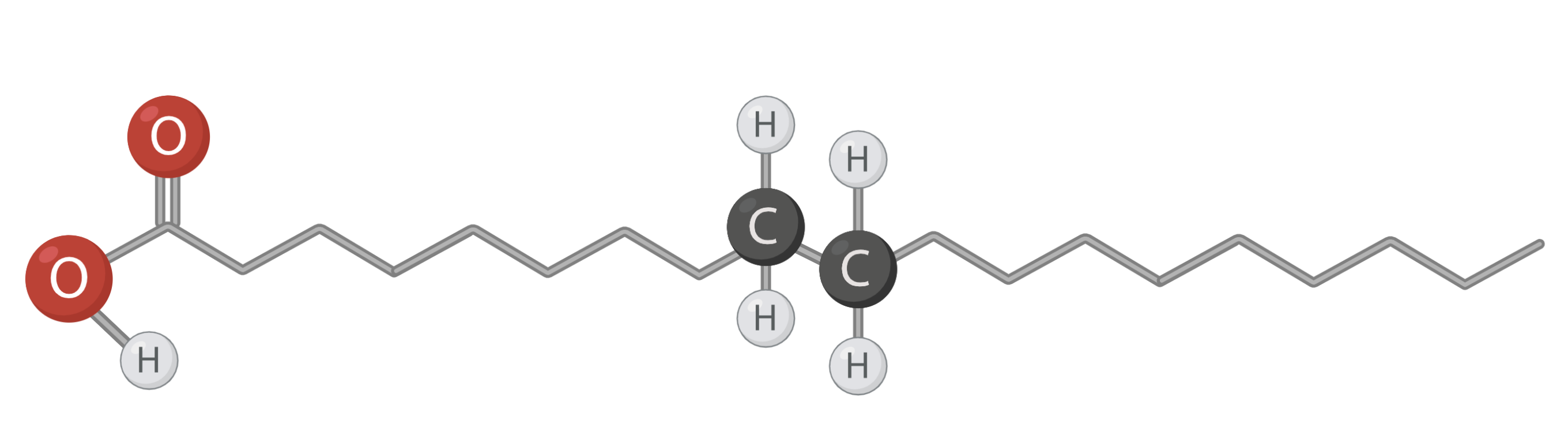
- In a saturated fatty acid, all carbons are bonded to two hydrogens
- This causes the carbon chain to form a straight line
- As the carbon chains are straight lines, the molecules are orderly and solid at room temperature
- Includes most animal fats
Unsaturated fat:
- In an unsaturated fatty acid, some carbons are double bonded to the next carbon, and are only bonded to one hydrogen
- Monounsaturated: There is one instance of unsaturation
- Polyunsaturated: There are multiple instances of unsaturation
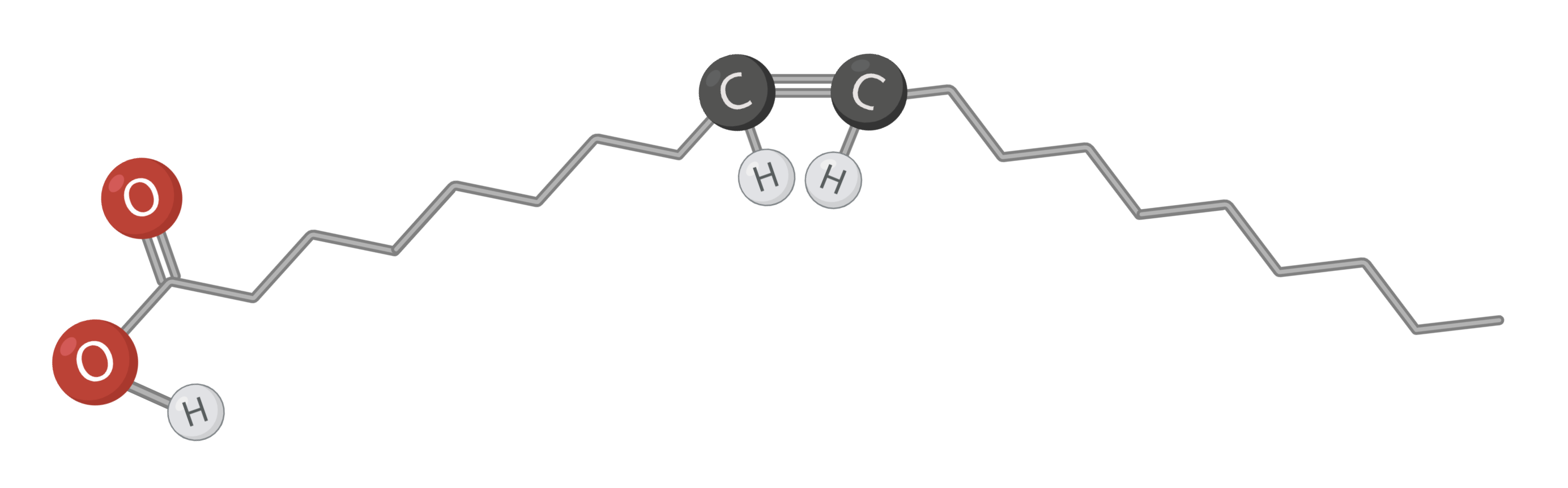
Cis unsaturated fat:
- Most natural unsaturated fatty acids are cis unsaturated: both hydrogens of the doubly bonded carbons are on the same - cis - side of the carbon chain
- This causes a kink - bend - in the carbon chain
- As the carbon chains are not straight lines, the molecules are disorderly and liquid at room temperature
- Includes most plant fats
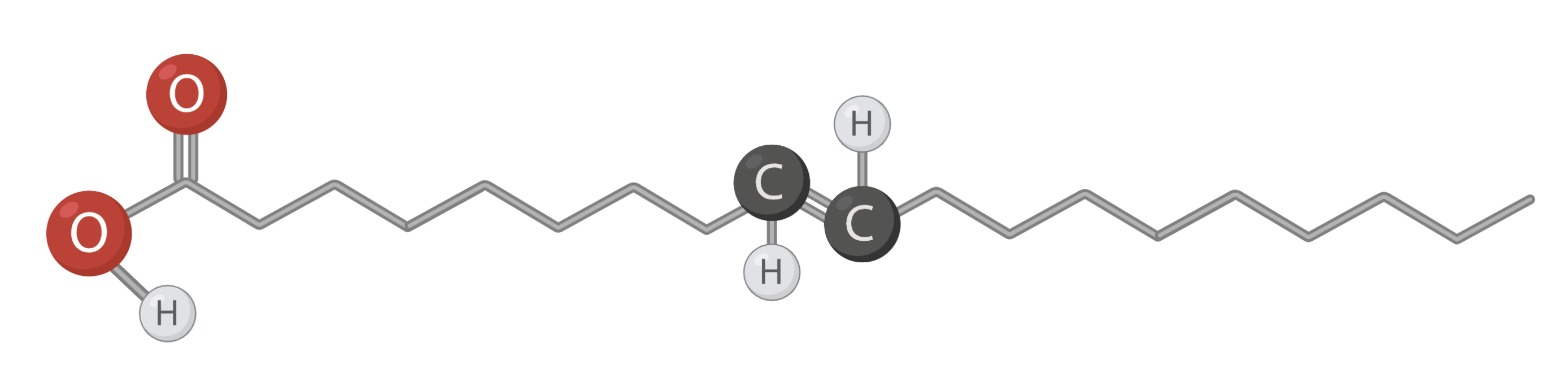
Trans unsaturated fat:
- Unsaturated fat in which the two hydrogens of the doubly bonded carbons are on opposing - trans - sides of the carbon chain
- Mostly man-made, through hydrogenation
- As the hydrogens are on opposite sides, there is no kink in the carbon chain; instead, the chains are straight, like saturated fats, and are orderly and solid at room temperature
Health implications:
- Saturated and trans unsaturated fats can clog arteries due to their capability to clump together
Phospholipid
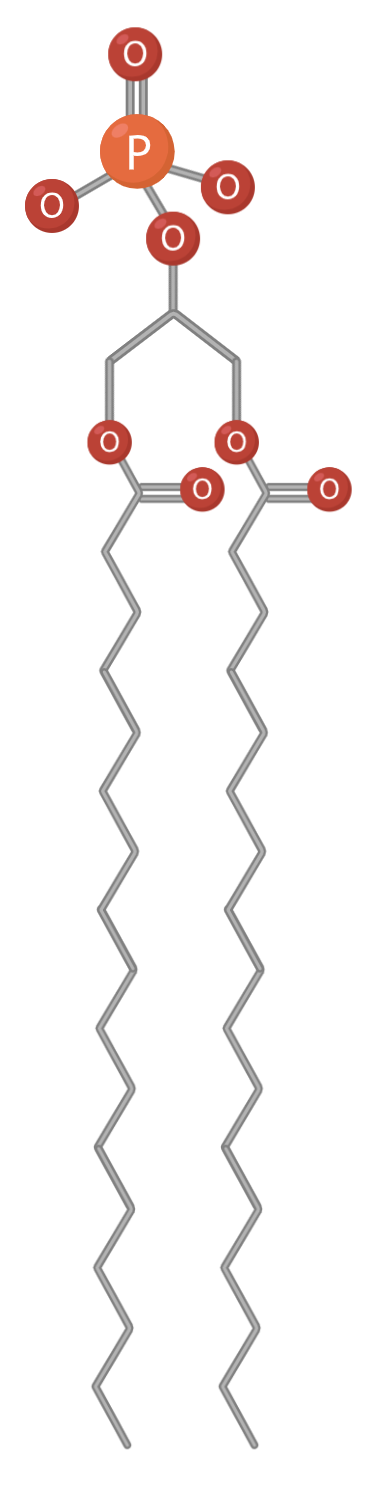
Phospholipid: Forms the cell membrane
Composition:
- Glycerol bonded to two fatty acids and one phosphate group
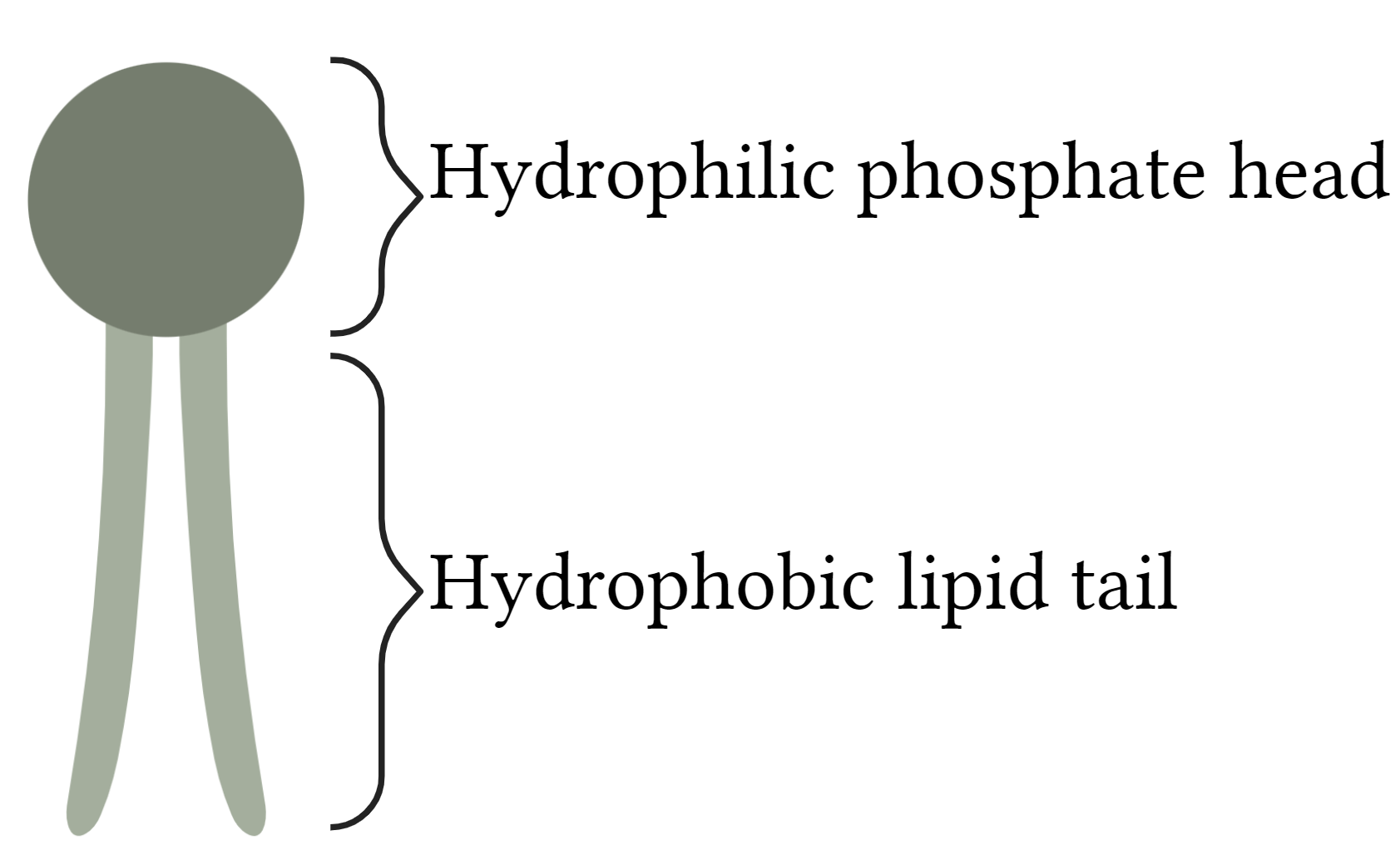
- The lipid tails are hydrophobic and the phosphate group head is hydrophilic
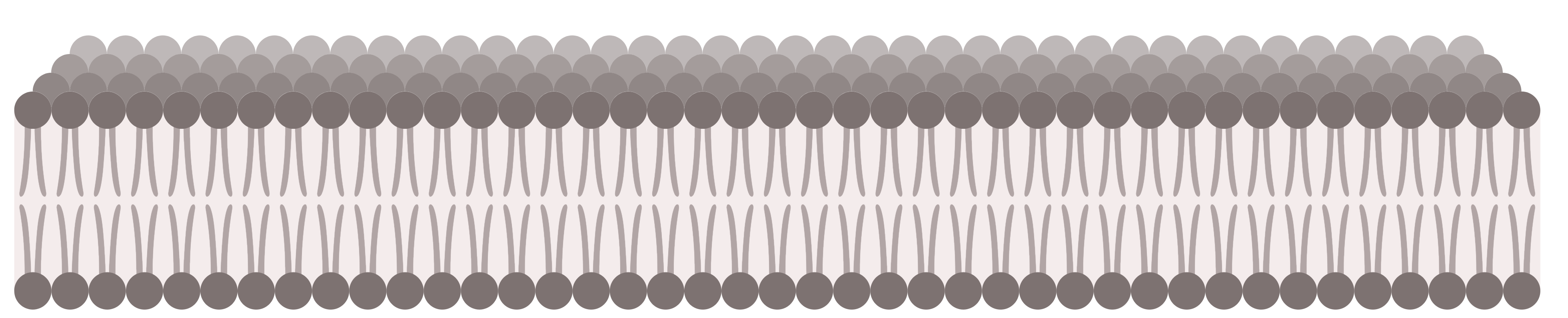
- When placed in water, the phospholipids form a spontaneous bilayer; the hydrophilic phosphate heads turn outwards, towards the water, and the hydrophobic tails turn inwards, away from the water
Steroids
Steroids:
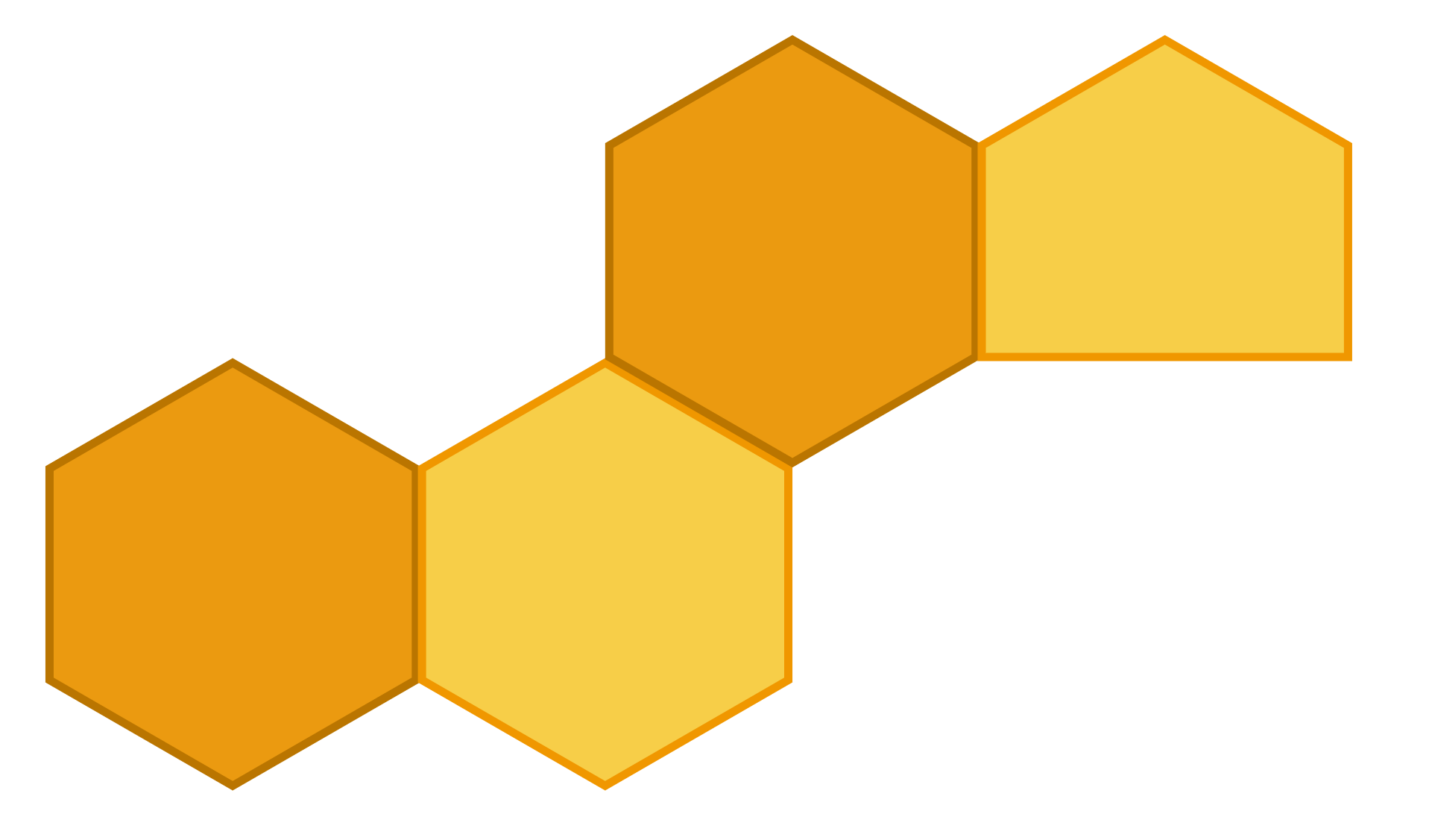
- Contains four fused hydrocarbon rings
- Hydrophobic
- Can contain a side tail
Cholesterol:
- Type of steroid
- Component of many hormones
- Embedded in phospholipid membrane; prevent the phospholipids from being too close or too far from each other
Wax
Wax:
- Form of lipid
- Provides waterproof coating for select plants and animals
Nucleic Acids
Function
Nucleic Acids:
- Store and process generic information
- Includes DNA and RNA
DNA
DNA (deoxyribonucleic acid):
- Stores genetic information
RNA
RNA (ribonucleic acid):
- Performs function related to genetic information processing, including protein synthesis and DNA replication
Monomer
Nucleotide: Nucleic Acid monomer
- DNA and RNA are each composed of four types of nucleic acids. They have three in common and differ in the fourth:
- Both: A (adenine), C (cytosine), G (guanine)
- DNA: T (thymine)
- RNA: U (uracil)
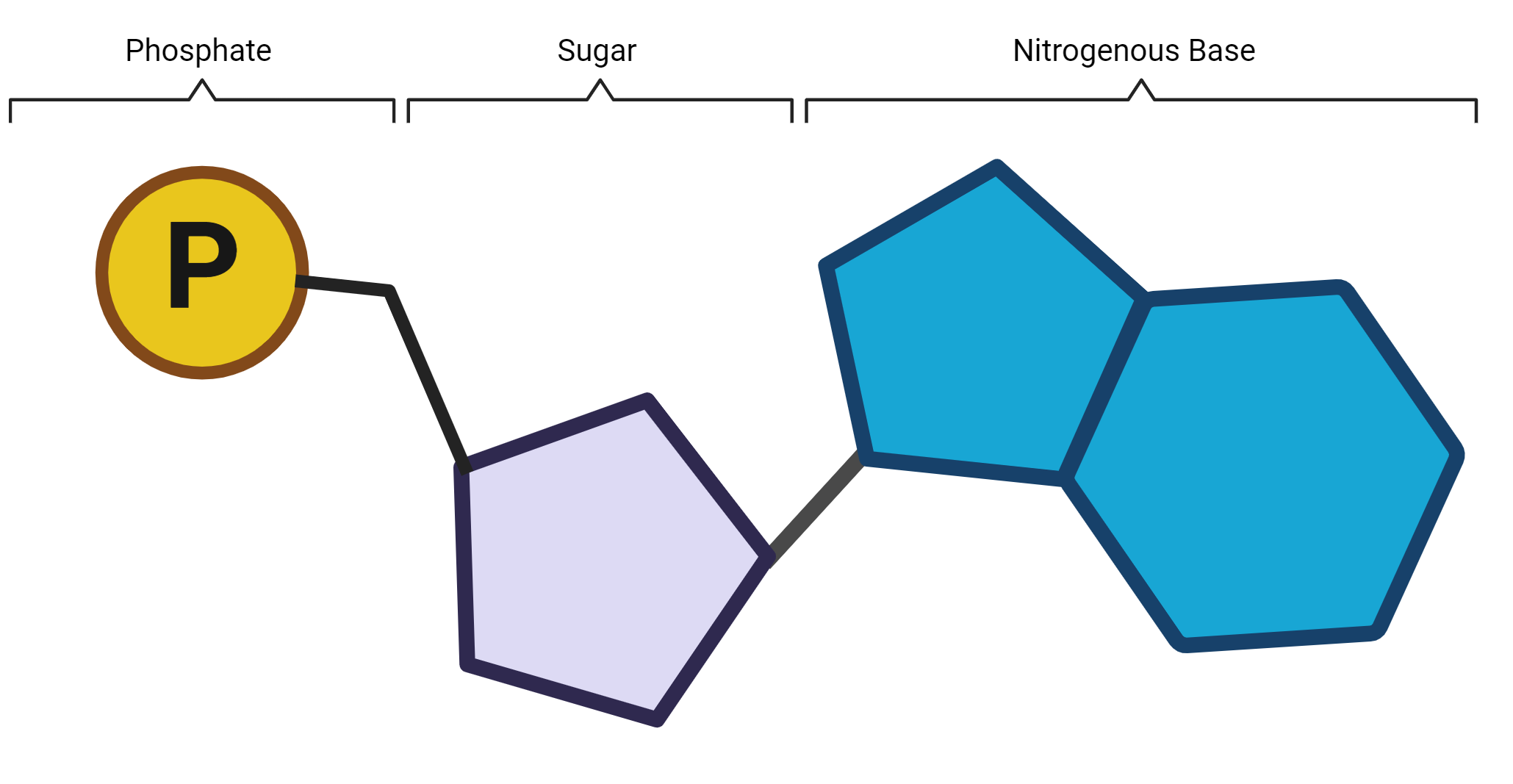
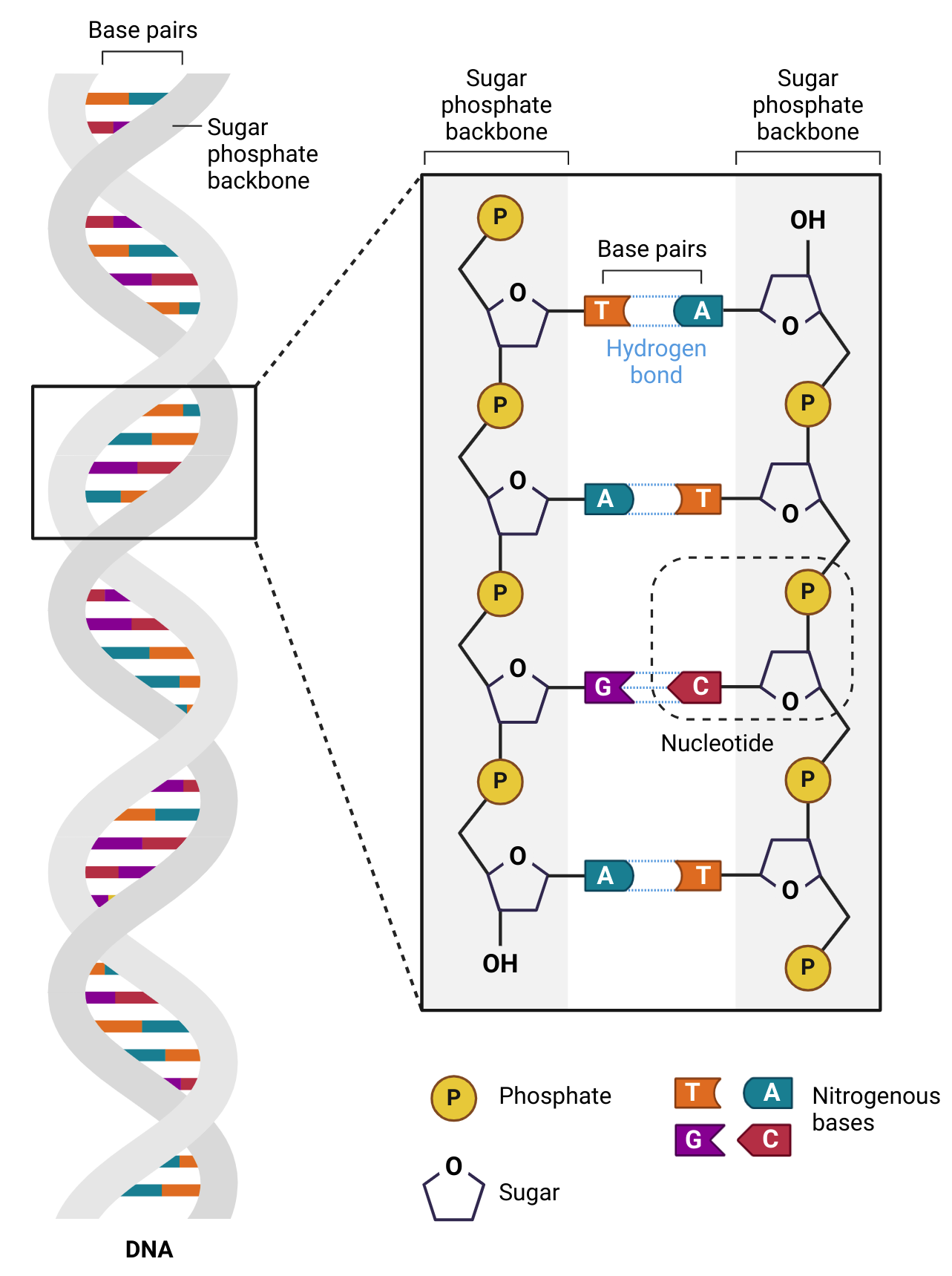
- Nucleotides are composed of a pentose sugar, a phosphate group, and a nitrogenous base
- Pentose sugar: Ribose in RNA; deoxyribose in DNA
- In both DNA and RNA, the four nucleotides (ACGT in DNA, ACGU in RNA) have identical pentoses and phosphate groups, however, the nitrogenous base differs between them. The nitrogenous base is what gives each type of nucleotide its individual identity and unique properties.
Polymerization
Polynucleotide: Chain of multiple bonded nucleotides
- The phosphate group of one nucleotide bonds with the pentose of the next.
- This pentose-phosphate chain form the polynucleotide backbone
- The nitrogenous bases are projected from the backbone
- The specific sequence of nitrogenous bases are what give each DNA molecule its individual identity and unique properties; the genetic information is encoded in the nitrogenous base sequence
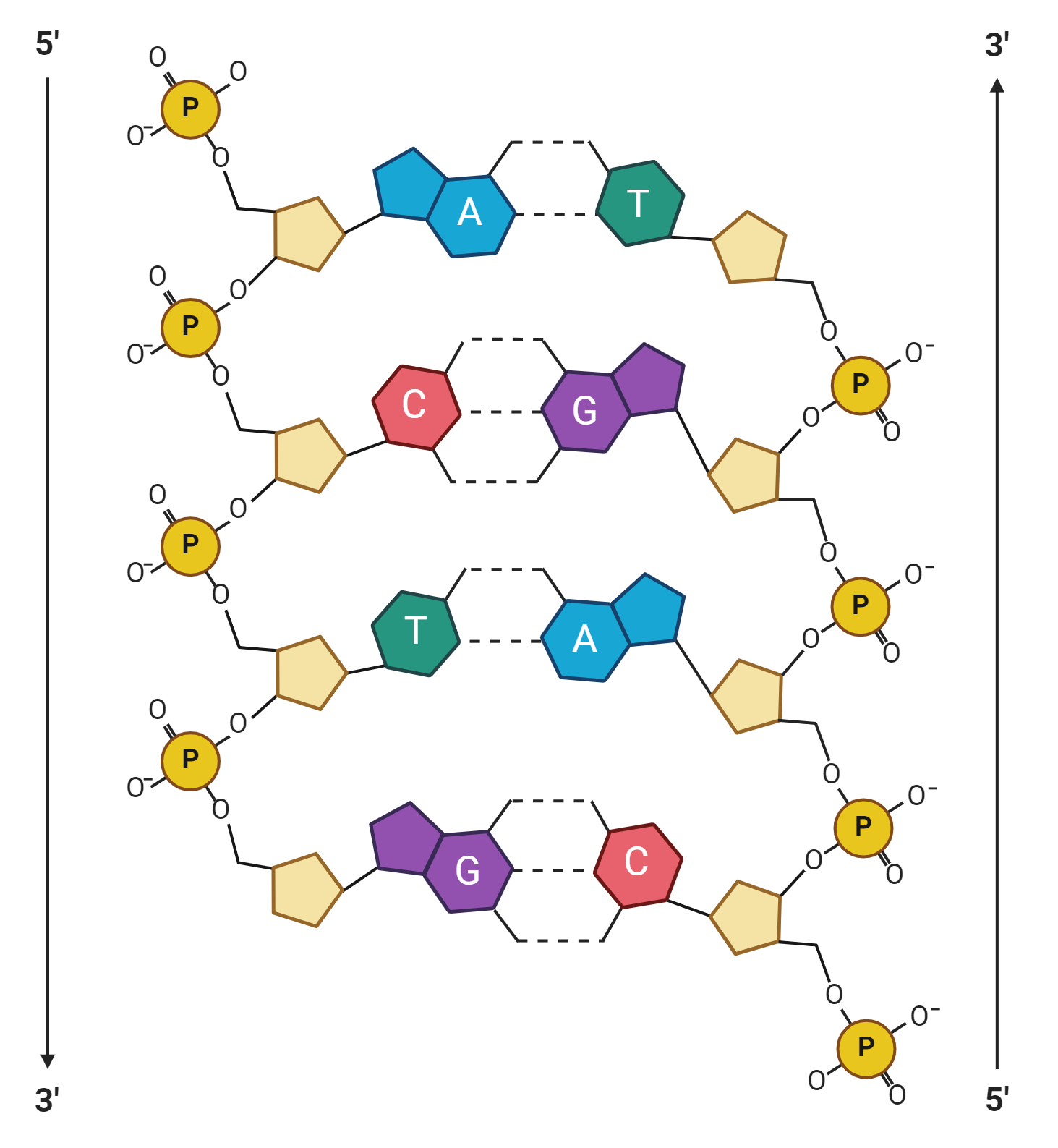
Phosphodiester Linkage: Phosphate group linking the pentose of two nucleotides
- The phosphate group bonds with the 5th carbon of the first nucleotide and the 3rd carbon of the next
- Then, another phosphate group bonds with the 5th of the second and the 3rd of the 3rd, and so on down the chain
- The first nucleotide, to which the phosphate is attached to its 5th carbon, is referred to as the 5-end; the last, to which the phosphate is attached to its 3rd carbon, is referred to as the 3-end
Structure
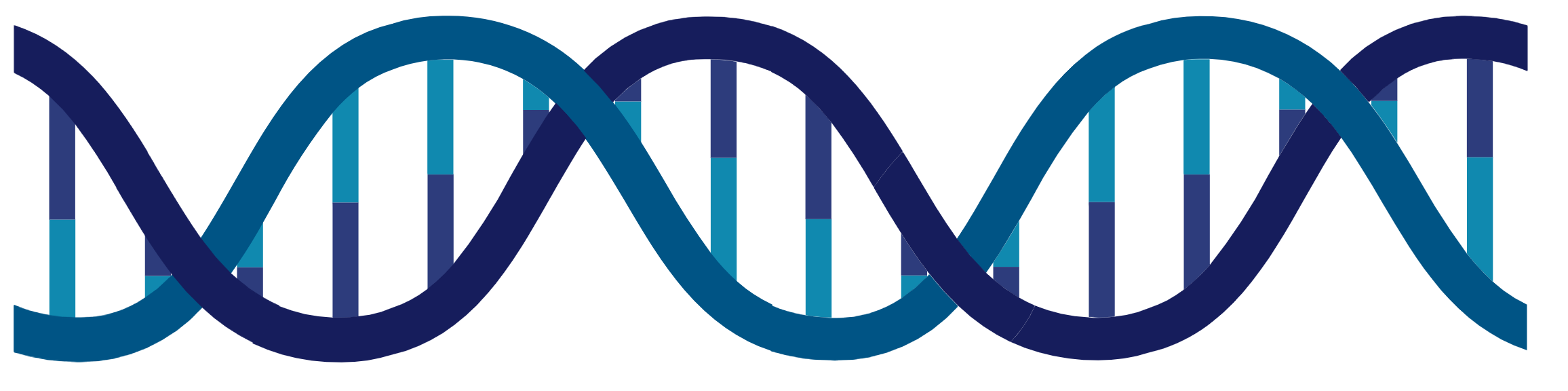
Various forces between the nucleotide’s pentose-phosphate backbone cause the polynucleotide chain to twist in a helix structure
DNA Structure:
- DNA has a second polynucleotide chain running reversely parallel to the first; the second has opposite 5 and 3 ends
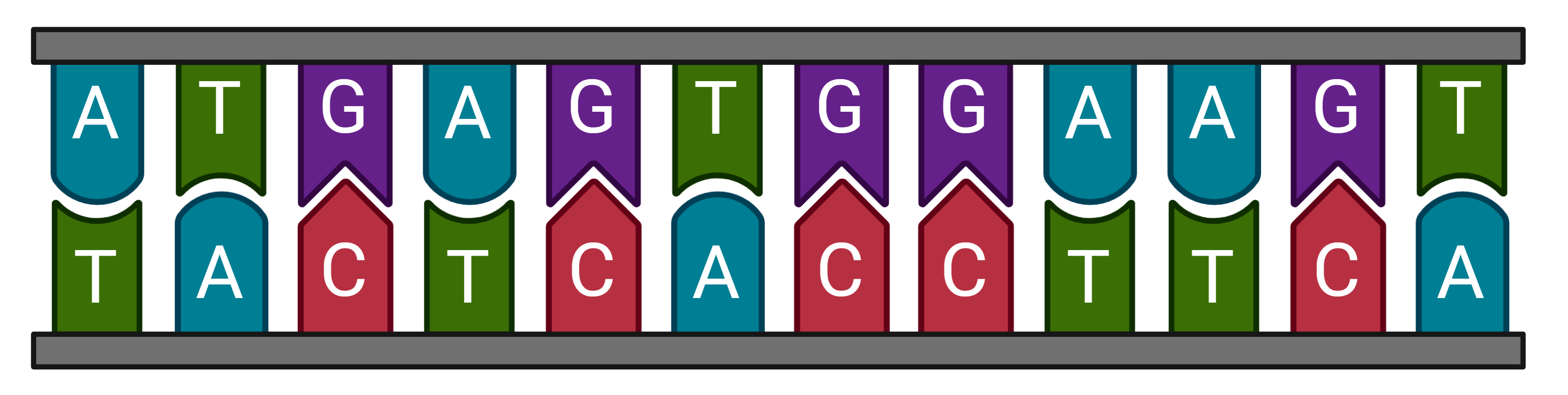
- The nitrogenous groups of each polynucleotide bonds with the corresponding nitrogenous groups of the opposing polynucleotide
- This is a selective process; each type of nucleotide will only bond with a specific type of second nucleotide
- A (adenine) must have a corresponding T (thymine) in DNA and U (uracil) in RNA, and vice versa
- C (cytosine) must have a corresponding G (guanine), and versa vice
Central Dogma of Life
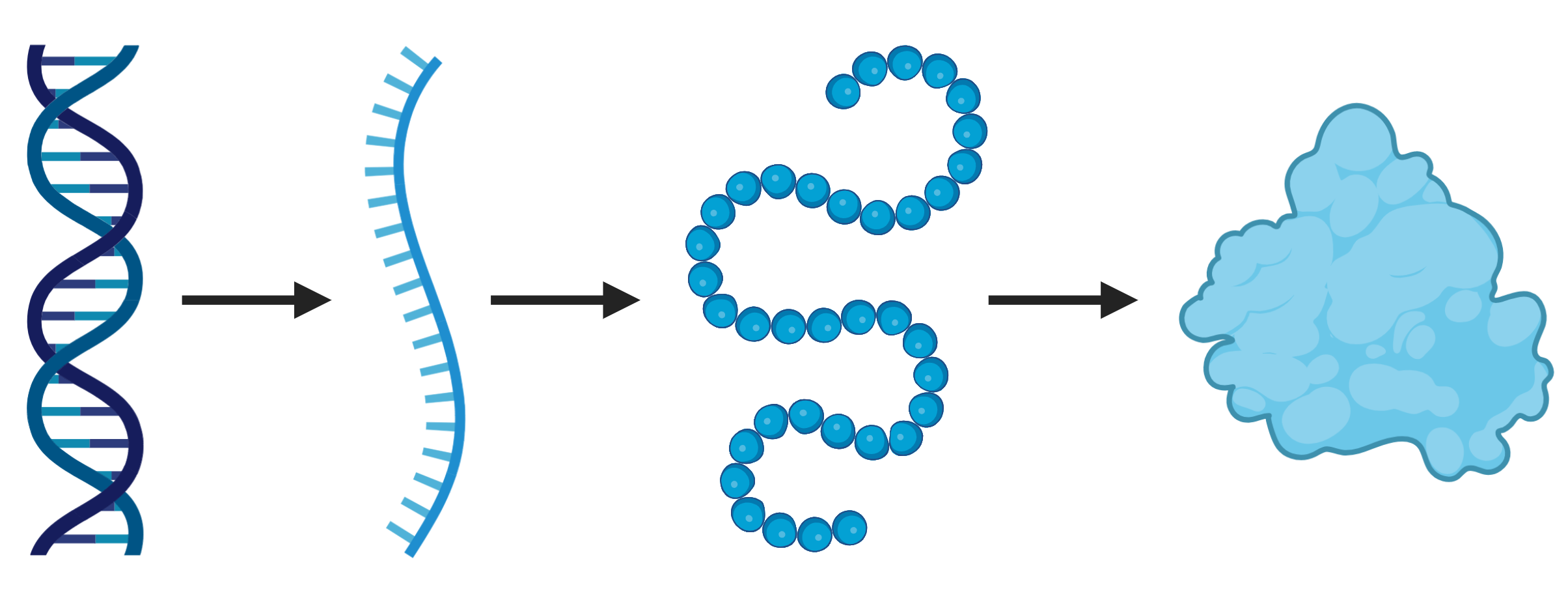
The central dogma of life describes the process of cellular information:
- DNA stores the genetic information
- Transcription: DNA information is transcribed to RNA
- Translation: RNA information is translated as specific protein formation
- The specific proteins perform specific functions, ultimately carrying out the information from the DNA
Schematics
Protein
-
Amino Acid
-
Types of amino acids
-
Amino Acid Dehydration Synthesis
-
Peptide bond
-
Amino Acid Chain
-
Primary Structure
-
$\alpha$ helix
-
$\beta$ pleated sheet
-
Tertiary Structure
-
Quaternary Structure
Carbohydrates
- Monosaccharide structure
- Linear monosaccharide chain
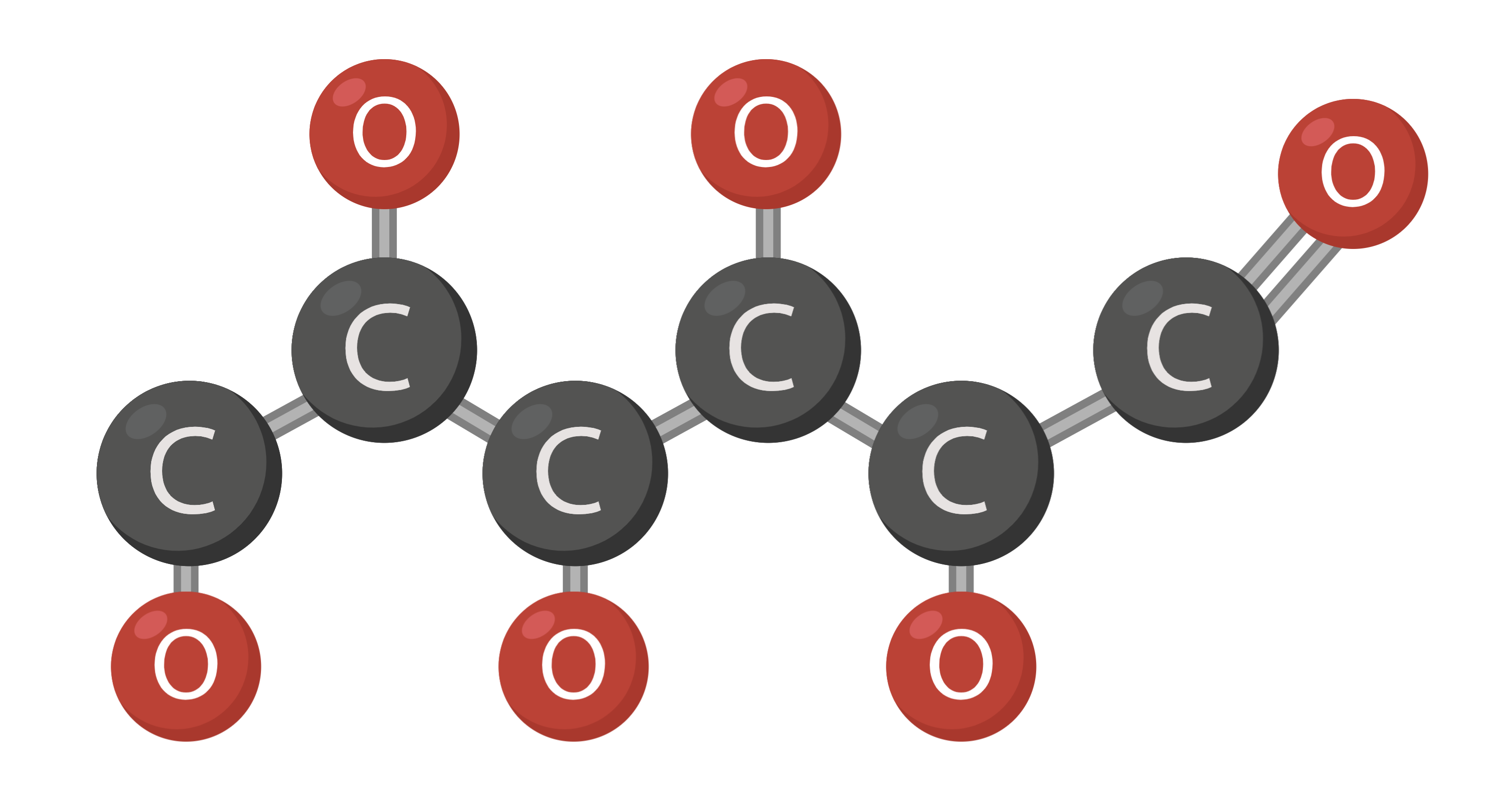
- Chain of carbons
- Each carbon is attached to an oxygen (alcohol group), with one carbon doubly bonded (carbonyl)
- Monosaccharide ring
- In most biological (aqueous) environments, monosaccharide chains form rings
- One of the carbonyl oxygen’s bonds is instead formed with one of the other carbons, forming a ring
- The carbon that forms a new bond with the oxygen, forming the ring, is generally not the last carbon in the chain. This leaves the remaining carbons branched off of the ring.
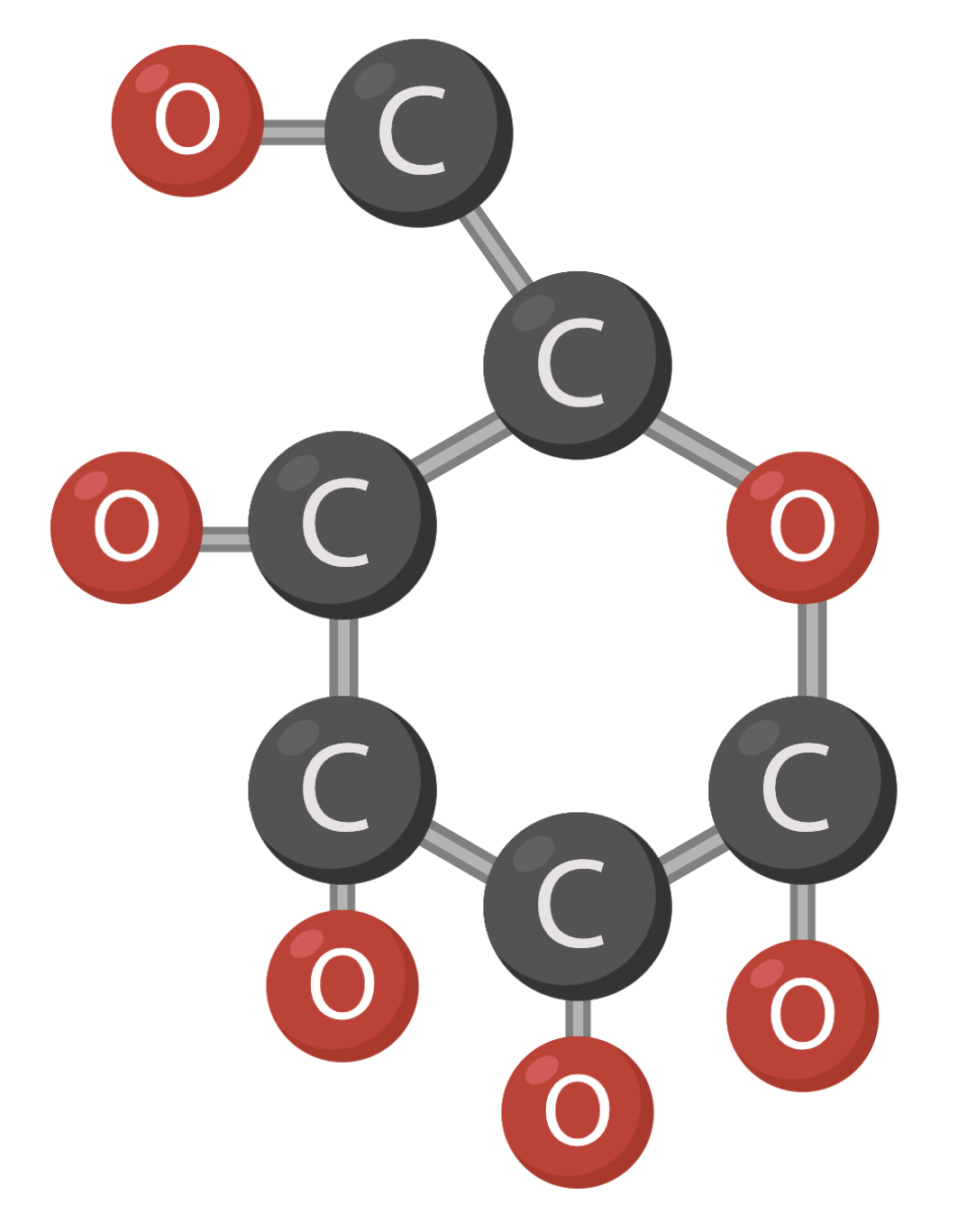
- Linear monosaccharide chain
- Monosaccharides
-
Glucose

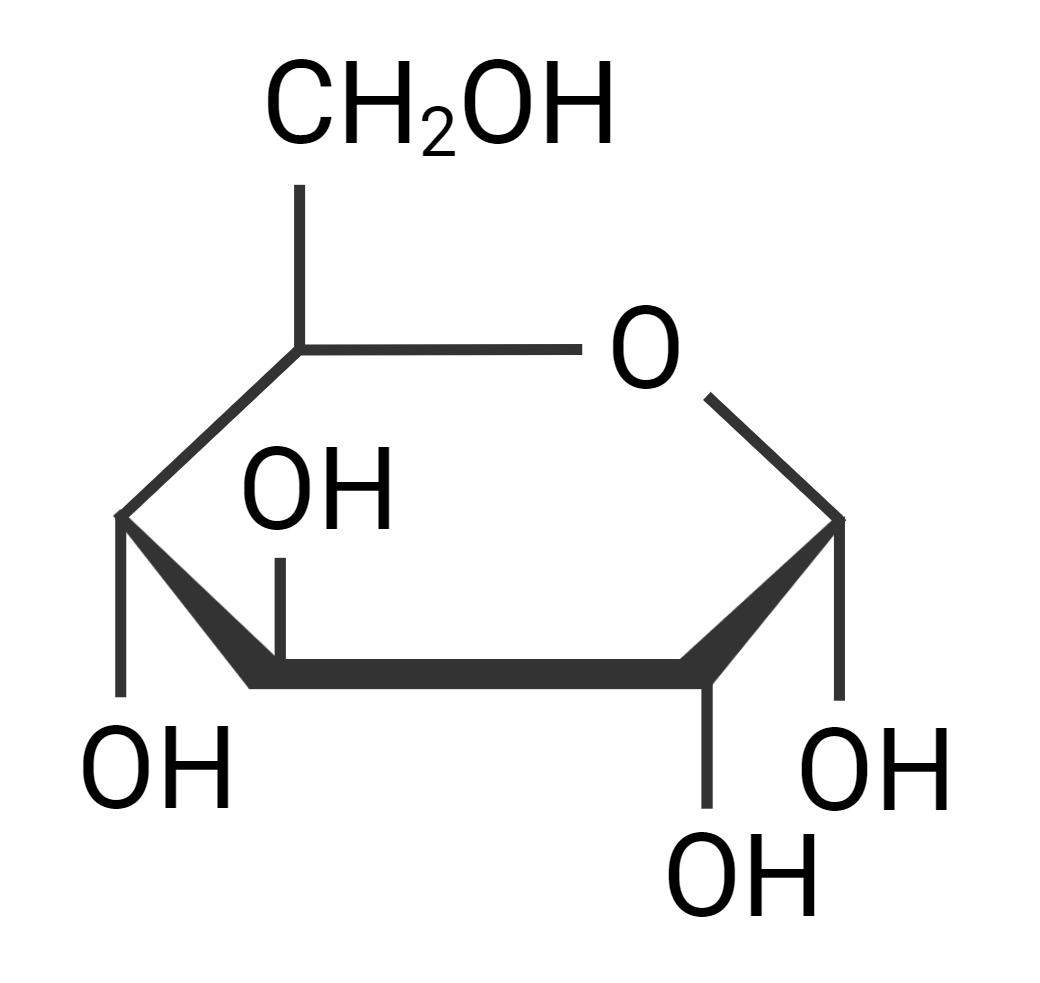
-
Fructose

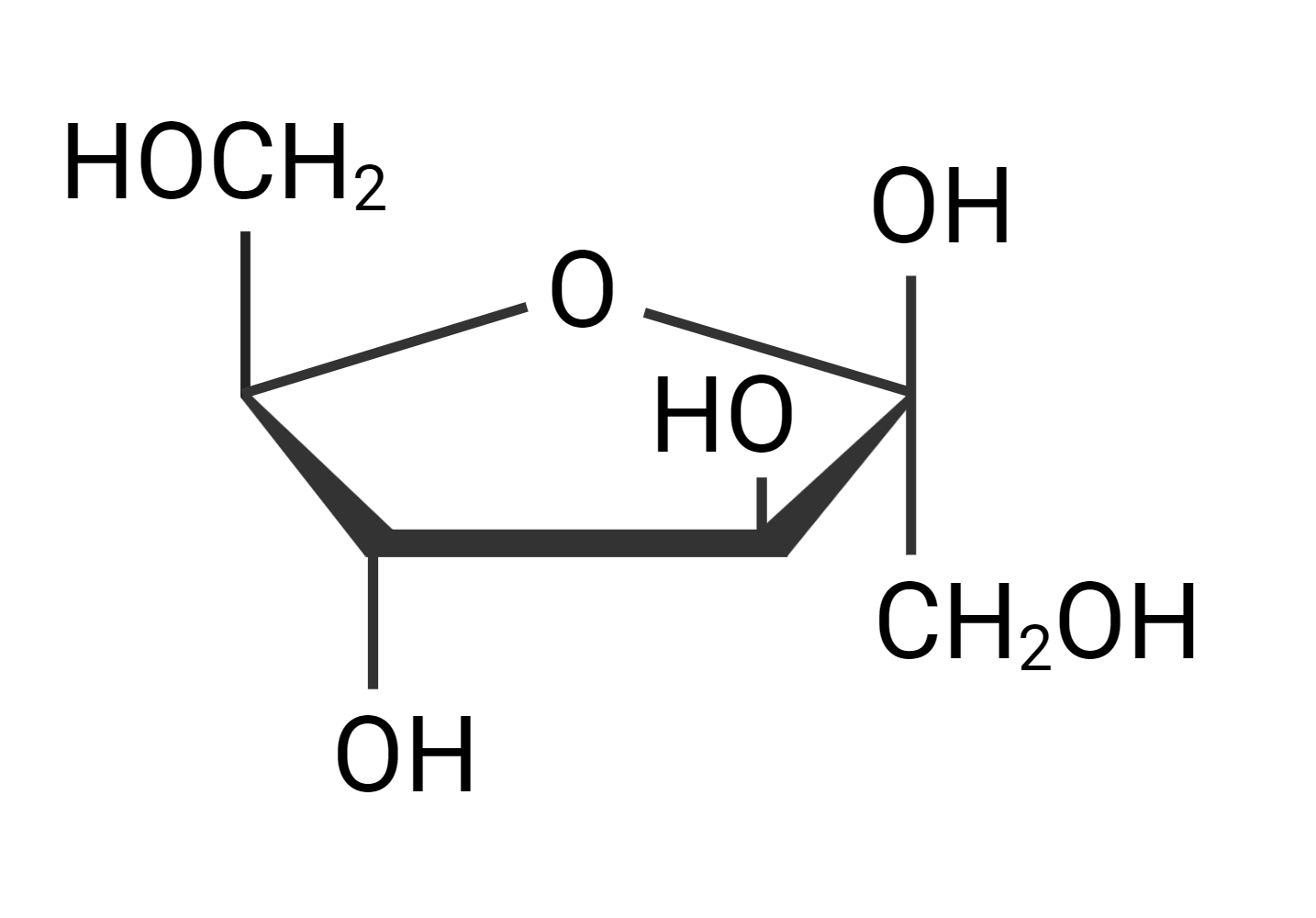
-
Galactose

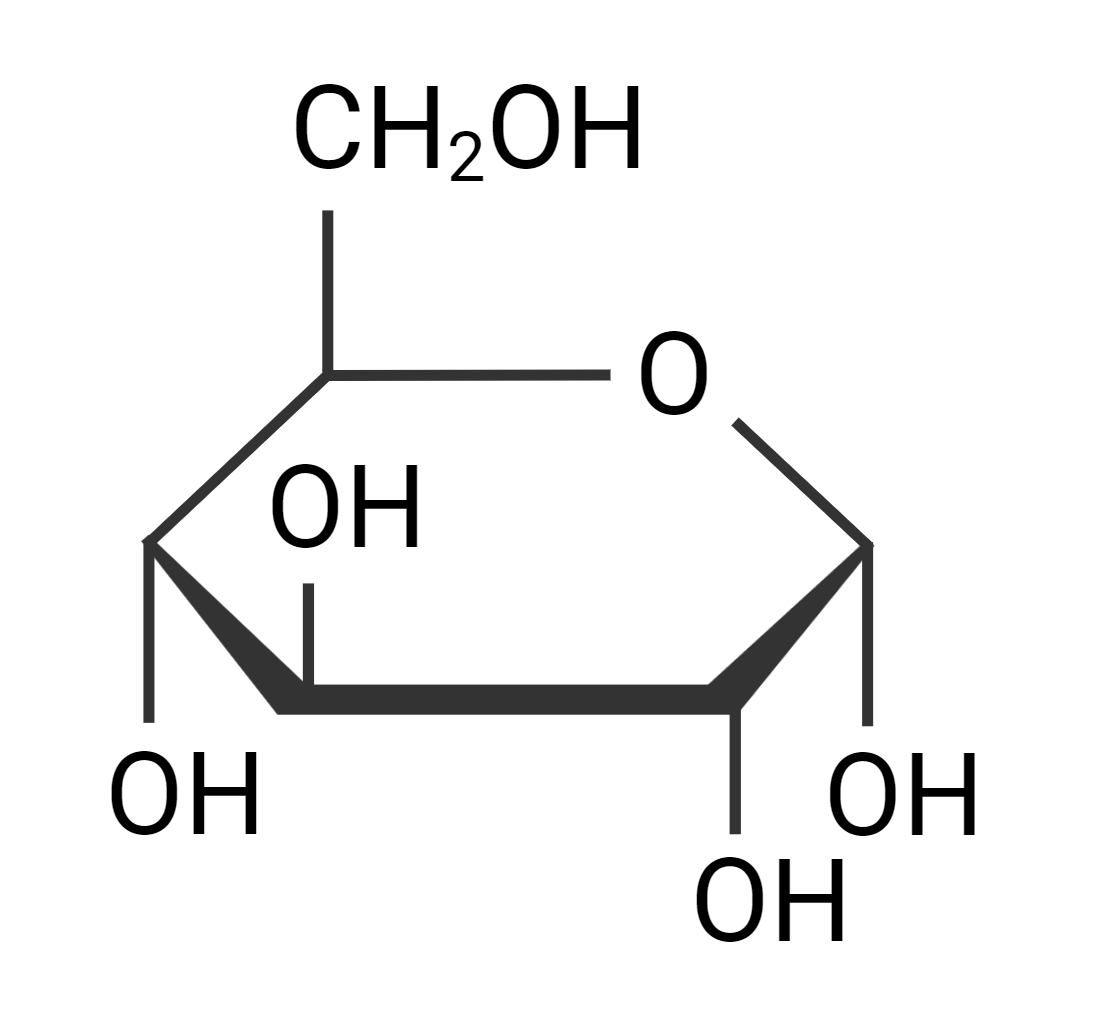
-
- Disaccharide
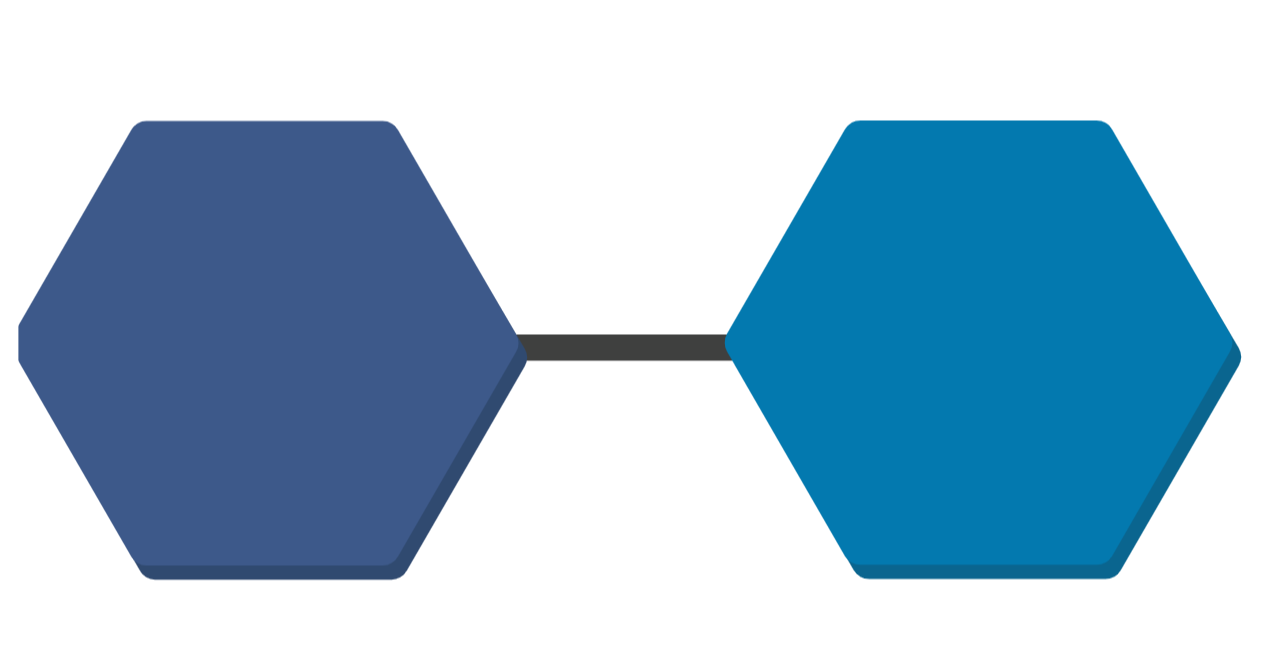
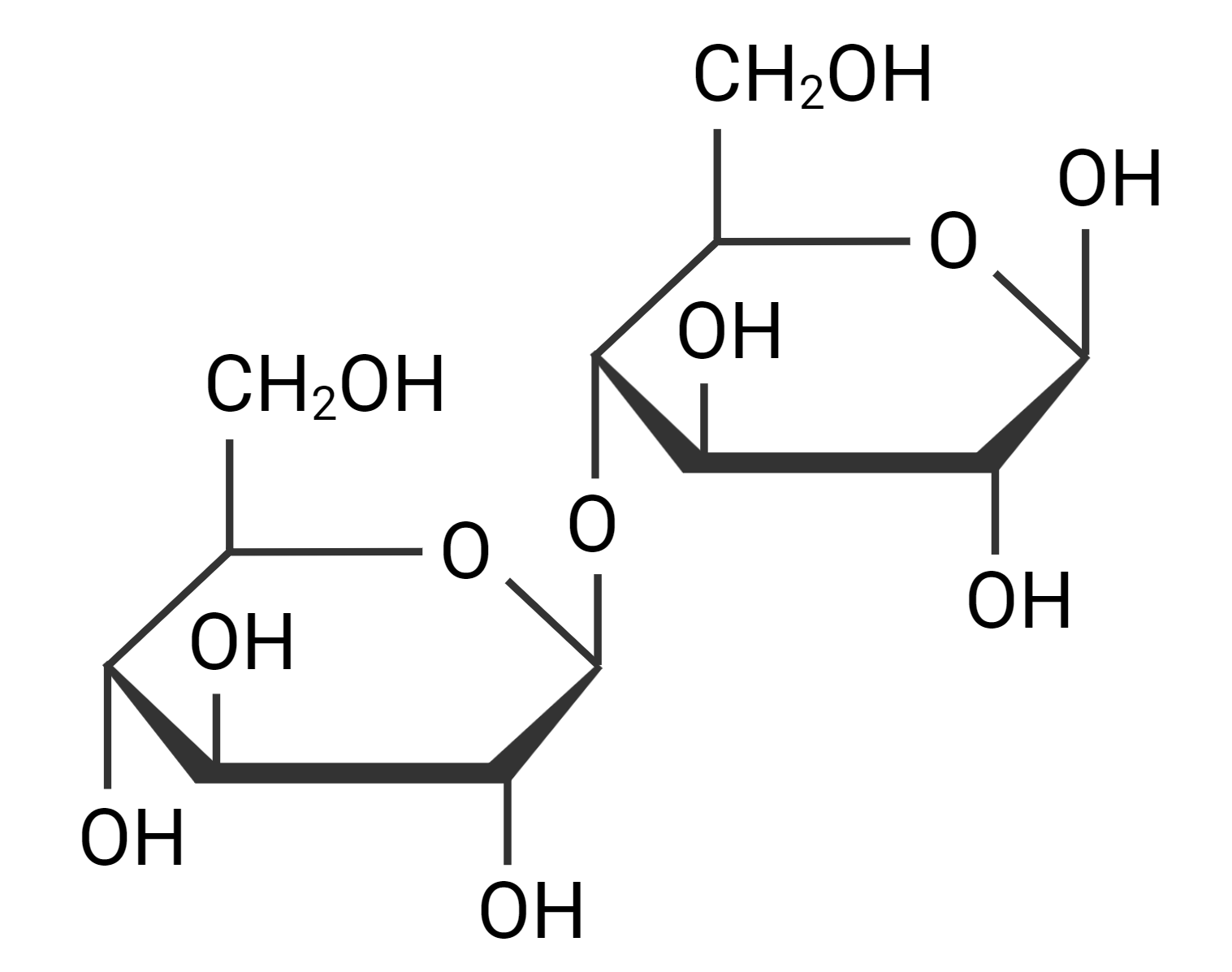
- Lactose
- Disaccharide
- Glucose + galactose
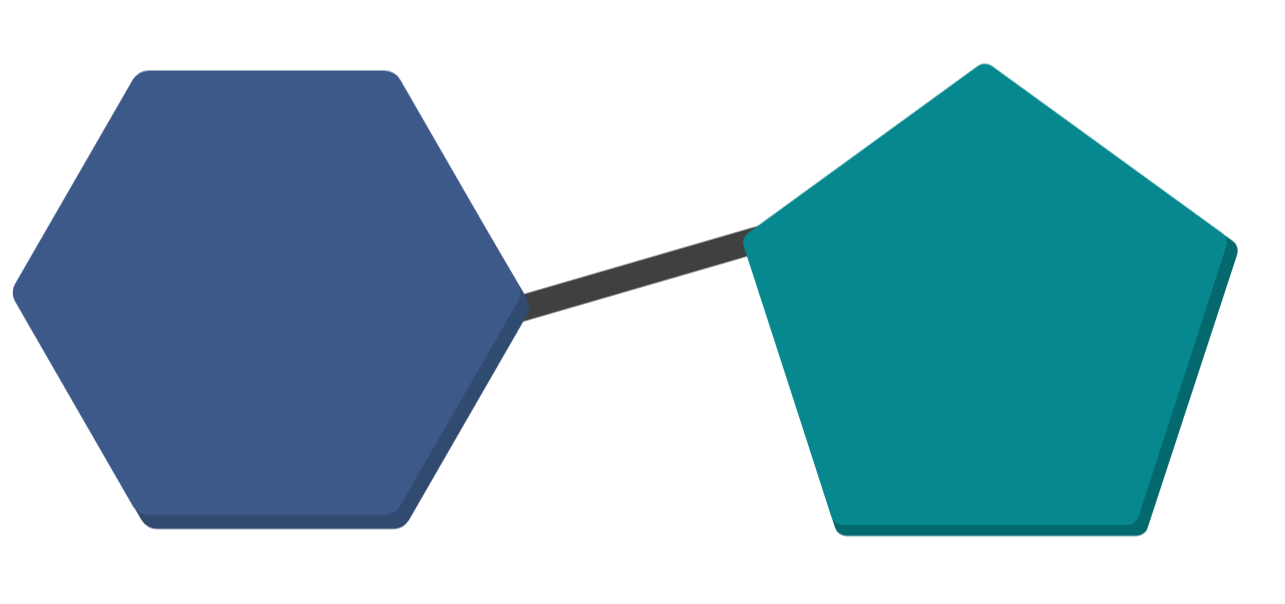
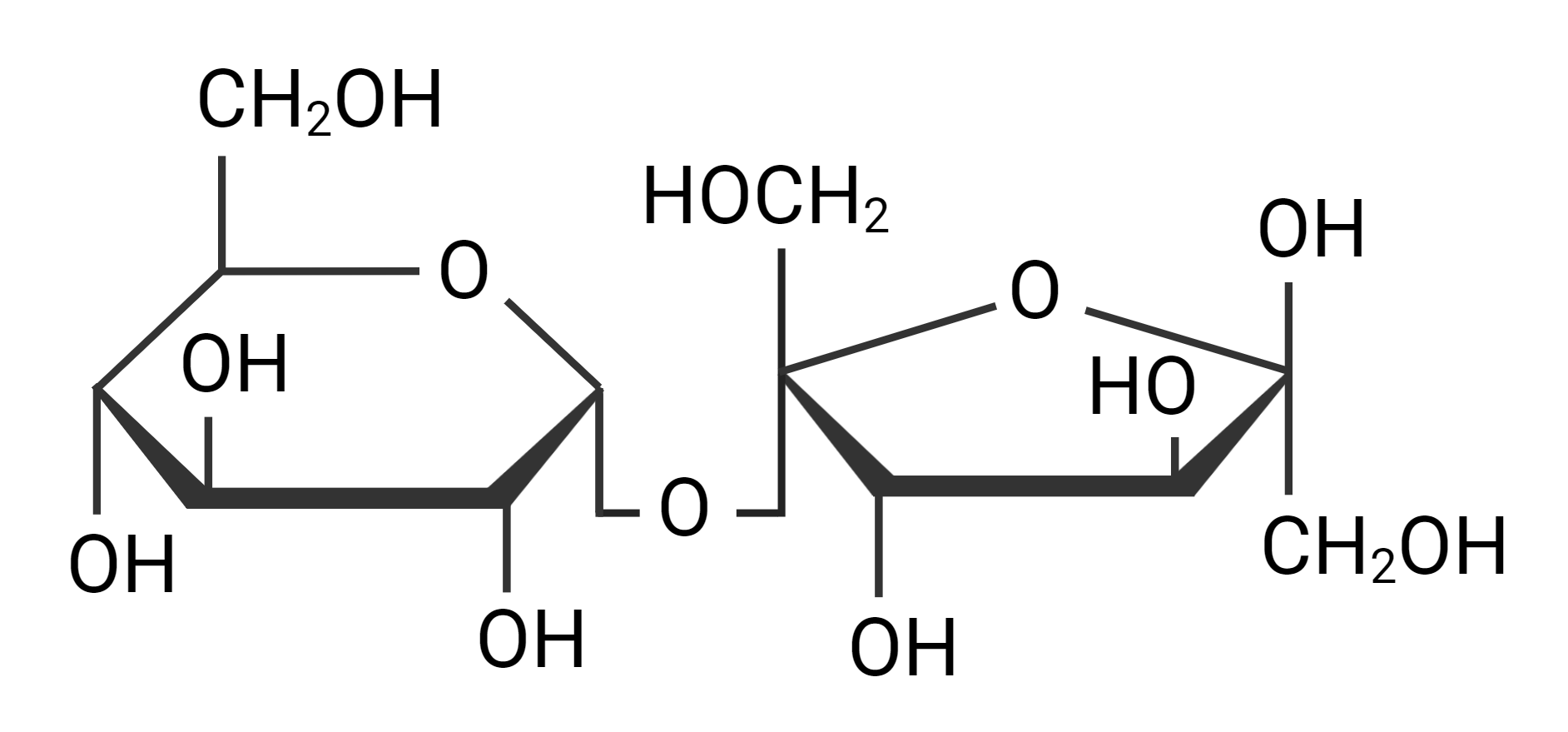
- Sucrose
- Disaccharide
- Glucose + fructose
- Lactose
-
Polysaccharide

Lipids
-
Glycerol
-
Fatty Acid
- Glyceride
- Triglyceride
- The fatty acid’s carboxyl head bonds with one of the glycerol’s oxygens, bonding the carbonyl with the glycerol’s carbon through dehydration synthesis
-
Saturated fatty acid
-
Cis unsaturated fatty acid
-
Trans unsaturated fatty acid
- Triglyceride
- Phospholipid
-
Phospholipid structure
-
Phospholipid properties
-
Phospholipid bilayer
-
-
Steroid
Nucleic Acid
-
Nucleotide
-
RNA strand

-
RNA bases

-
DNA strand
-
DNA bases
-
DNA structure
-
DNA directional structure
Central Dogma; Overview
-
DNA → RNA → Polypeptide chain → Folded protein