Chapter 4: Tour of the Cell
Unified Cell Theory
Unified Cell Theory
Unified Cell Theory:
- Cells are the most basic unit of life
- All living things are composed of cells
- Cells only develop from other cells
Types of Cells
Prokaryotes vs Eukaryotes
There are two types of cells: Prokaryotes and Eukaryotes
Both have:
- DNA
- Ribosome
- Cell Membrane
- Cytoplasm
Prokaryotes:
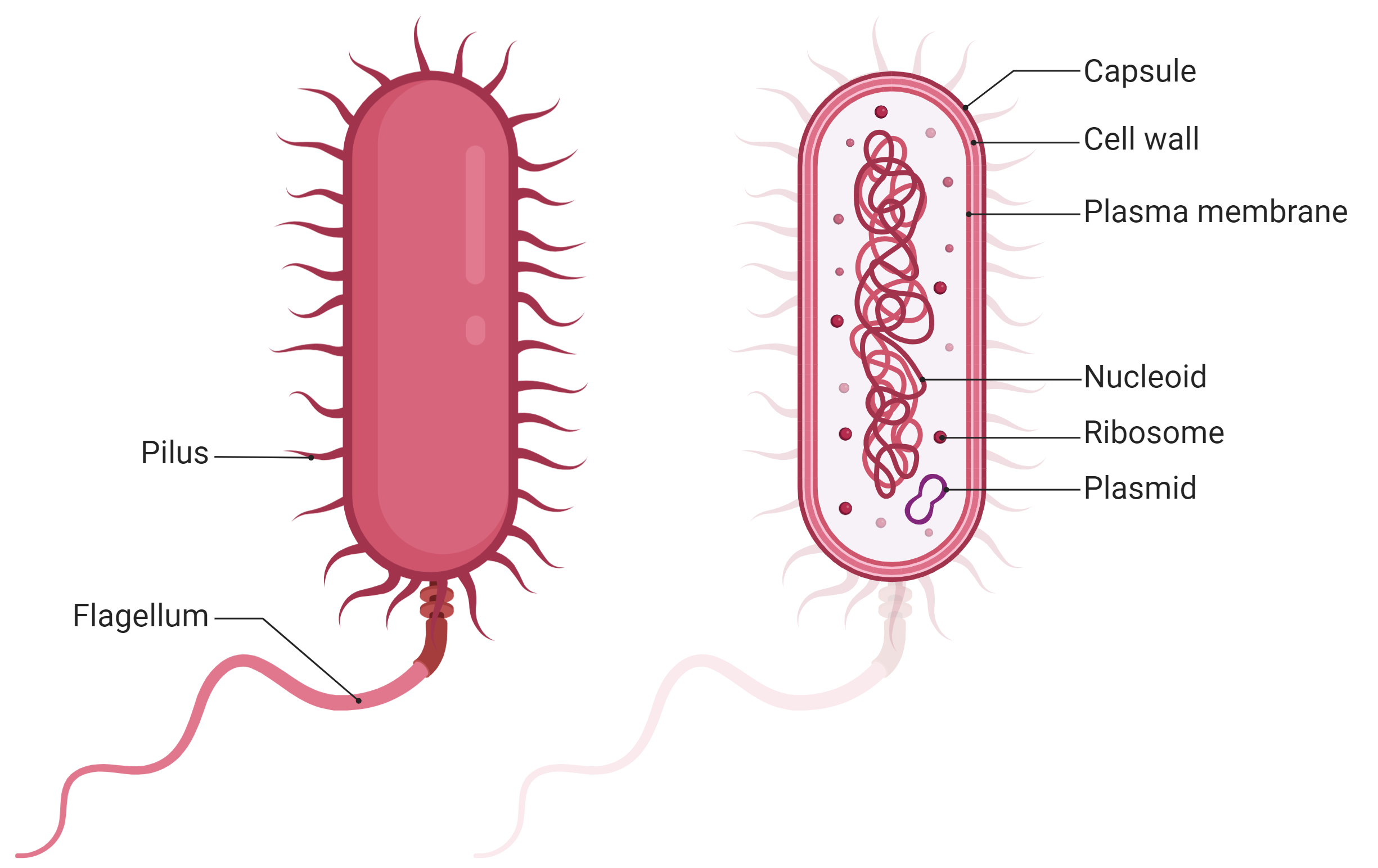
- DNA is not in a nucleus, rather in the nucleoid region
- No membrane bound organelles
- Includes bacteria and archaea
Eukaryotes:
- DNA is in a nucleus
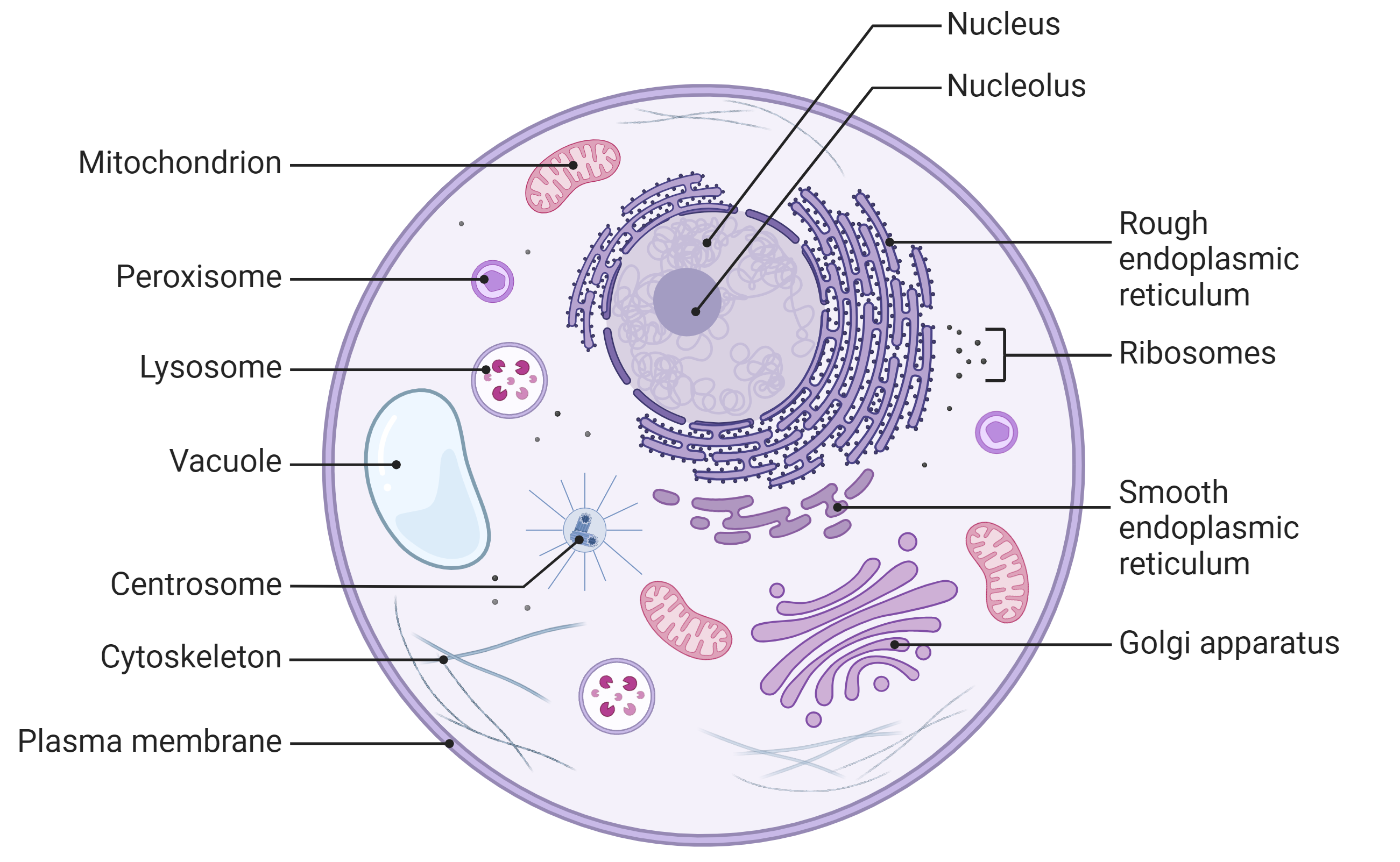
- Has membrane bound organelles
- Includes plants, animals, fungi and protists
Plants vs Zombies
- Animals have:
- Lysosome
- Centriole
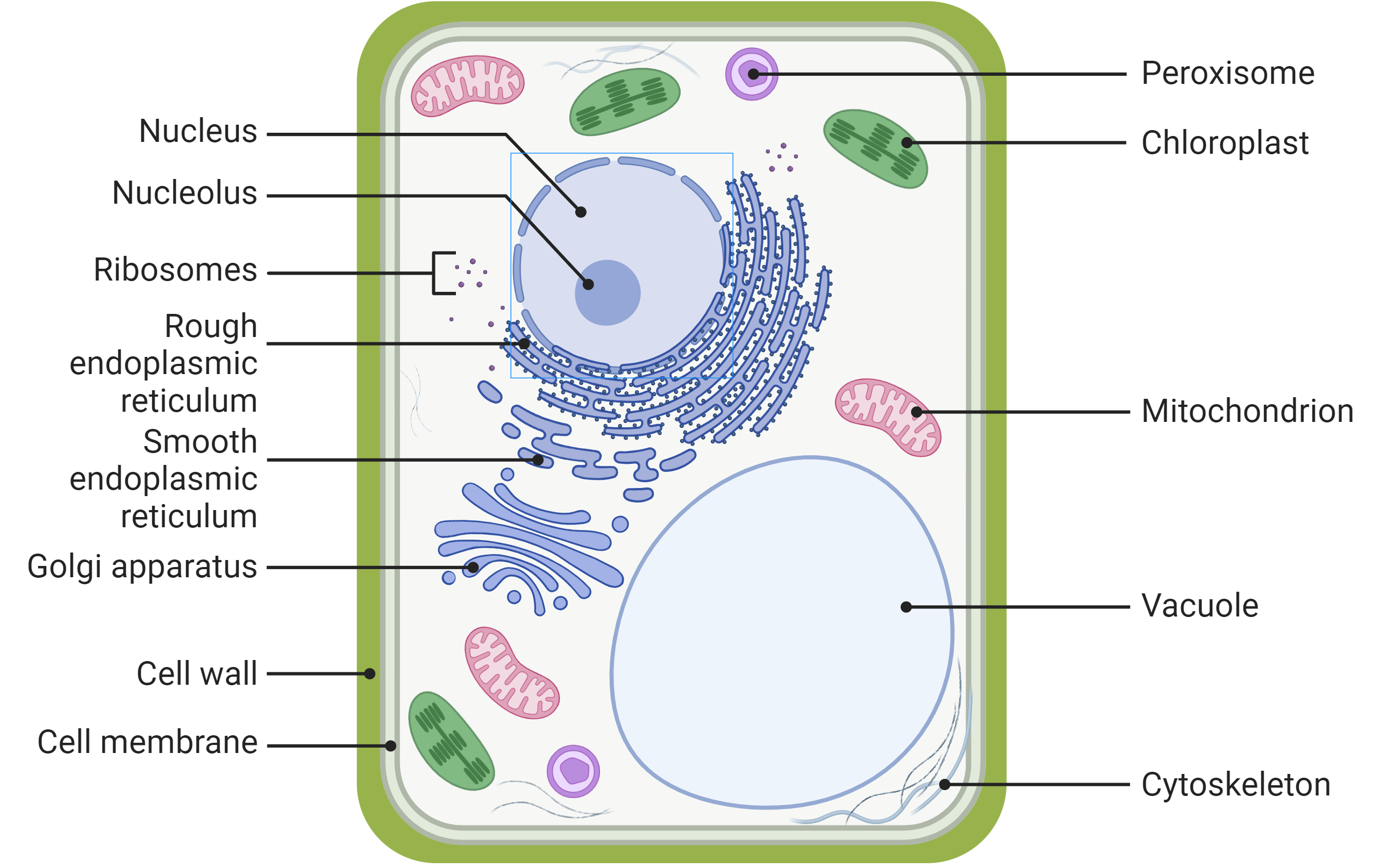
- Plants have:
- Chloroplast
- Central Vacuole
- Cell wall
DNA, Ribosomes
Central Dogma of Life
The central dogma of life describes the process of cellular information:
- DNA stores the genetic information
- Transcription: DNA information is transcribed to RNA
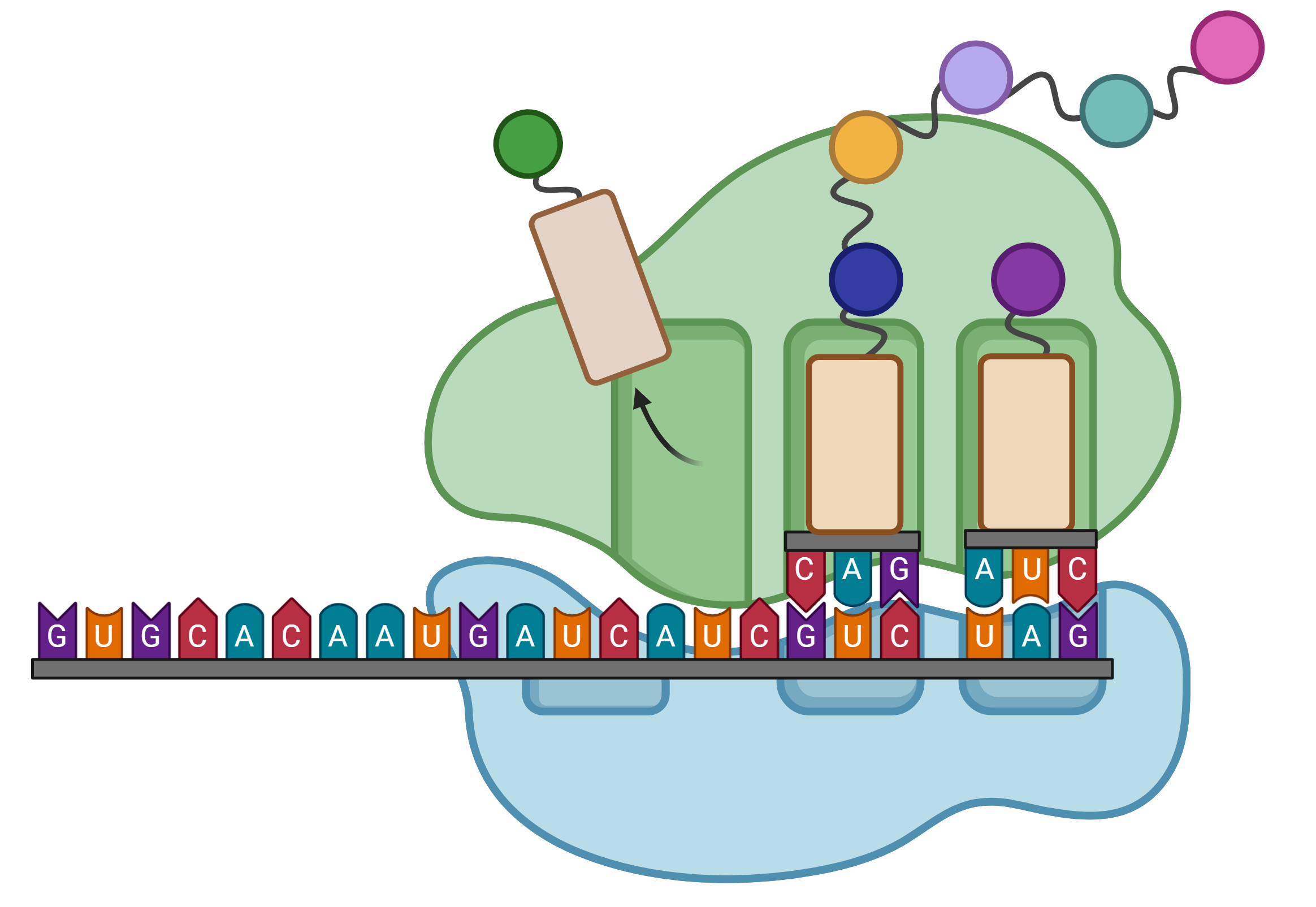
- Translation: RNA information is translated as a specific protein formation
- The specific proteins perform a specific function, carrying out the DNA’s information
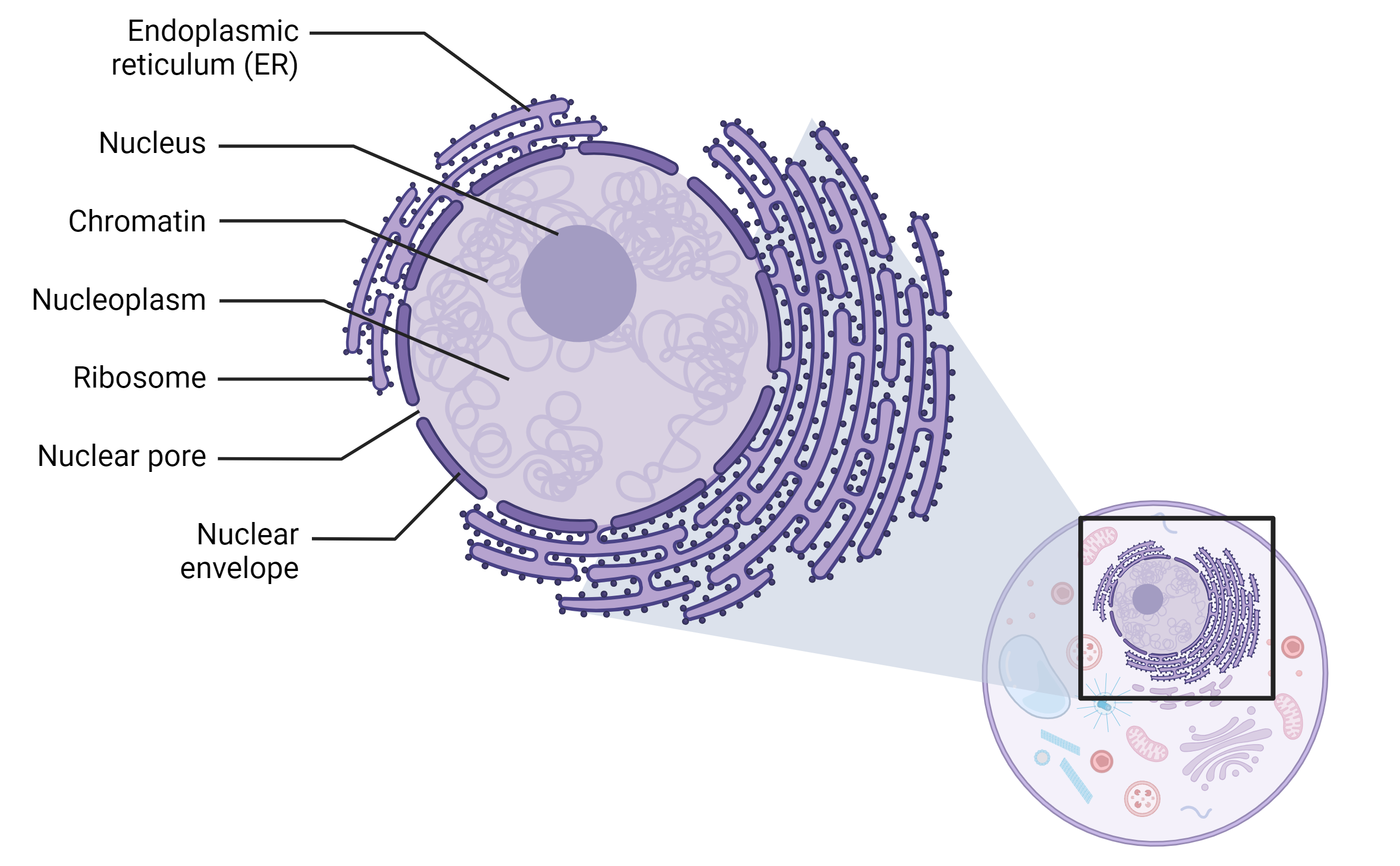
Nucleus
Nucleus:
- Only in eukaryotes
- Stores the DNA
- Referred to as the “control center of the cell”
- Components:
- DNA
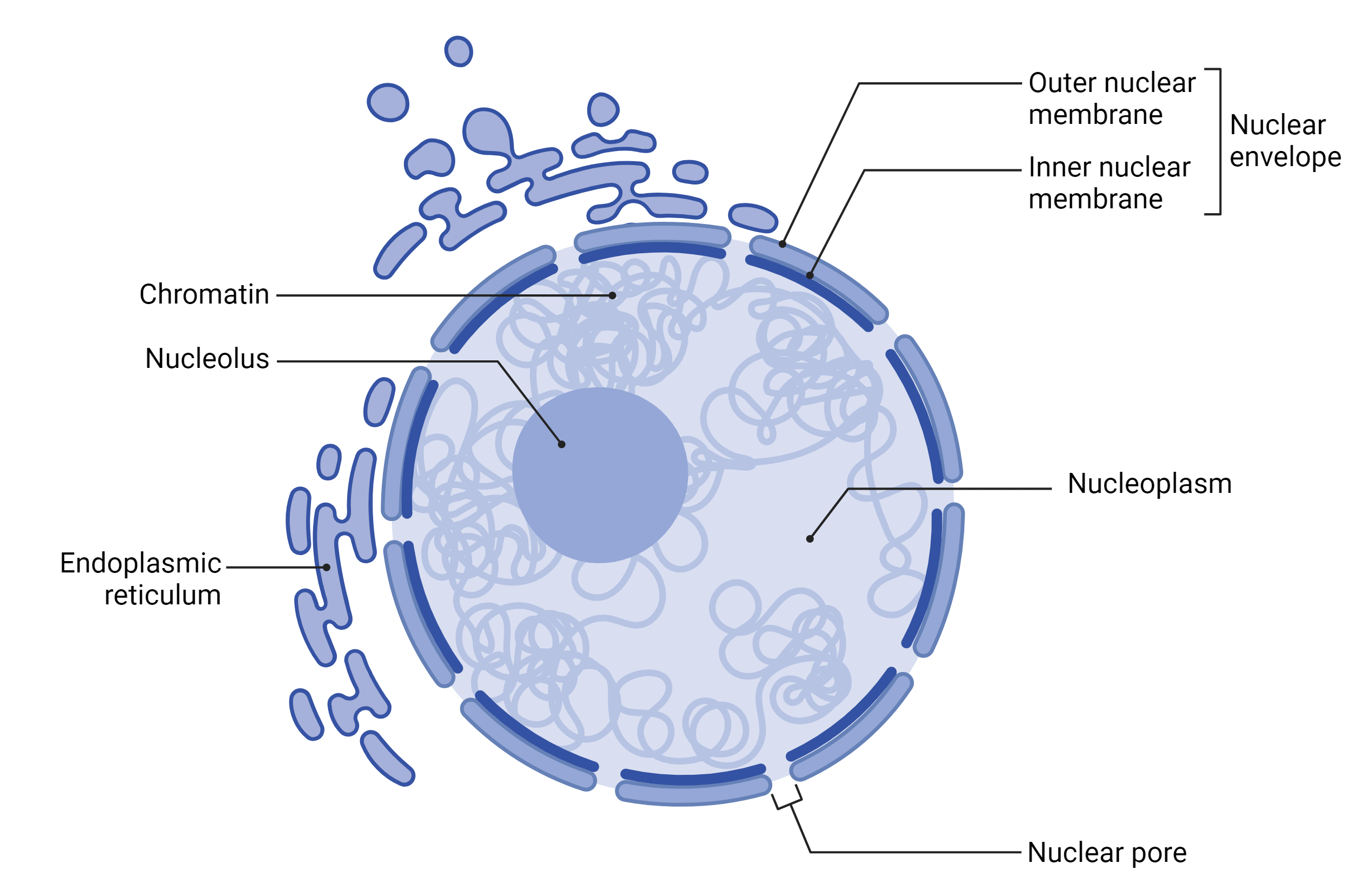
- Nucleolus: Dark area where rRNA and ribosome are constructed
- Nuclear Envelope: Double membrane that surrounds the nucleus
- Contains pores for molecules to enter and exit
- Filled with nucleoplasm
DNA
- Prokaryotes have a single circular DNA chromosome, located in the nucleoid region
- They may also have plasmids: smaller circular DNA separate from the main strand
- Eukaryotes have multiple linear DNA chromosome, located in the nucleus
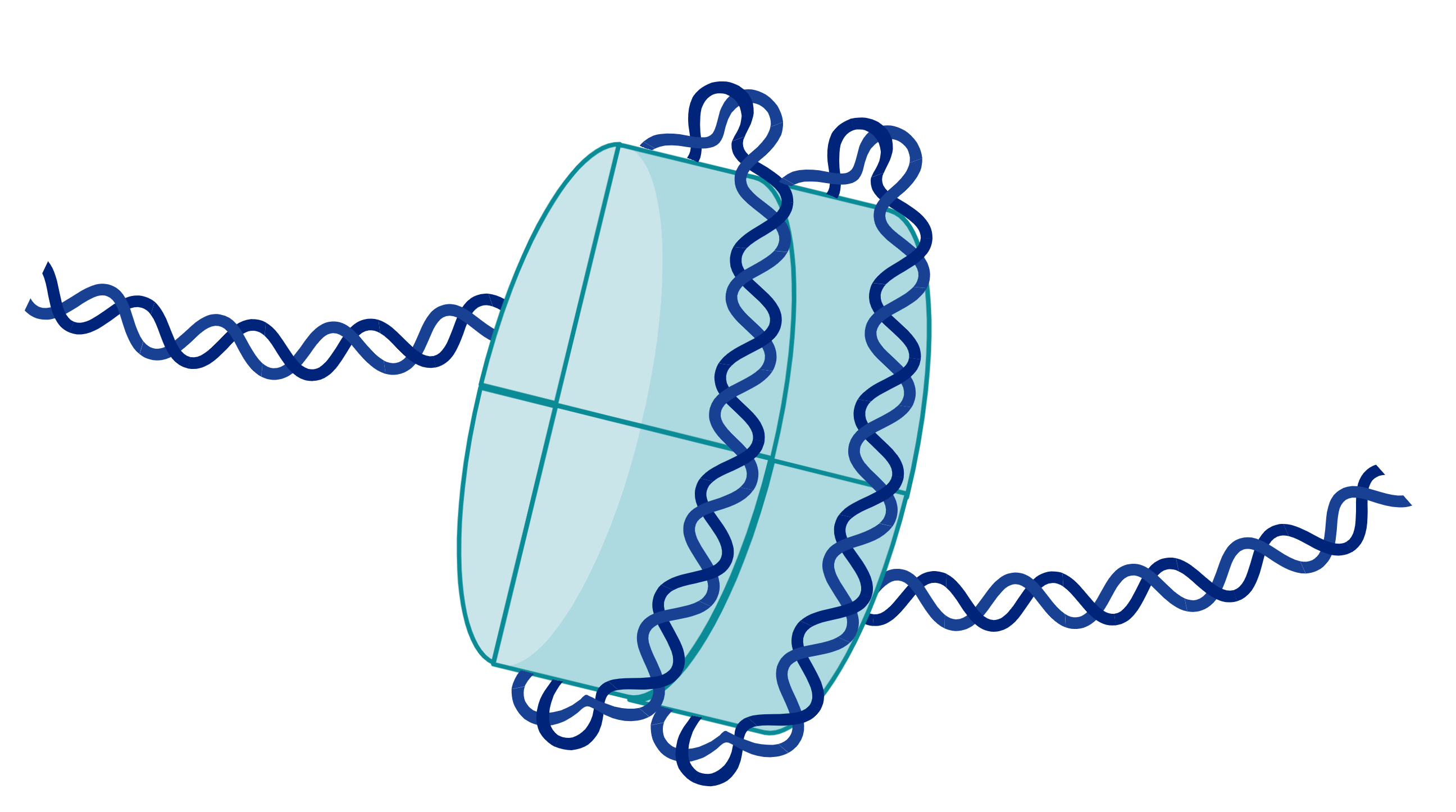
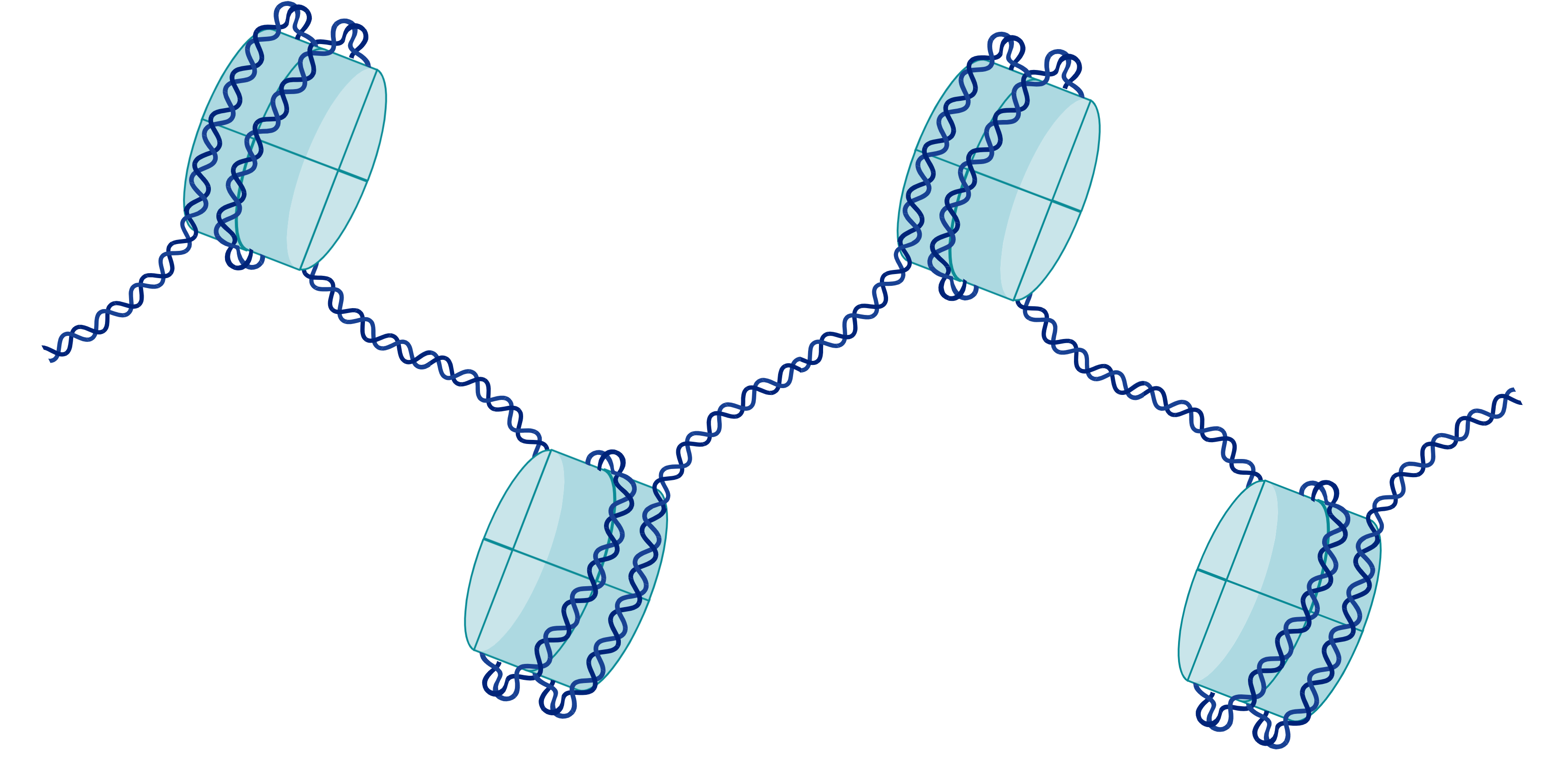
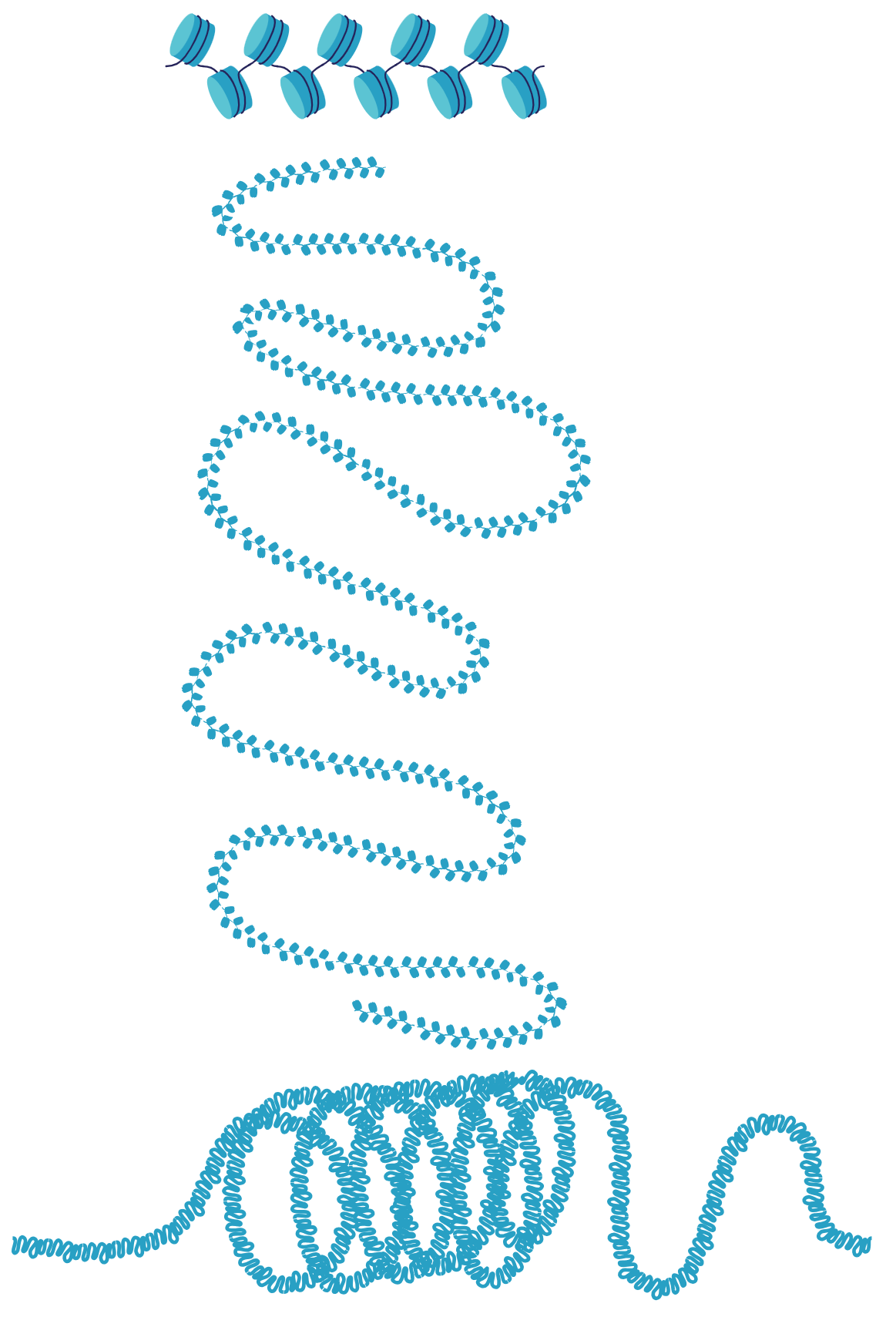
- Eukaryotic DNA is packed into a DNA-protein complex named chromatin
- DNA information is transcribed to mRNA (messenger RNA). In eukaryotes, this happens in the nucleus. The mRNA is then translated to protein in the ribosome.
Ribosomes
Ribosome:
- Synthesize proteins from amino acids
- Composed of rRNA and protein
Protein synthesis:
- tRNA (transfer RNA) transfers amino acids to the ribosome
- The ribosome synthesizes the amino acids to protein based on the mRNA instructions
Structure:
- Unlike other organelle, ribosome are not membrane bound
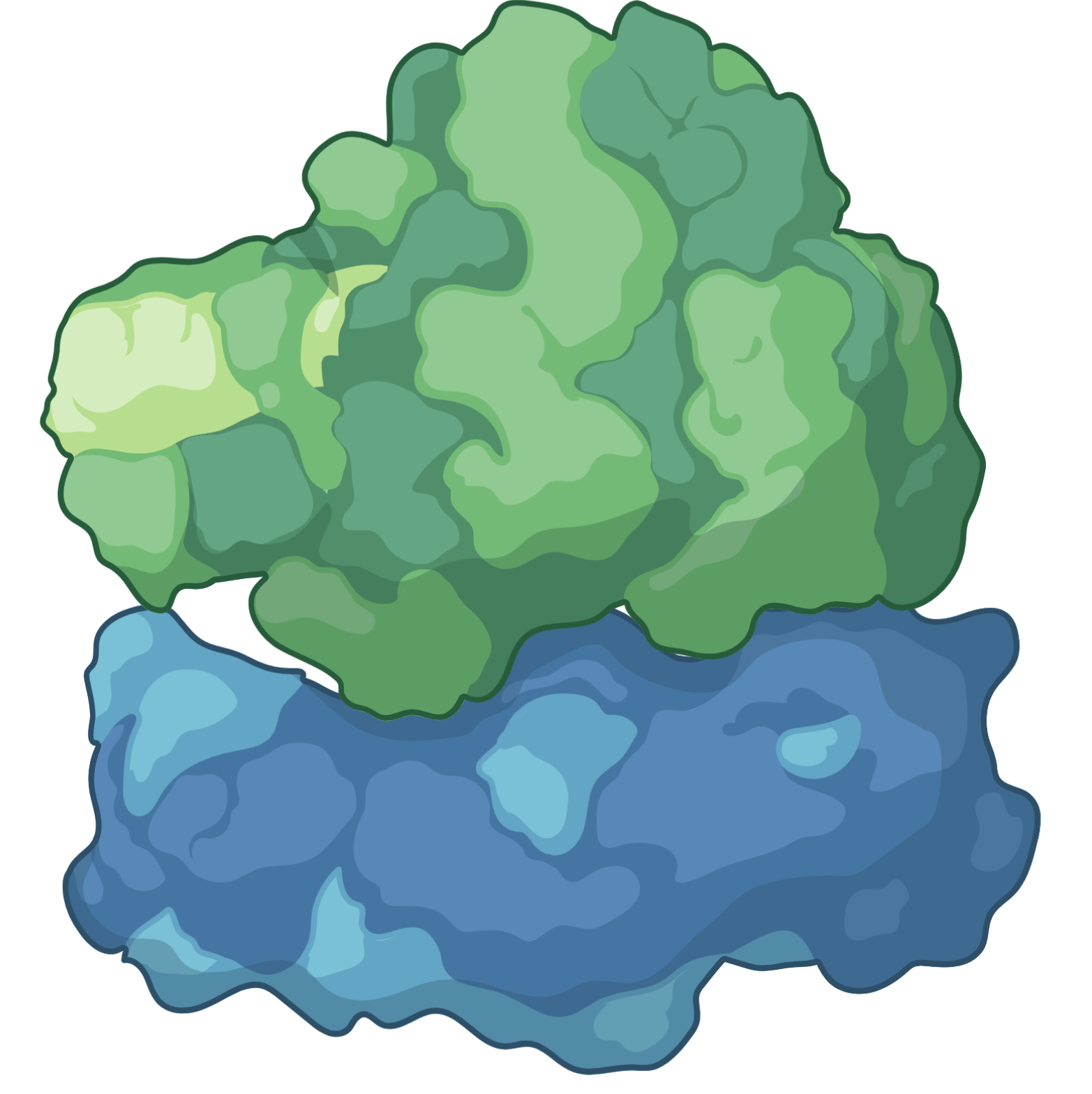
- Contains two parts; a large and a small subunit
- In protein synthesis, the mRNA is threaded between the large and small subunits
- The small subunit translates the mRNA
- The amino acids are arranged and bonded in the large subunit
Location:
- Can be free in the cytoplasm, attached to the cell membrane, nuclear envelope or RER
- Free ribosome generally synthesize protein that will remain in the cytoplasm; RER ribosome generally synthesize protein that will leave the cell or be embedded in the cell membrane.
Polyribosome: Cluster of multiple ribosome
Mitochondria, Chloroplasts
Mitochondria
Mitochondria:
- Only in eukaryotes
- Performs cellular respiration; manufactures ATP
- Referred to as the “powerhouse of the cell”
Structure:
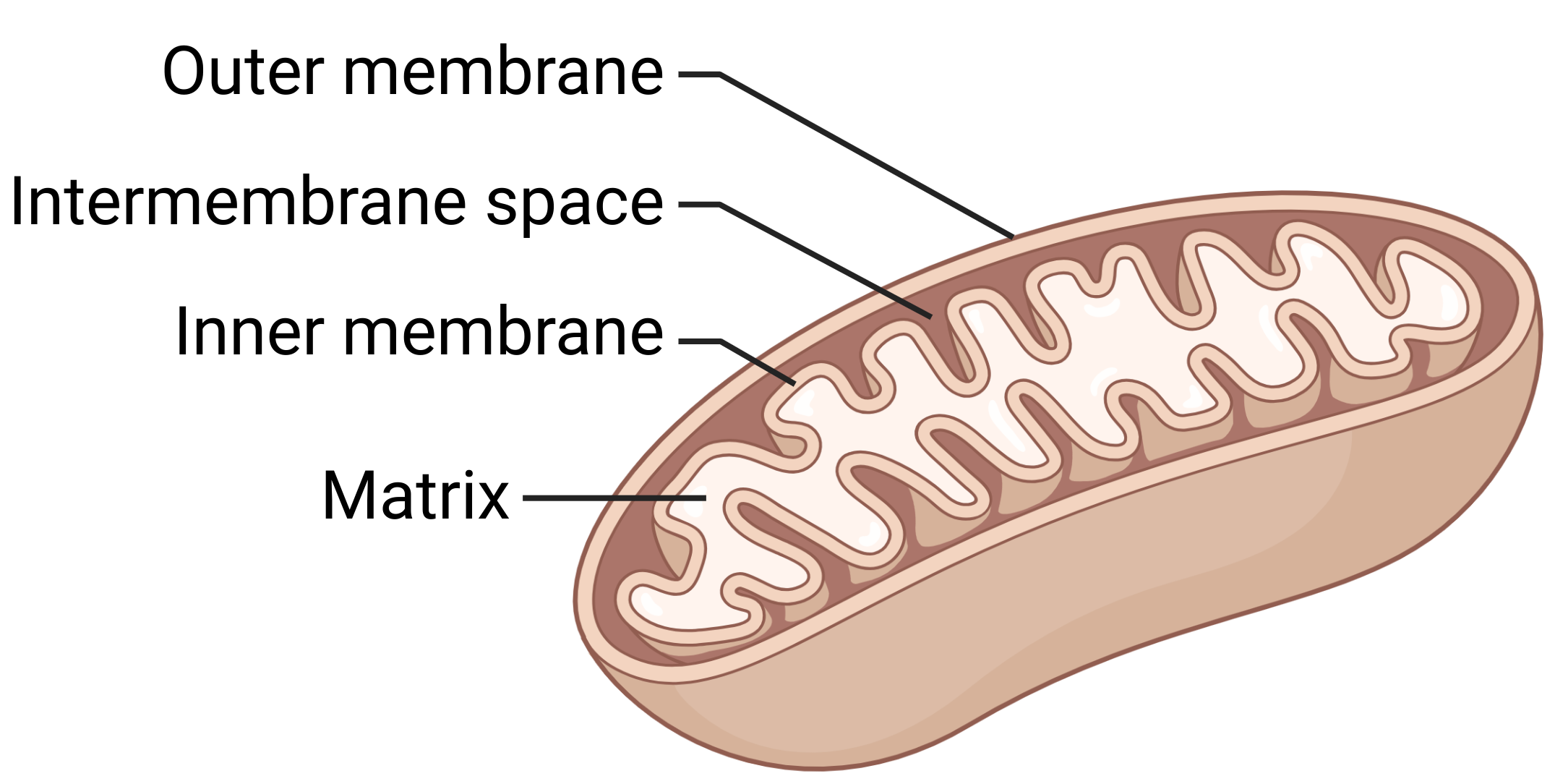
- Contains an outer membrane
- Contains an inner membrane with cristae - folds
- The area in between the two membranes is the intermembrane space.
- The area inside the inner membrane is the mitochondrial matrix.
Chloroplasts
Chloroplasts:
- Only in plant cells
- Only in green parts of plants; not in, for example, the edible part on an onion
- Perform photosynthesis
Structure:
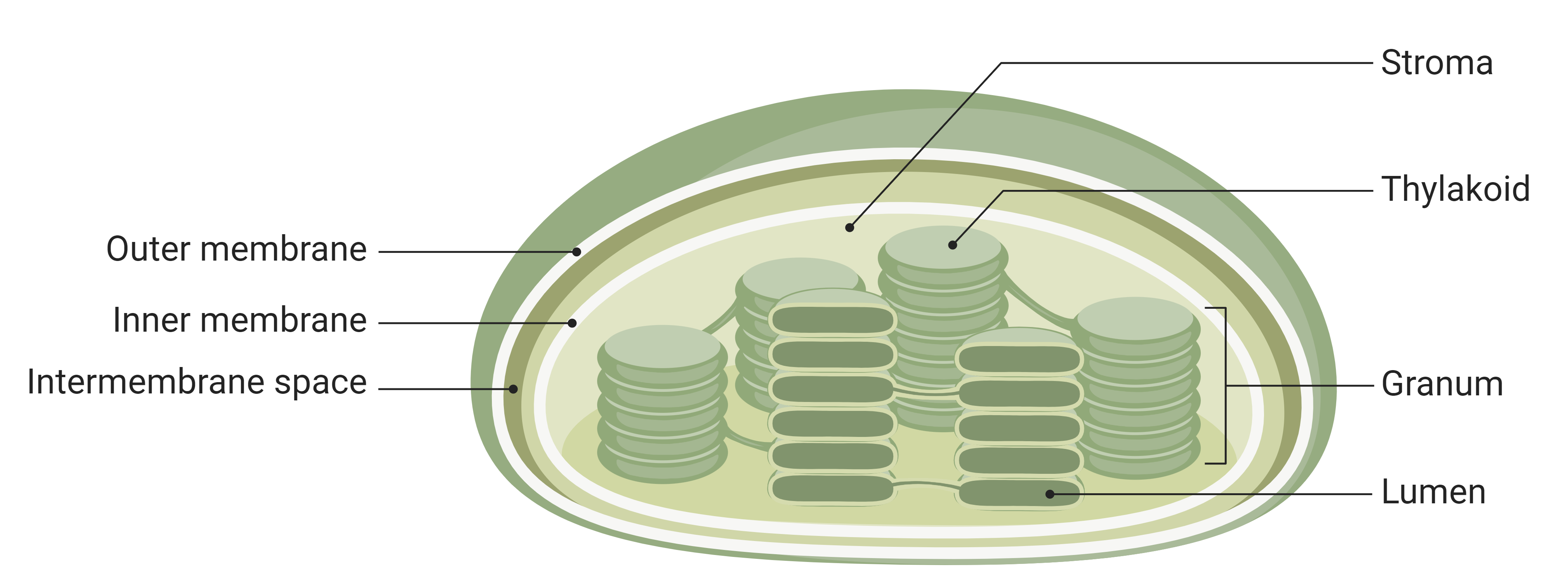
- Contains a double outer membrane
- Thylakoids: Disc-like structures within the chloroplast
- Chlorophyll: Pigments within the thylakoid membrane; absorb sunlight
- Does not absorb green wavelength sunlight, instead reflecting it, resulting in a green appearance
- Thylakoid lumen: Within the thylakoid membrane
- Chlorophyll: Pigments within the thylakoid membrane; absorb sunlight
- Granum (plural: grana): Stack of thylakoids
- Stroma: Space inside chloroplast not occupied by thylakoids, filled with fluid
- Some bacteria can perform photosynthesis. They have thylakoids with chlorophyll, but do not have chloroplasts.
Endosymbiosis Theory
Endosymbiosis Theory:
- Theorizes that mitochondria and chloroplasts were originally independent prokaryotic cells that later became integrated into eukaryotes in a symbiotic relationship
- Indicated by the following features found in both mitochondria and chloroplasts:
- Double membrane
- Contain their own DNA and ribosomes
- Can reproduce independently
Endomembrane System
Overview
- Only in eukaryotes
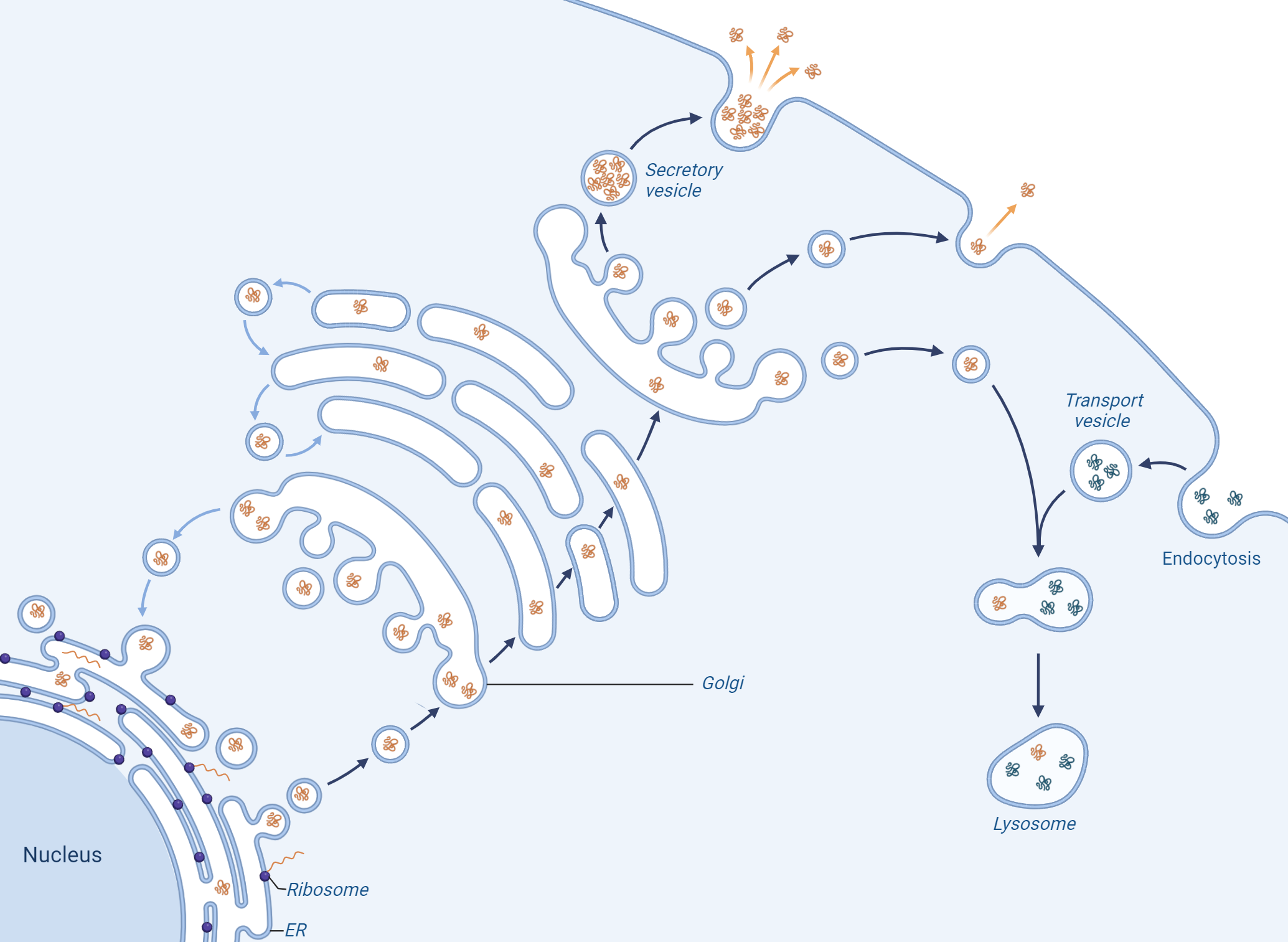
- System of organelles that modify, package and transport proteins, carbohydrates and lipids
- Generally, the endomembrane system specifically handles molecules that are bound to leave the cell or be embedded in the cell membrane
- Endomembrane organelle are membrane-bound and have interior lumen with separate conditions from the cytoplasm, specific for their functions.
- Materials are transported between endomembrane organelle in transport vesicles
Endoplasmic Reticulum
Endoplasmic Reticulum:
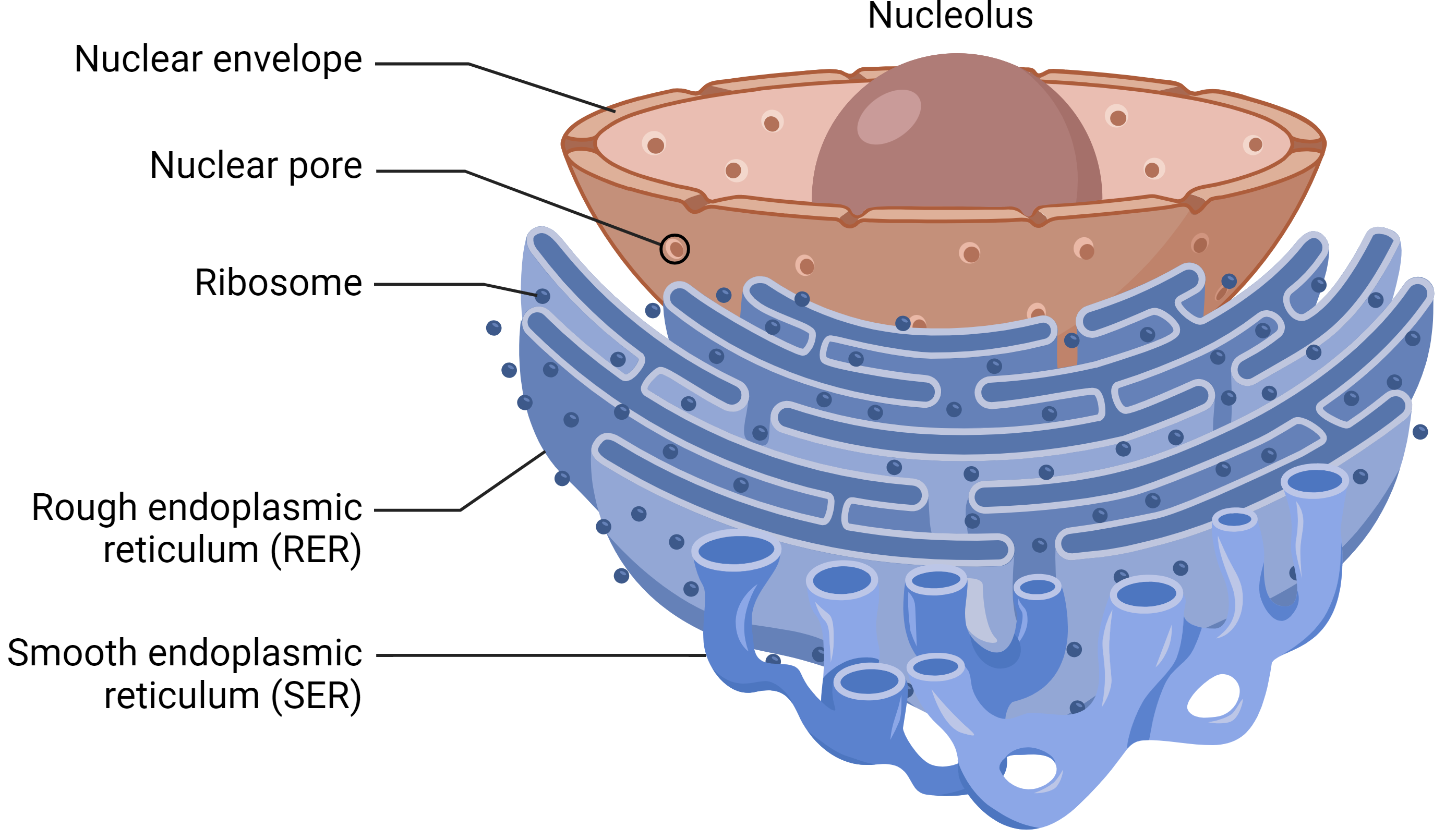
- Interconnected membrane that extends from the nuclear envelope’s outer membrane
- Has two parts: Rough ER and Smooth ER
- Rough ER:
- Studded with ribosomes
- Modifies protein and phospholipids
- Smooth ER:
- Does not have ribosome
- Modifies lipids and cholesterol; performs select detoxification; stores calcium
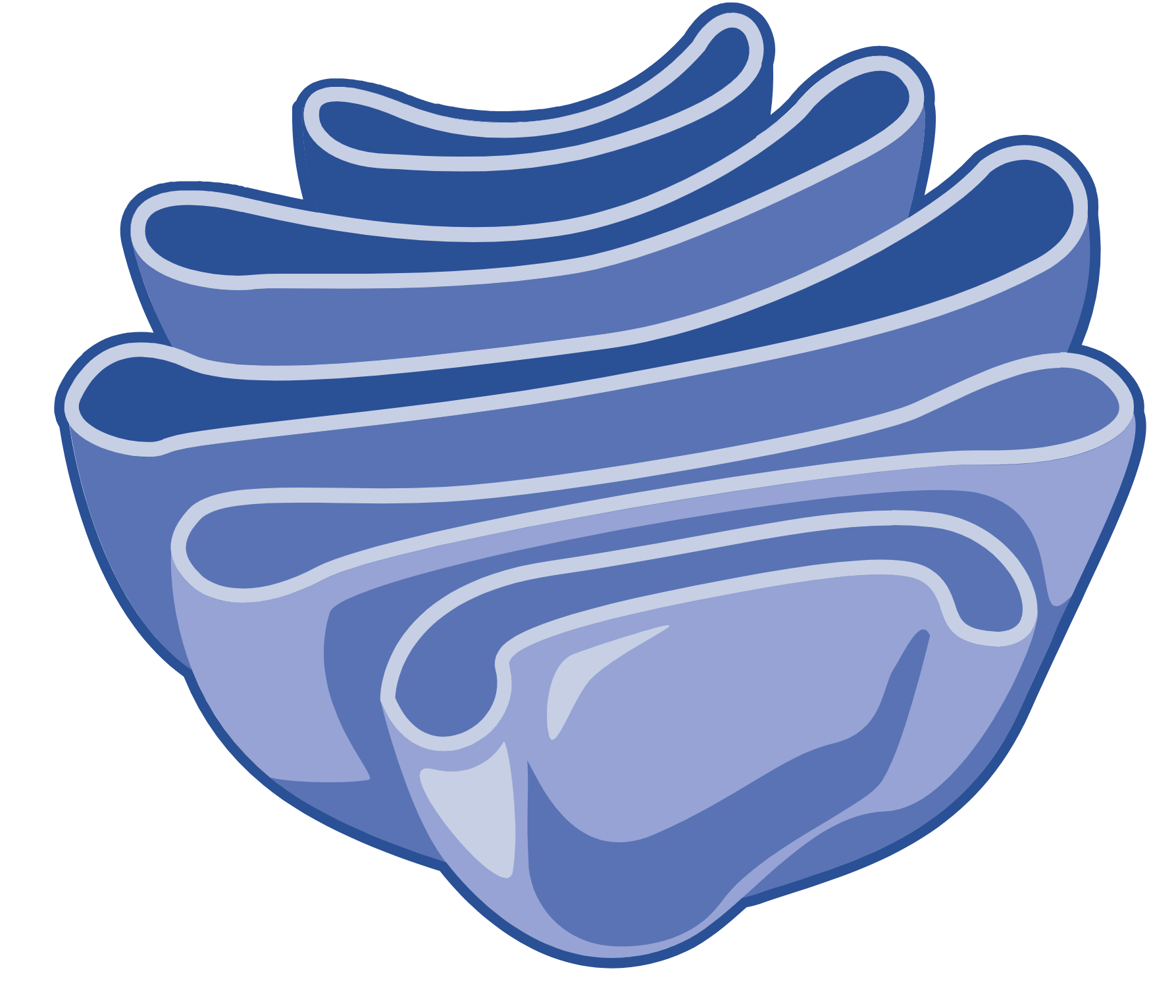
Golgi Apparatus
Golgi Apparatus:
- Set of non-connected membrane discs
- Packages, labels and ships proteins
- Has two sides:
- Cis side: faces the ER
- Trans side: faces away from the ER
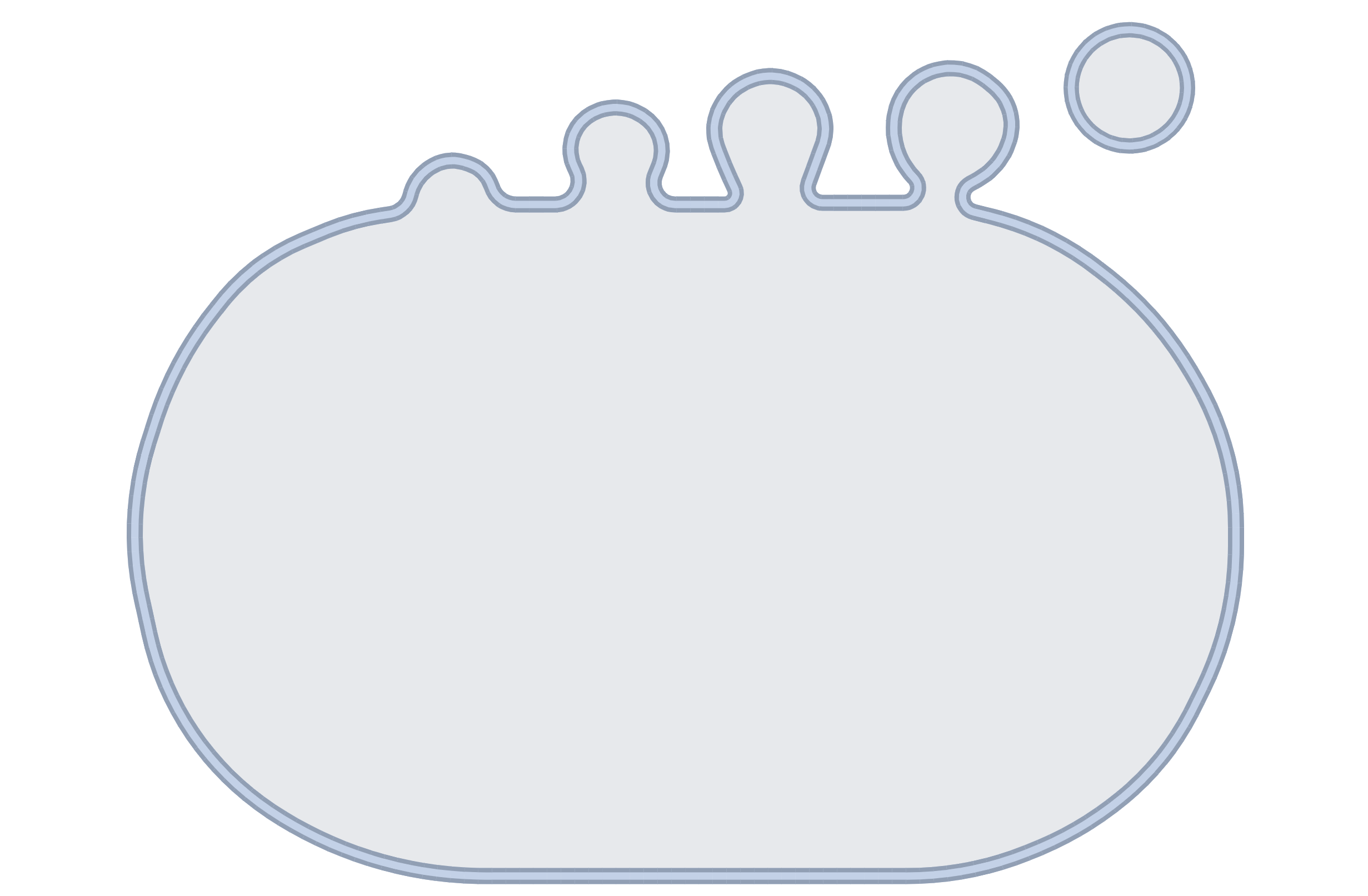
Vesicles
Vesicles:
- Dynamic membrane sac, used to transfer material
- Formed from the ER and Golgi membrane; sacs bud off a departure point with material inside, then fuse to the arrival point and release their material
Lysosome
Lysosome:
- Only in animals, not plants
- Vesicle containing digestive enzymes
- Fuses with other vesicles and digests their contents
- Breaks down old organelle, foreign agents; involved in cell suicide
Vacuoles, Peroxisomes
Vacuoles
Vacuole:
- Only in eukaryotes
- Permanent membrane bound sac; usually used for storage
Central Vacuole
Central Vacuole:
- Only in plant cells
- Large, fluid filled central vacuole
- Function: structure, storage, digestion, maintaining chemical balance
- Supports cell structure by swelling with fluid and providing turgor pressure against the cell wall
Peroxisomes
Peroxisome:
- Only in eukaryotes
- Small membrane bound organelle; detoxifies and breaks down molecules through oxidation
- Glyoxysomes: Special peroxisomes in plants that convert fat to sugars.
Cytoplasm
Cytoplasm
Cytoplasm:
- Area within the cell membrane (excluding the nucleus in eukaryotes)
- Filled with cytosol, a jelly-like substance
- Contains the cytoskeleton
- Organelle are suspended in the cytosol, anchored by the cytoskeleton
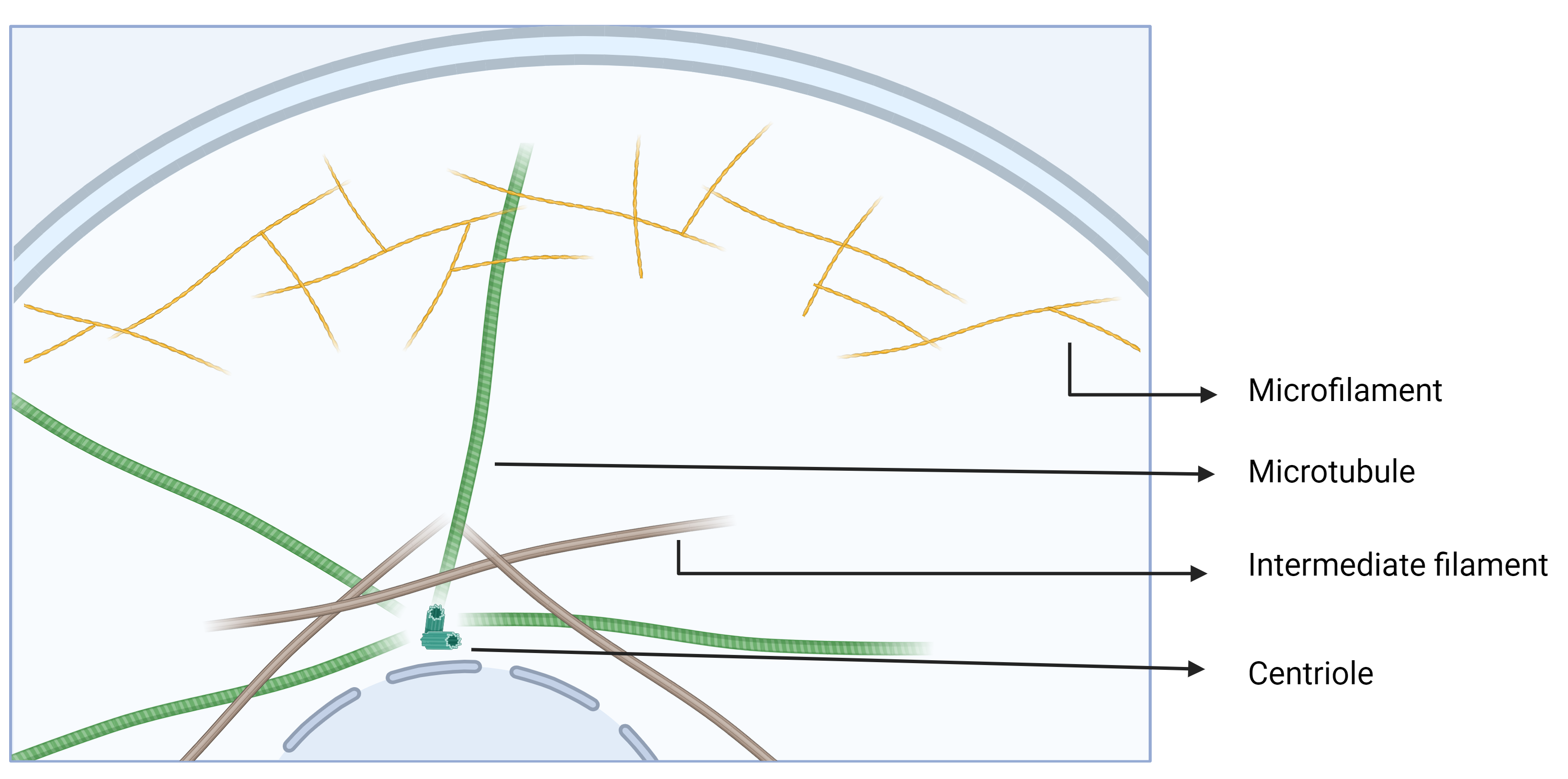
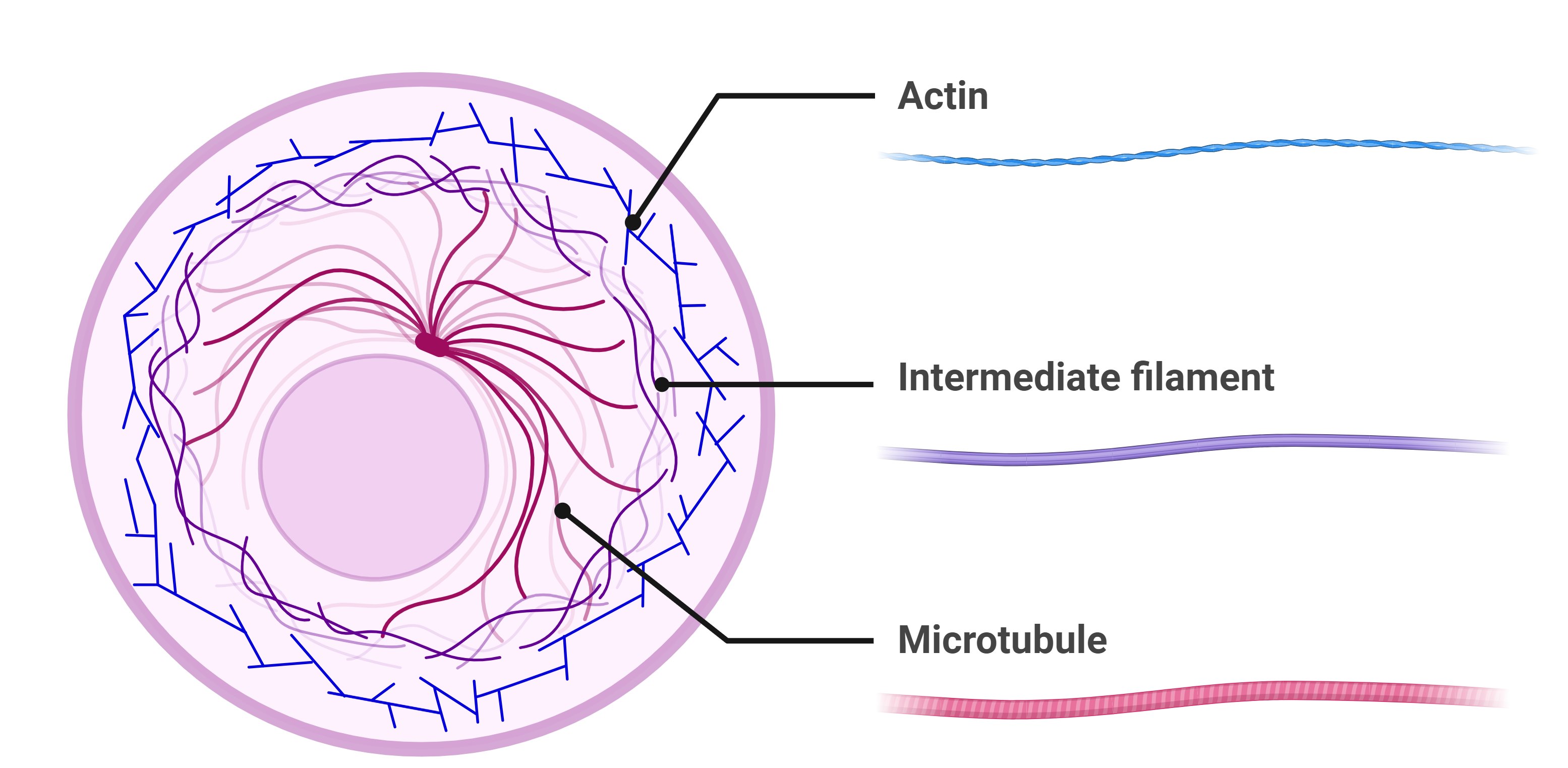
Cytoskeleton
Cytoskeleton: Intracellular skeletal system
- Functions:
- Provides cellular structure
- Anchors organelle
- Creates pathways for organelle and materials
- Facilitates cell motility
- Aids in cell division
Components: (mostly applicable specifically for eukaryotes)
- Microtubules
- Largest cytoskeleton component.
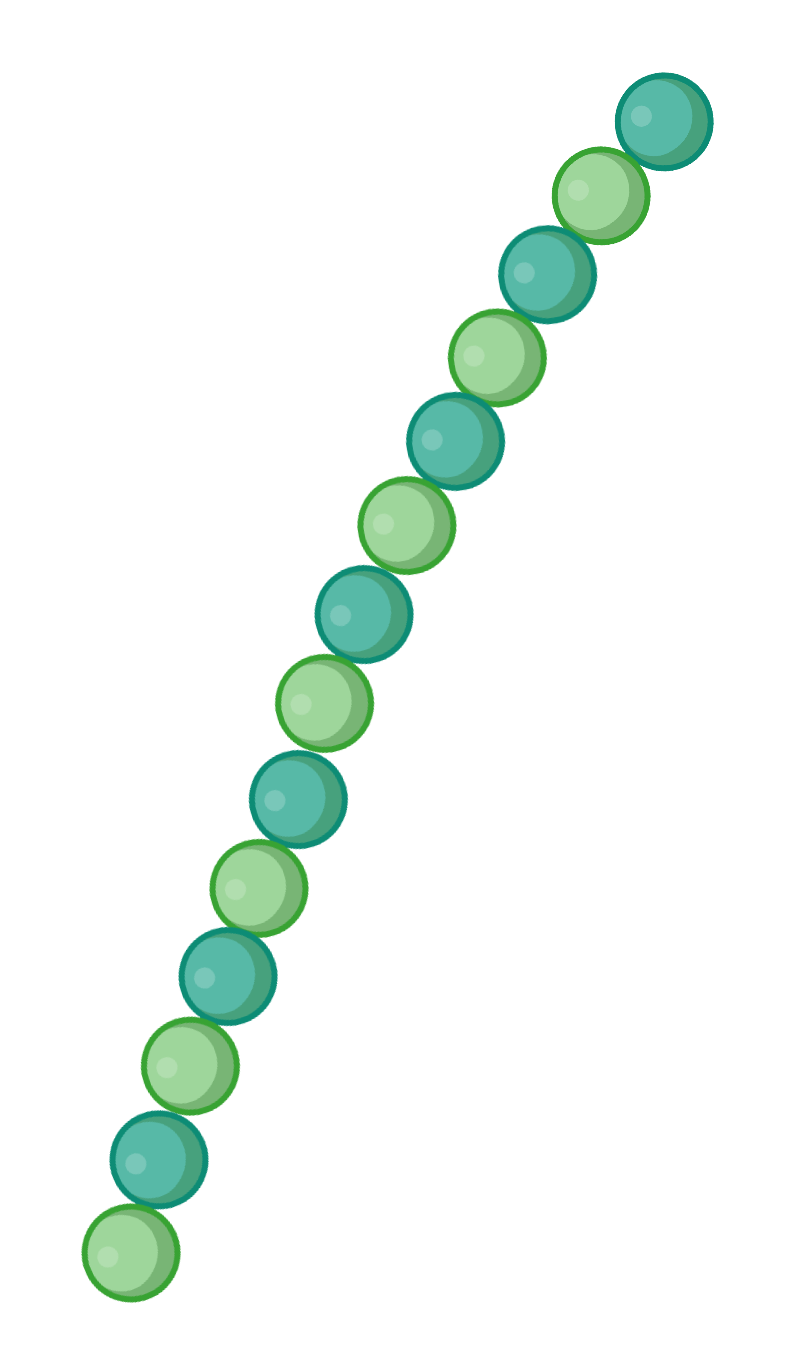
- Hollow tubes made of tubulin monomers
- Maintain cell structure; resist compression
- Form tracks for organelle movement
- Play a role in cell division
- Aid cell motility
- Intermediate Filaments
- Smaller than microtubules
- Made of protein
- Provide structural support; holds organelles in place
- Microfilaments
- Smallest component
- Made of actin fibers
- Can rapidly assemble and disassemble
- Maintain structure; provide tension around inner side of cell membrane
- Play a role in cell division
- Aid in cell motility
Centrosome:
- Central microtubular hub
- In animals, contains centrioles
Centrioles:
- Two perpendicular cylinders; each made of 9 sets of three microtubules
- Plays a role in cell division
Cell Membrane, Cell Wall, Extracellular Activity
Cell Membrane
Cell Membrane: Surrounds the cell
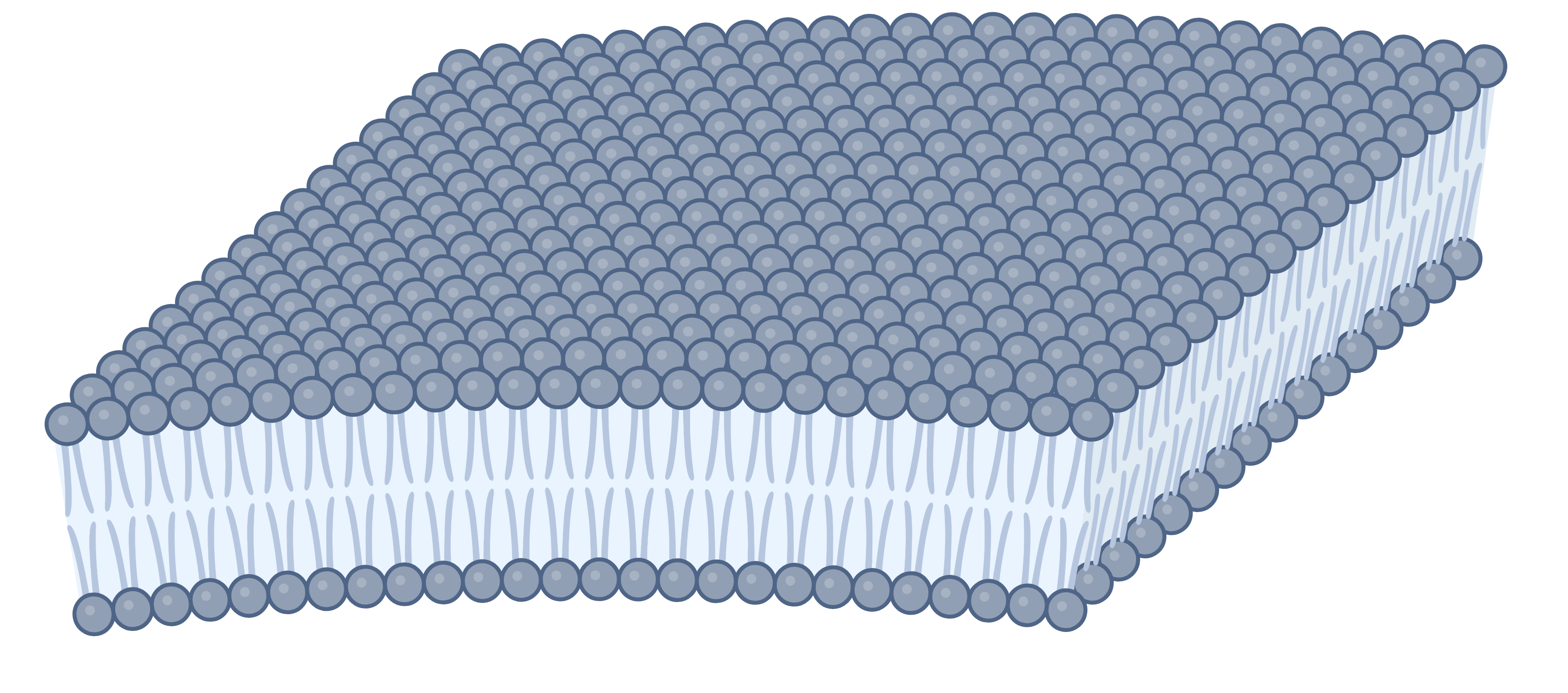
- Composed of a phospholipid bilayer
- Fluid Mosaic Model
- Selectively permeable
Cell Wall
Cell Wall
- Plants, fungi and prokaryotes have an exterior cell wall beyond the cell membrane
- Cellulose: Composes plants’ cell wall
- Plants’ cell wall and central vacuole conjunctively maintain rigidity, support, strength and structure.
- Chitin: Composes fungi’s cell wall
- Peptidoglycan: Composes bacterias’ cell wall
- Capsule: Some bacteria are further surrounded by a capsule
- Flagella: Present in some cells: tail-like propeller by which the cell moves
- Cilia: Present in some eukaryotes: short, hairish protrusions which can move the cell or move substances along the cell surface.
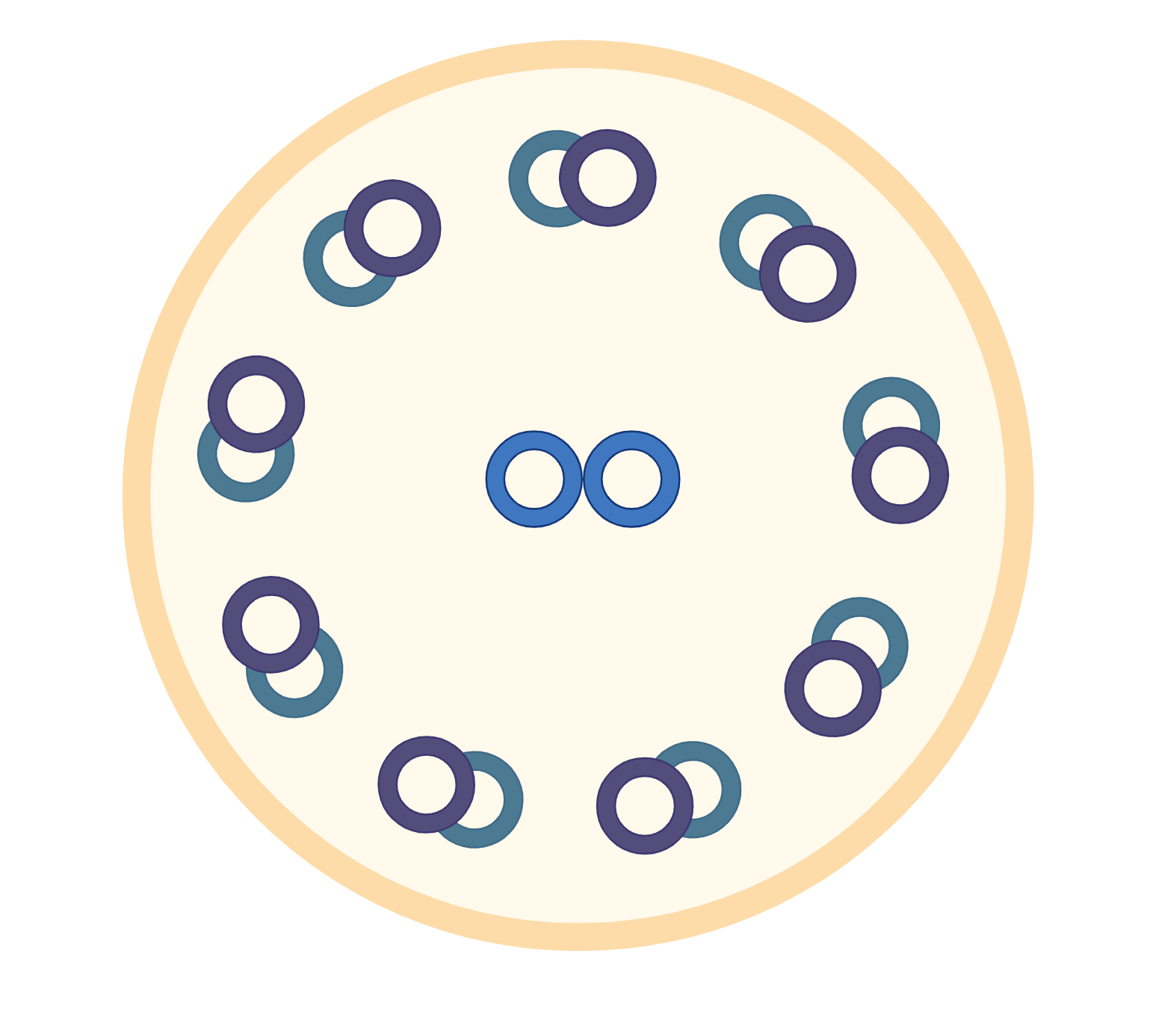
- In eukaryotes, cilia and flagella are made of microtubules arranged in a 9+2 structure: 2 central microtubules surrounded by 9 outer microtubule doublets
- Pili: Present in some bacteria: thin cell-membrane protrusions
- Aid in adhesion to surfaces and in transferring genetic material.
Extracellular Activity
Plants:
- Plant cell membranes are surrounded by a rigid cellulose wall
- Neighboring cell walls are connected
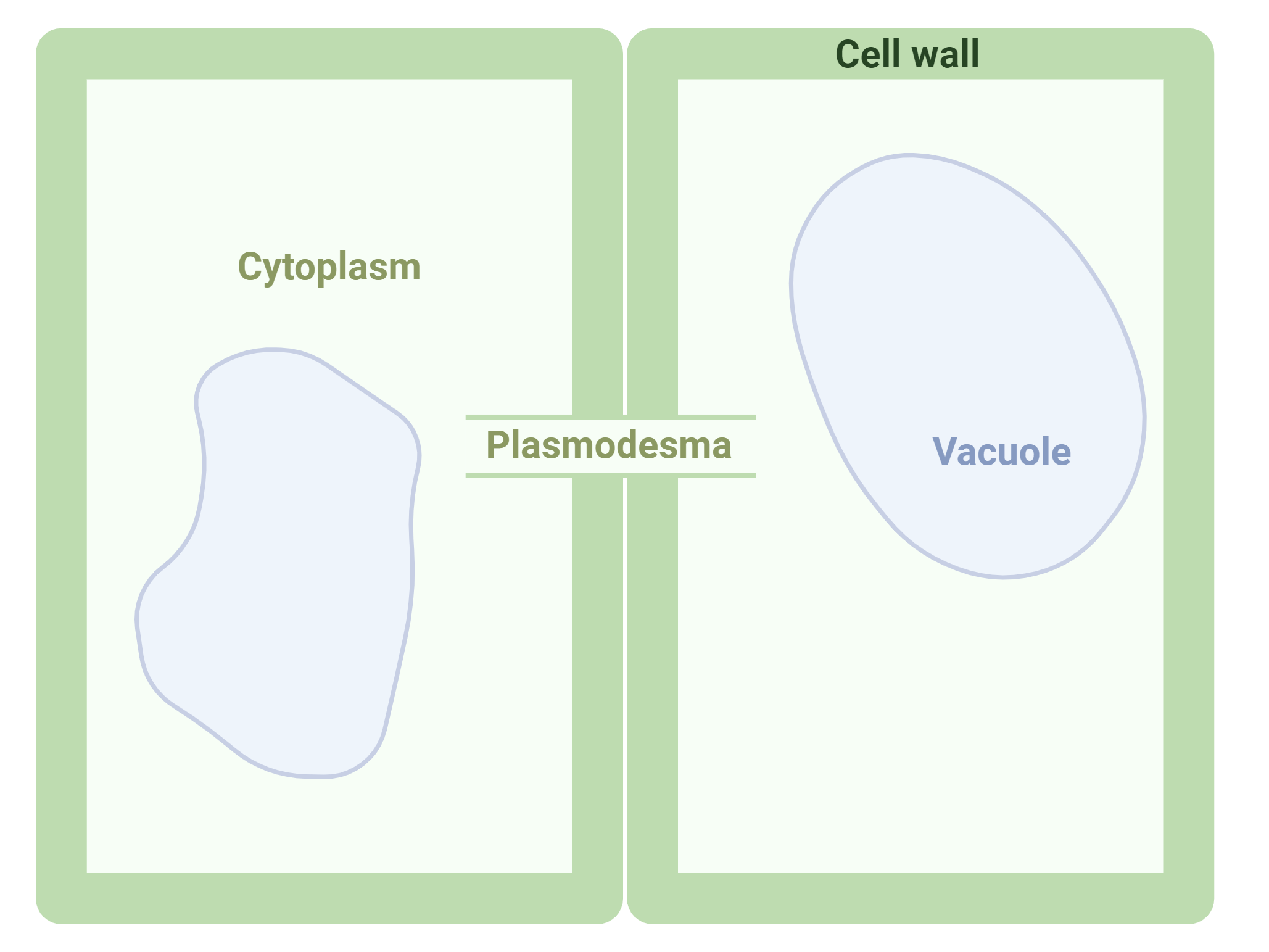
- Neighboring cells communicate and transfer material through plasmodesmata connections
- Plasmodesmata:
- “Tunnel” between two plant cells
- Goes through the wall between the two cells and connects their cytoplasm
- Animals:
- Extracellular Matrix (ECM): Area between cells
- Filled with various proteins, mostly collagen
- Holds cells in place; facilitates communication between cells
- Binds with integrin proteins on the cell membrane surface
- Facilitates intercellular communication; substances in the matrix can send signals to the cell through the integrin
- Animal cells have three types of junctions:
- Gap junction:
- Similar to plasmodesmata - protein tunnel from one cell’s cytoplasm to its neighbor’s
- Tight junction:
- Fuses the surface of neighboring cells together
- Proteins in the two cell membranes bond
- Prevents things from passing between the cells; creates a waterproof barrier
- Desmosomes:
- Protrusions from the cell that latch to desmosomes of the adjacent cell
- Attaches the two cells, but not tightly
- Gap junction:
- Extracellular Matrix (ECM): Area between cells
Schematics
Types of Cells
-
Prokaryotic
-
Eukaryotic
-
Animal
-
Plant
-
Cell Components
-
Nucleus
-
Nucleus, ER
- DNA
- See chapter 3
- Nucleosome
- DNA wraps around histone proteins
-
Chain of nucleosomes
-
Nucleosome chains form chromatin
-
Loose chromatin
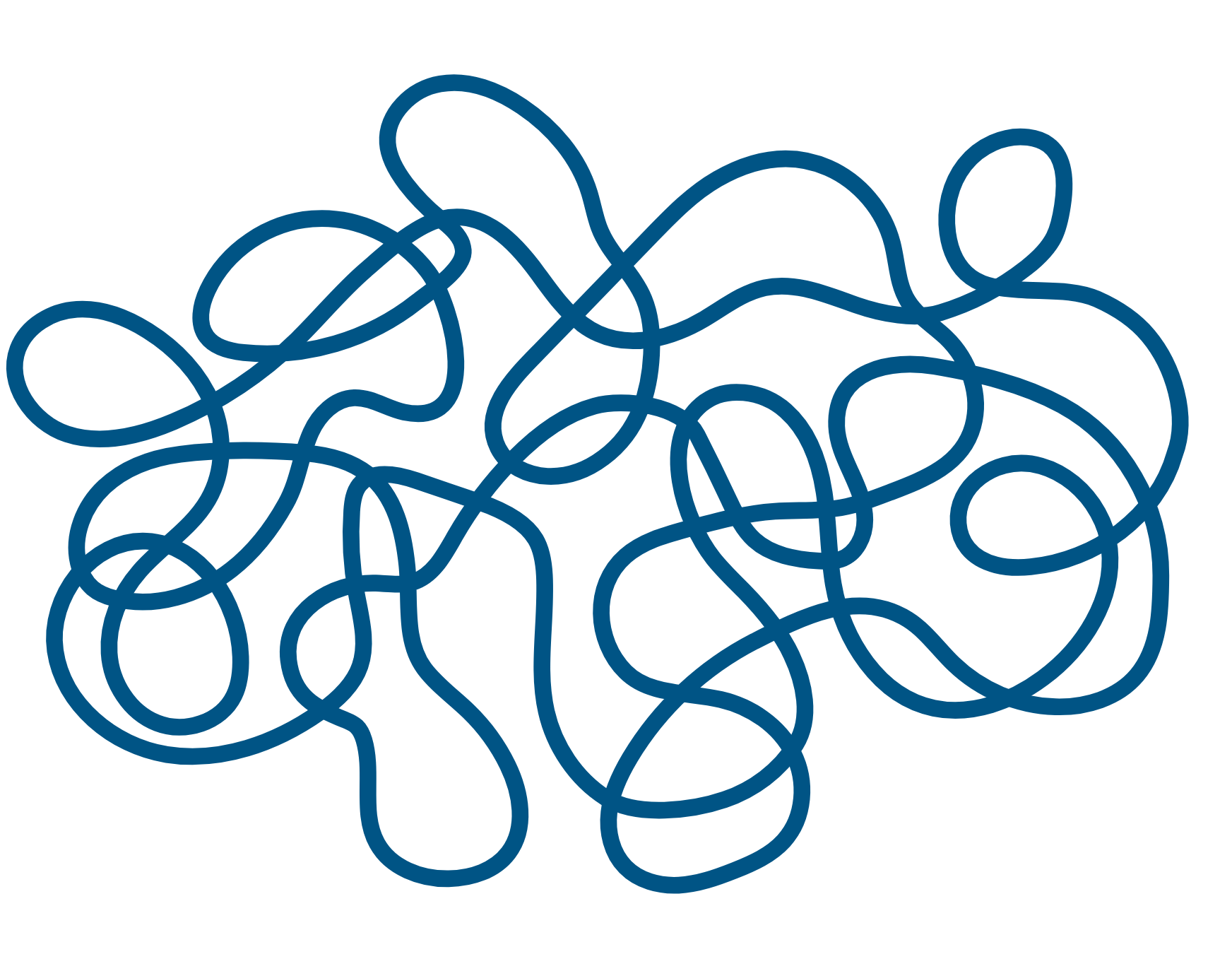
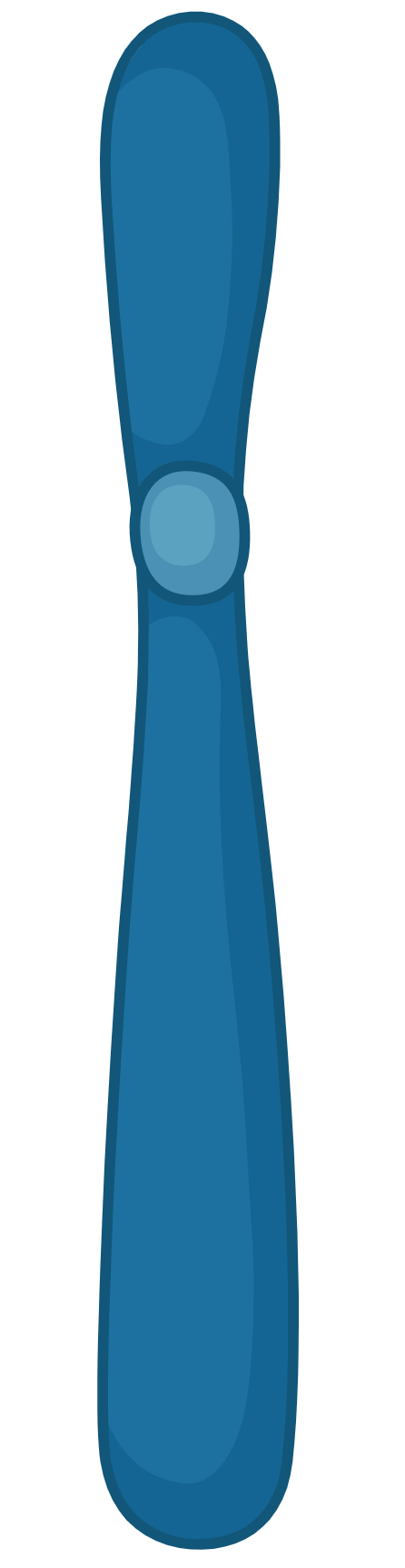
- Chromatid
- Prior to DNA duplication, chromatin condenses and is visible as individual chromatid
- Ribosome
-
Ribosome
-
Translation
-
-
Mitochondria
-
Chloroplast
- Endomembrane System
-
Endomembrane system
-
Endoplasmic Reticulum
-
Golgi Apparatus
-
Vesicle
-
- Cytoskeleton
-
Cytoskeleton
-
Tubulin strand
-
Microtubule

-
-
Phospholipid bilayer
-
Cilia / Flagella cross section
-
Plasmodesmata
-
ECM
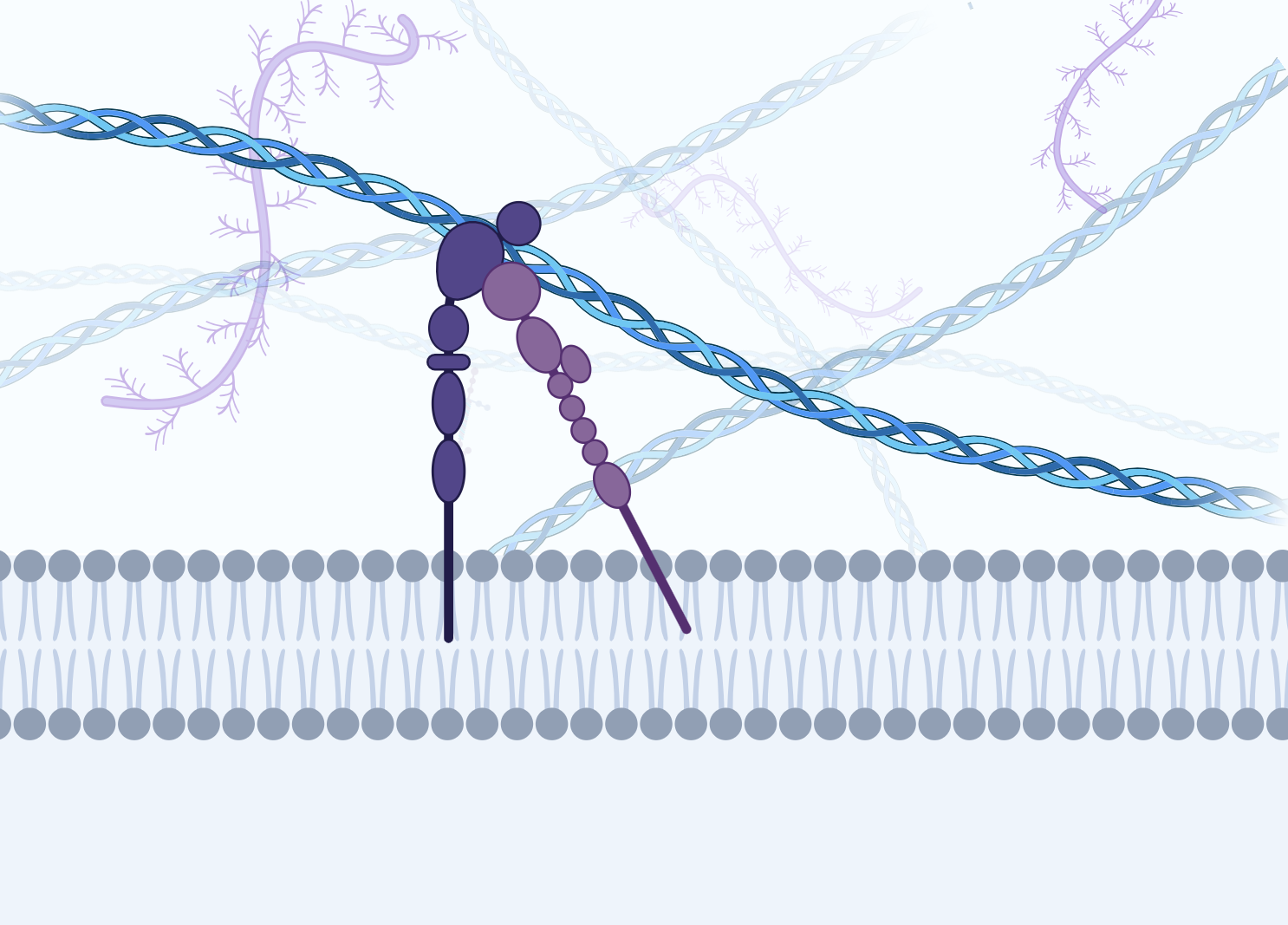
- Animal cell junctions
-
Gap junction
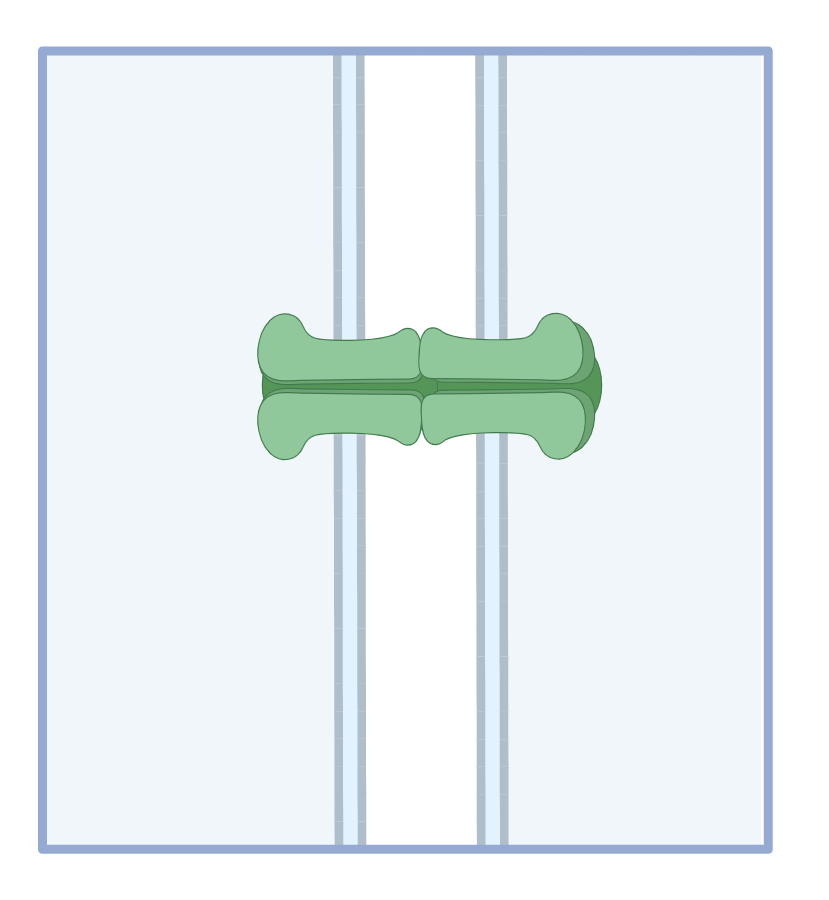
-
Tight junction
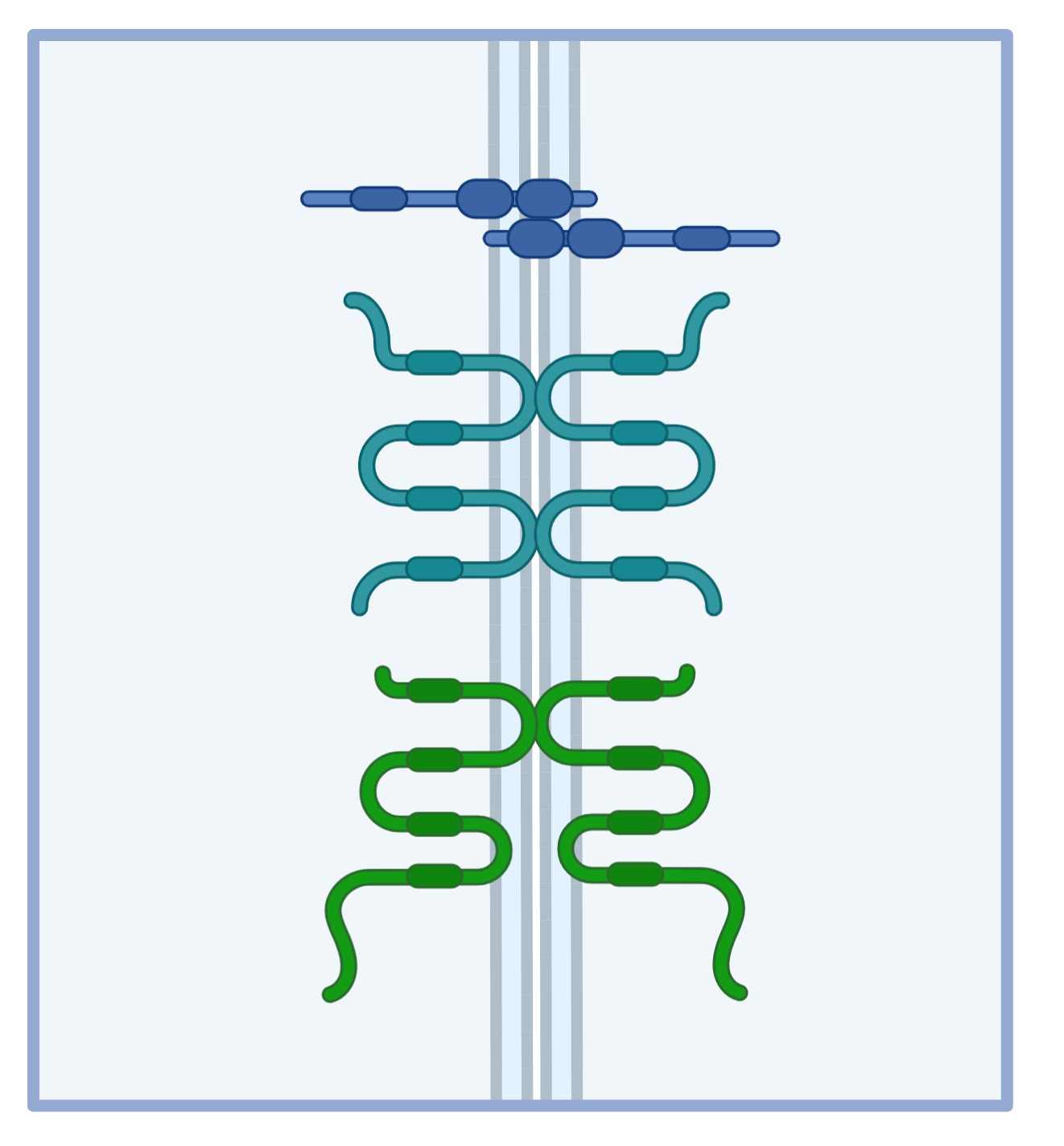
-
Desmosome
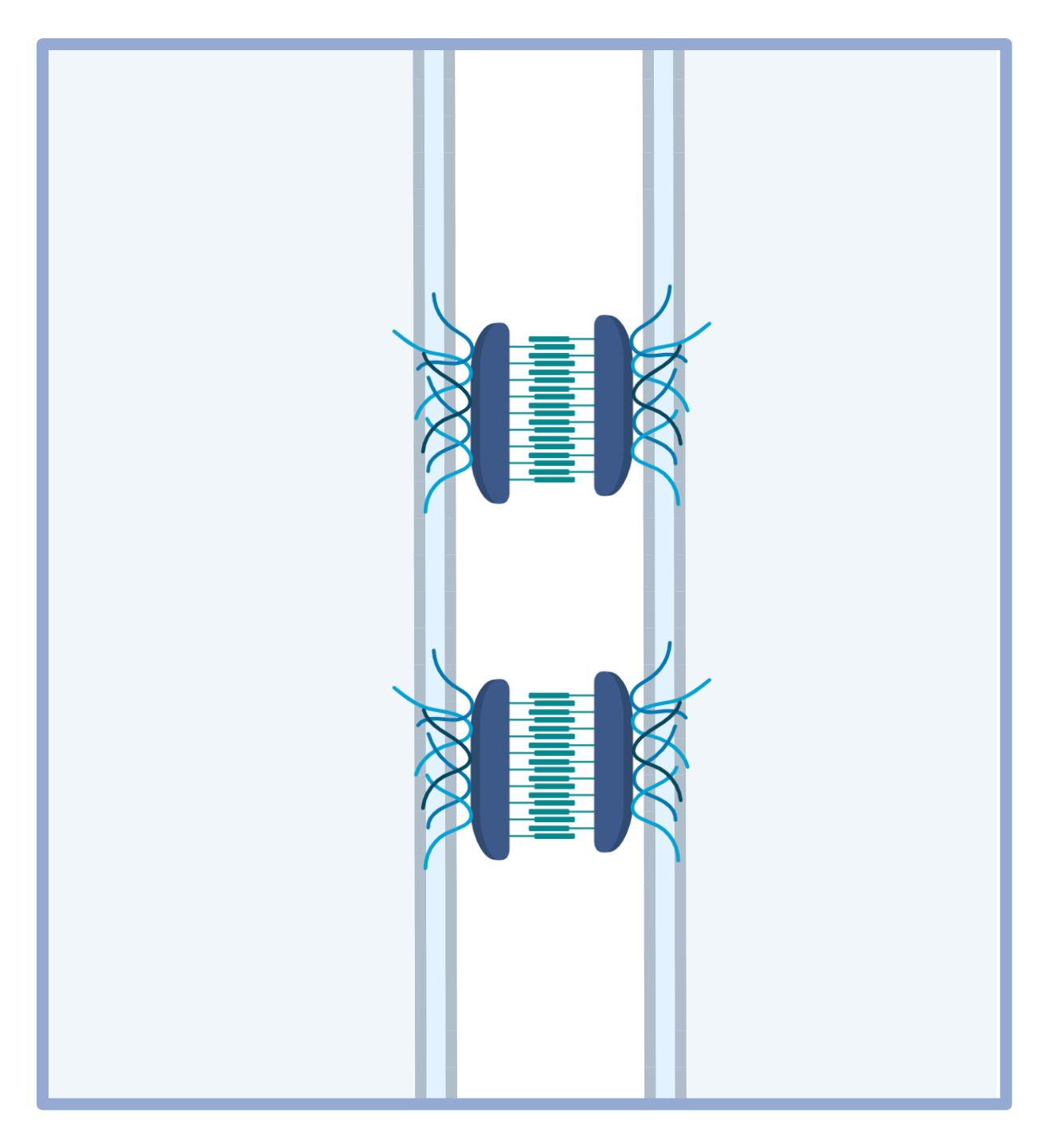
-